Building a Salon Brand That Attracts Your Ideal Client
Updated:
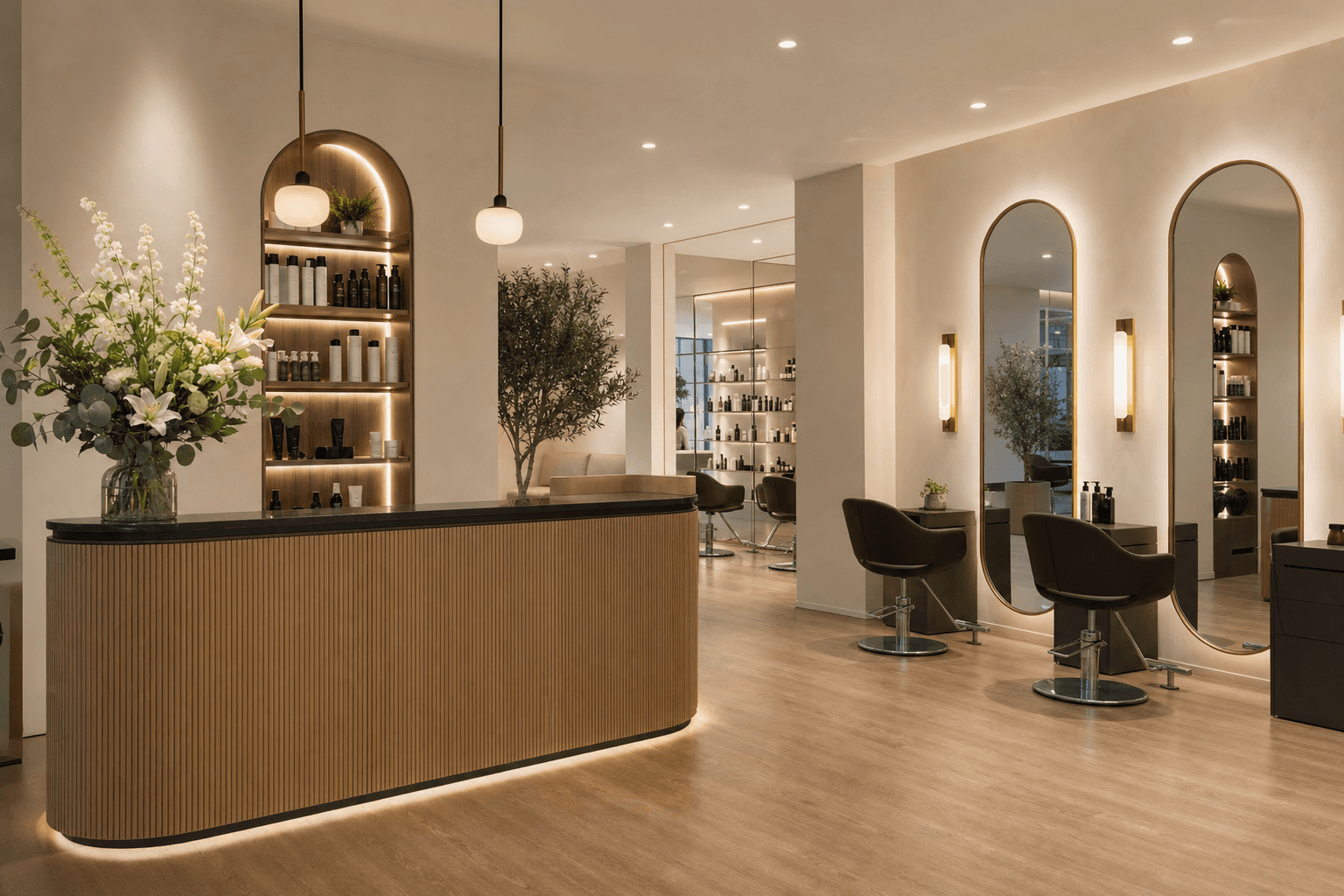
Most salon owners think branding means picking a logo and a color palette. It doesn't. Branding is the sum of every impression your business makes—from the font on your service menu to the way your receptionist answers the phone to how your Instagram grid looks on a Tuesday afternoon. Done well, it works like a filter: it pulls in the clients you actually want and quietly signals to the wrong ones that they'd be happier somewhere else.
That filter matters more than most owners realize. A well-defined brand reduces price shopping, increases rebooking rates, and makes every marketing dollar work harder. This guide walks you through the practical steps of building that brand—from clarifying who you're for, to making sure your digital presence backs it up.
Start With Your Ideal Client, Not Your Logo
Before you touch a single design element, you need a clear picture of the person you most want in your chair. Not a vague demographic like "women aged 25–45," but a specific archetype with real preferences, real frustrations, and real reasons to choose you over the salon two blocks away.
Ask yourself these questions:
- Who are your five best current clients? What do they have in common—job type, lifestyle, the services they book, how they found you?
- What problem do they come to you to solve? Is it saving time? Trusting someone with color-treated hair? Finding a barbershop that doesn't feel like a waiting room?
- What do they care about beyond the service itself? Ambiance, sustainability, privacy, speed, conversation, silence?
- What would make them leave a five-star review without being asked?
Write the answers down. This profile—sometimes called a client avatar—becomes the lens through which every branding decision gets made. When you're unsure whether to add a new service, change your hours, or redesign your menu page, you ask: "Does this serve that person better?"
Define Your Positioning: What Makes You the Obvious Choice
Positioning is the single sentence that explains why your ideal client should choose you instead of anyone else. It's not a tagline—it's an internal compass. A few examples of sharp positioning:
- "We're the only curly-hair specialist studio in the neighborhood that offers a dry-cut consultation at no extra charge."
- "We're a men's grooming lounge where appointments run on time, every time—no walk-in chaos."
- "We're the nail salon that uses only non-toxic, vegan products and books by appointment only so it never feels rushed."
Notice what these have in common: they're specific, they address a real client concern, and they implicitly exclude clients who don't fit. That exclusion is intentional and healthy. A brand that tries to appeal to everyone appeals to no one.
Once you have your positioning statement, stress-test it: Is it true? Is it provable? Is it something a competitor can't easily copy? If yes on all three, you have something to build on.
Build a Visual Identity That Signals the Right Things
Your visual identity—logo, colors, typography, photography style—should feel like a natural extension of your positioning. A high-end balayage studio and a fast, affordable barbershop should look completely different, because they're talking to completely different people.
Color and typography
Colors carry associations. Deep navy and matte gold read as premium and traditional. Soft sage and off-white read as clean, wellness-forward, and modern. Bright pops of color read as fun and energetic. Choose a palette that matches the emotional experience you want clients to have, then use it consistently—on your signage, your social media, your printed materials, and your digital menu.
Typography matters just as much. A script font signals warmth and personality. A clean sans-serif signals efficiency and modernity. Mixing too many fonts signals nothing except that nobody was paying attention.
Photography
Inconsistent photography is one of the fastest ways to undermine an otherwise strong brand. You don't need a professional photographer for every shot, but you do need a consistent style. Pick a lighting approach (bright and airy vs. moody and dramatic), a background style, and stick to it. Your before-and-afters, your team photos, your salon interior shots—they should all feel like they belong to the same world.
Your service menu as a brand touchpoint
Most salon owners overlook this one. Your service menu is often the first detailed look a potential client gets at your business—and a cluttered, outdated, or poorly formatted menu undercuts even the strongest visual identity. An online salon menu that's clean, well-organized, and easy to read on a phone reinforces the professionalism of your brand before the client ever walks through the door.
Write Copy That Sounds Like You and Speaks to Them
Brand voice is the personality that comes through in everything you write—your website, your Instagram captions, your booking confirmation texts, your service descriptions. It should feel consistent and human, not corporate.
A few principles:
- Write for one person, not a crowd. "Hey, if you've been putting off fixing that grown-out color—this is your sign" lands better than "We offer a wide range of color correction services for all hair types."
- Use the language your clients use. If they say "my hair feels fried," say "fried" in your copy. Don't say "chemically compromised."
- Be specific about outcomes. "Leave feeling like yourself again" is more compelling than "professional hair care services."
- Avoid filler phrases. "Passionate about beauty" and "dedicated to excellence" appear on every salon website. They mean nothing. Cut them.
Apply this voice to your service descriptions too. Instead of "Gel Manicure — $45," try "Gel Manicure — chip-resistant color that lasts up to three weeks. Choose from 80+ shades. $45." One line of real information does more brand-building than a paragraph of generic adjectives.
Make Your Digital Presence Work as Hard as Your Team
Your brand doesn't clock out when the salon closes. Potential clients are researching you at 10 p.m. on their phones. What they find—or don't find—shapes whether they book or move on.
Your website or hosted menu page
You don't necessarily need a full website with five pages and a blog. What you do need is a clean, fast-loading page that answers the three questions every potential client has: What do you offer? What does it cost? How do I book? A well-built digital menu page can handle all three—and it's far easier to keep up to date than a traditional website.
Google Business Profile
This is non-negotiable. Your Google Business Profile is often the first thing someone sees when they search your salon name. Make sure your photos are current, your hours are accurate, your services are listed, and you're actively responding to reviews. An unanswered one-star review with no response tells potential clients more about your brand than a dozen five-star ratings.
QR codes in the salon
A QR code on your front desk, in your waiting area, or on your appointment cards can link clients directly to your service menu, your booking page, or your review page. It's a small touch that makes the experience feel polished and intentional. You can generate and manage these easily with a QR code menu generator built for service businesses.
Social media
Choose one or two platforms and do them well rather than spreading yourself thin. Instagram and TikTok reward visual content—which salons are naturally good at producing. The key is consistency of aesthetic and message, not posting frequency. Three great posts a week beat seven mediocre ones every time.
Price Your Services to Match Your Brand Positioning
Pricing is a brand signal. Underpricing a premium service confuses clients and attracts the wrong ones. It also trains your clientele to expect discounts, which is a hole that's very hard to climb out of.
If your positioning is premium, your prices need to reflect that—and your entire experience needs to justify them. That means:
- A spotless, thoughtfully designed space
- Transparent, detailed service descriptions (so clients know exactly what they're paying for)
- Consistent, on-time appointments
- Follow-up communication that feels personal, not automated
If your positioning is value-focused, price competitively—but don't compete on price alone. Compete on speed, convenience, friendliness, or a specialty niche. There's always a race to the bottom on price; you don't want to win it.
Review your pricing at least once a year. Factor in your cost of supplies, your time, your overhead, and what comparable salons in your market are charging. A well-structured spa or salon service menu makes it easy to present tiered pricing clearly—so clients self-select the level that's right for them without feeling pressured.
Build Brand Consistency Across Every Touchpoint
The strongest brands feel the same everywhere. A client who finds you on Instagram, visits your website, walks into your salon, and receives a follow-up text should feel like they're dealing with the same entity at every step. Inconsistency—a casual Instagram vibe paired with a formal, stiff website, for example—creates subconscious friction that erodes trust.
Do a quick audit of your touchpoints:
- Instagram / TikTok profile — Does the bio, link, and visual style match your brand?
- Google Business Profile — Are photos current? Is the description consistent with your positioning?
- Website or menu page — Does it reflect your current services, prices, and brand voice?
- Booking confirmation / reminder messages — Do they sound like you, or like a generic automated system?
- In-salon experience — Does the physical space, music, scent, and team communication match what you've promised online?
- Printed materials — Business cards, aftercare cards, retail bags—are they visually consistent?
Fix the biggest gaps first. You don't need everything perfect on day one, but you do need a clear direction and a commitment to closing the gaps over time.
Use Social Proof to Reinforce Your Brand Story
What clients say about you is more persuasive than anything you say about yourself. Reviews, testimonials, and before-and-after photos don't just build trust—they reinforce your positioning. A review that says "I've never found anyone who really understands curly hair until I came here" does more for your brand than a month of Instagram posts.
Make collecting reviews a systematic habit, not a random one. Ask at the right moment—right after a client expresses satisfaction, not at checkout when they're distracted. Send a follow-up text with a direct link to your Google review page. Respond to every review, positive or negative, in a voice that's consistent with your brand.
Showcase testimonials on your menu page and website. Tag your best work on social media with a brief description of what was done and why the client wanted it—that context makes the work relatable and searchable.
Frequently Asked Questions
How long does it take to build a recognizable salon brand?
Most salons start seeing meaningful results—more of the right clients, less price negotiation, stronger word-of-mouth—within six to twelve months of consistently applying a clear brand strategy. The visual and messaging work can be done in a few weeks; the reputation-building takes longer but compounds over time.
Do I need to hire a designer to brand my salon?
Not necessarily. Tools like Canva make it possible to build a cohesive visual identity on your own if you have a clear direction. That said, if you're repositioning an existing salon or targeting a genuinely premium market, investing in a professional designer for your logo and core assets is usually worth it. The rest—social graphics, menu layouts, signage—you can often handle yourself once you have the foundation.
Should I niche down even if it means turning away some clients?
Yes, in most cases. A clear niche makes you the obvious choice for a specific group of people, which is far more valuable than being a vague option for everyone. Niching down doesn't mean you refuse all other clients—it means your marketing, your space, and your services are optimized for one type of person, and that person will pay more and refer more than a general clientele will.
How do I update my service menu without reprinting everything?
This is one of the strongest arguments for using a digital menu. With a hosted digital menu, you can update prices, add new services, or remove discontinued ones in minutes—no reprinting, no outdated paper menus in the waiting area. Your QR code always points to the current version, so clients always see accurate information.
How does my service menu connect to my brand?
Your service menu is one of the most-viewed pieces of content your salon produces. How it looks, how it reads, and how easy it is to navigate all communicate something about your brand. A well-organized, clearly written menu with consistent typography and pricing signals professionalism and builds confidence before the appointment even starts. Treat it as a brand asset, not just a price list.
Ready to make your salon's brand work harder? Browse MenuHoster's salon menu templates to find a design that fits your style, then build a polished digital menu and QR code that reinforce your brand at every client touchpoint. It takes about ten minutes to set up—and it's one of the easiest upgrades you can make to your salon's first impression. See our pricing and get started today.
MenuHoster Team
Helping restaurants go digital