Cafe Community Boards, Local Partnerships, and Other Offline Marketing Ideas That Still Work
Updated:
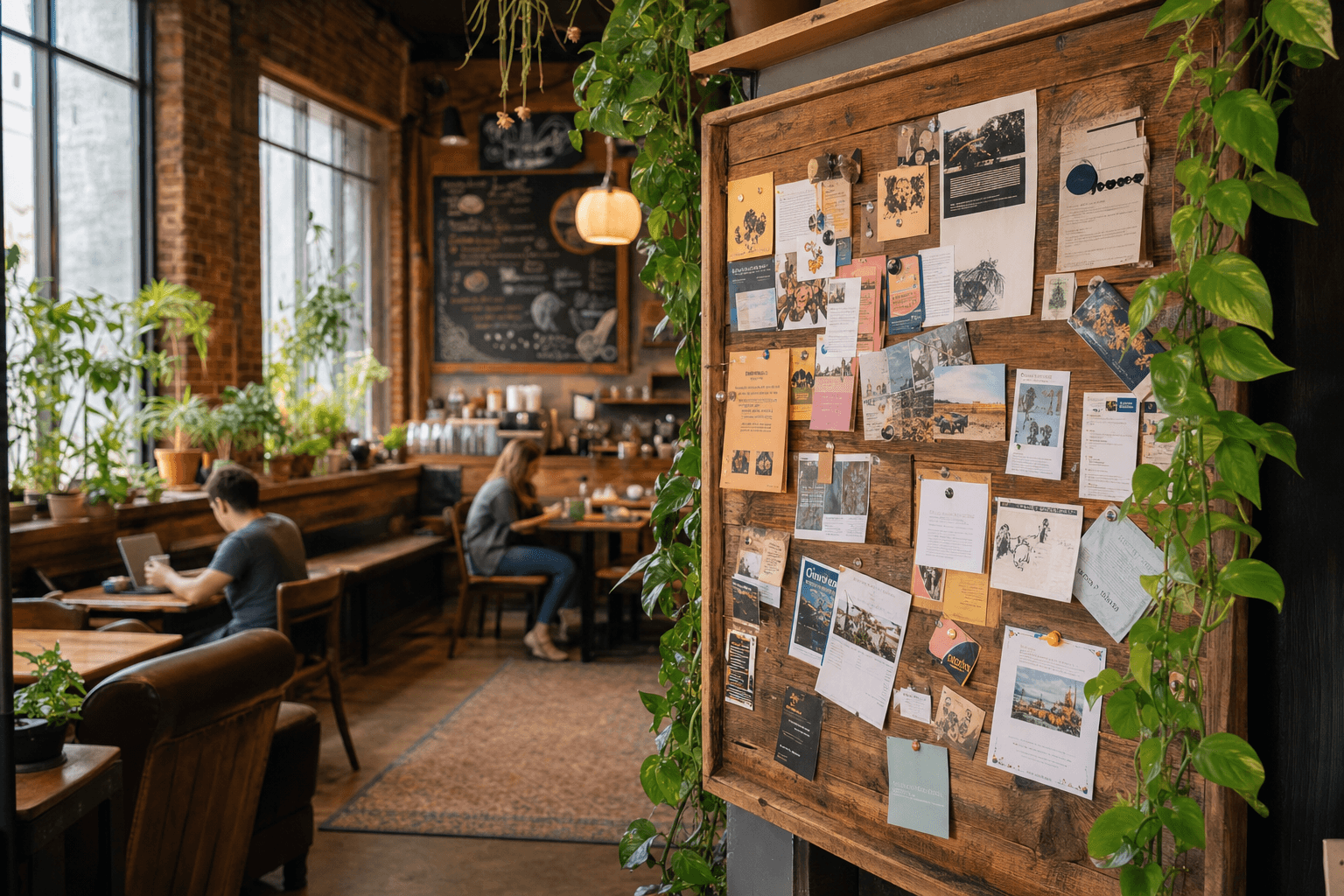
Digital marketing gets all the attention, but the cafes with the longest lines on a Saturday morning usually have something else going on: they're woven into the fabric of their neighborhood. People talk about them at the school gate. Their flyers are on the yoga studio wall. Their owner knows the name of the bookshop around the corner.
That kind of presence doesn't come from Instagram alone. It comes from deliberate, consistent offline marketing—the kind that chains can't easily replicate because it requires genuine local relationships. This guide covers the tactics that independent cafe owners are still using to great effect, along with practical advice on how to execute each one without burning time or money you don't have.
Community Boards: The Underrated Asset in Your Cafe
A well-managed community board isn't just a nice decoration—it's a reason for people to linger, return, and tell others about your space. It signals that you're a hub, not just a transaction point.
Set it up with intention
Pick a visible, high-traffic wall near the entrance or the order counter. Invest in a proper corkboard or magnetic board—something that looks deliberate rather than neglected. Frame it, label it clearly ("Community Notices," "Local Events," "Neighbors"), and keep it curated. A messy board communicates neglect; a tidy one communicates care.
Curate, don't just collect
Accept flyers and cards from local businesses, community events, tutors, dog walkers, musicians, and neighborhood groups—but review the board weekly. Remove outdated notices. Arrange items by category if volume warrants it. The goal is a board that people actually read, not a paper graveyard.
Make it reciprocal
When you post someone else's flyer, let them know. Send a quick message: "Hey, we put your event notice on our community board—hope it helps." That small gesture starts a relationship. Many of those people will return the favor by recommending your cafe, stocking your loyalty cards, or mentioning you to their own customers.
Use it to promote yourself too
Reserve one corner for your own promotions: your weekly specials, upcoming in-cafe events, or a QR code linking to your digital cafe menu. Customers who pause to read the board are already engaged—give them something that deepens their connection to you.
Local Business Partnerships That Actually Drive Foot Traffic
The best local partnerships are ones where both businesses genuinely benefit and where the overlap in customer base is obvious. Think about who your customers are and where else they spend money in the neighborhood.
Complementary businesses to target first
- Bookshops and stationery stores: Readers drink coffee. Offer a joint promotion—buy a book, get a discount on your next latte. Stock each other's loyalty cards.
- Yoga studios, gyms, and pilates spaces: Post-workout coffee is a ritual. Offer a small discount to members who show their studio card. Many studios will mention you in their newsletters or on their boards.
- Florists: Beautiful spaces attract people. A florist who supplies your weekly flower arrangement gets exposure; you get ambiance and a story to tell.
- Barbers and hair salons: Waiting time is dead time. Offer to leave a stack of your loyalty cards at the reception desk; they may do the same.
- Local boutiques and gift shops: Gift card cross-promotions work well here—buy a gift card at the boutique, get a free coffee voucher, and vice versa.
How to approach a potential partner
Walk in during a quiet hour. Introduce yourself as the owner of the cafe down the street, not as someone with a marketing pitch. Ask about their business first. Then propose something specific and low-effort: "Would you be open to leaving each other's cards at the counter for a month and seeing if it moves the needle?" Low commitment, clear value, easy yes.
Formalize what works, drop what doesn't
After 4–6 weeks, check in. Did either of you see new customers? If yes, build on it—co-host an event, create a joint social post, or design a shared loyalty perk. If not, no hard feelings. Move on to the next potential partner.
In-Cafe Events That Build Community and Buzz
Events turn a cafe into a destination. They give regulars a reason to bring friends, give newcomers a low-stakes reason to visit, and give you a story worth telling. You don't need a big venue or a big budget.
Low-effort, high-return event formats
- Open mic nights or acoustic sets: Partner with a local music school or college to find performers. They get a venue; you get atmosphere and an audience.
- Book clubs: Host a monthly meeting for an existing local book club, or start a simple one yourself. Regulars who share this interest will bond over it—and bond with your cafe.
- Skill-share mornings: Invite a local expert—a nutritionist, a watercolor artist, a language tutor—to run a 45-minute session on a slow weekday morning. Charge a small fee or make it free with a minimum spend.
- Coffee cuppings: If you take your beans seriously, a monthly tasting event is a natural fit. It positions you as an authority and attracts curious regulars who become enthusiastic word-of-mouth advocates.
- Kids' story time: If you're near a residential area with young families, a Saturday morning story time draws parents who will return on their own throughout the week.
Promote events offline first
Your community board, a small A-frame sign outside, and table cards are your primary event promotion channels. Flyers in partner businesses' windows extend your reach. Word of mouth from regulars does the rest. Social media is a supplement, not the strategy.
Printed Materials That Earn Their Keep
Most printed marketing is wasteful. But a few formats consistently deliver a return for cafes.
Loyalty cards
A simple stamp card—buy nine coffees, get the tenth free—remains one of the highest-ROI marketing tools a cafe can use. The physical card keeps your brand in someone's wallet. It creates a psychological commitment to return. And unlike app-based loyalty programs, there's no barrier to entry. Pair your stamp card with a QR code on the back that links to your digital menu so customers can browse before they order.
Table cards and tent cards
A small folded card on each table can do a lot of quiet selling: promote a seasonal special, invite customers to follow you, explain your coffee sourcing, or direct them to your online ordering page. Change them seasonally so regulars notice something new.
Takeaway bag inserts
If you do any takeaway business, a small card in the bag—a discount for the next visit, a note about your weekend specials, or a referral offer ("Bring a friend and both get a free pastry")—reaches people at a moment when they're already happy with you.
Neighborhood Outreach: Going to Where Your Customers Are
You don't have to wait for people to find you. Some of the most effective offline marketing happens when you take your cafe into the neighborhood.
Introduce yourself to nearby offices and coworking spaces
Walk in with a box of pastries and a stack of loyalty cards. Introduce yourself, leave a QR code menu card so they can browse your offerings, and mention that you do group orders or catering. Office workers are repeat customers by definition—they're in the neighborhood every weekday.
Sponsor local events and causes
You don't need a large sponsorship budget. Donating a coffee voucher to a school raffle, providing coffee for a local charity event, or sponsoring the refreshments at a neighborhood association meeting puts your name in front of engaged locals who care about their community—exactly the people most likely to become loyal regulars.
Farmers markets and pop-ups
If there's a local farmers market, weekend market, or street fair, consider taking a small stand. Even if you only sell takeaway cups, you're meeting hundreds of local residents who may not have discovered your cafe yet. A simple sign with your address and a QR code linking to your menu is all you need.
Word-of-Mouth Engineering: Making It Easy for Regulars to Spread the Word
Word of mouth is the most powerful marketing channel a local cafe has—but it doesn't happen automatically. You have to create conditions that make it easy and natural.
Give people something worth talking about
A genuinely surprising pastry. A barista who remembers your order. A community board that has something new on it every week. A bathroom that's unexpectedly beautiful. These are the details that make people say "you have to go to this place" to their friends. Identify two or three things in your cafe that could become signature talking points and invest in them deliberately.
Ask directly—at the right moment
When a customer compliments your coffee, say: "That means a lot—if you ever mention us to friends, it genuinely makes a difference for us." That's not pushy; it's honest. Most people are happy to refer a business they like when they're reminded that it matters.
Referral cards
A simple referral card—"Give this to a friend, they get a free coffee on their first visit"—costs almost nothing and turns your existing customers into active recruiters. Track redemptions to understand how much new business it's generating.
Tying Offline Marketing to Your Digital Presence
Offline and online marketing work best when they reinforce each other. Every offline touchpoint is an opportunity to deepen the digital relationship—and vice versa.
Put a QR code on your loyalty card, your table cards, your community board corner, and your takeaway bags. Link them to your online ordering page or your digital menu so that curious customers can explore your full offering the moment they're interested. A customer who scans your QR code at home at 9pm and sees your full menu is far more likely to come in the next morning than one who only saw your sandwich board in passing.
Consistency matters here. Make sure your printed materials, your community board presence, and your digital menu all tell the same story about who you are. If your cafe has a warm, neighborhood-focused personality, every touchpoint—physical and digital—should reflect that.
Frequently Asked Questions
How much should I budget for offline marketing as an independent cafe?
Most of the tactics in this article cost very little—loyalty cards, flyers, and community board management can be done for under $100 a month. The bigger investment is time: building relationships with local businesses, curating your board, and showing up at neighborhood events. Treat it as a regular part of your week rather than a one-off campaign.
How do I know if offline marketing is actually working?
Ask new customers how they heard about you—at the register, on a simple card, or via a follow-up QR code survey. Track loyalty card redemptions and referral card usage. Monitor foot traffic trends after specific initiatives like a partnership launch or a sponsored event. You won't get perfect attribution, but you'll get enough signal to know what's worth continuing.
What's the best way to approach a local business about a partnership?
In person, during a quiet hour, with a specific and low-effort proposal. Don't pitch a grand co-marketing strategy—suggest something simple like swapping loyalty cards or putting each other's flyers up for a month. Make it easy to say yes, then build from there if it works.
Are community boards still relevant when everyone is on their phone?
Yes—precisely because everyone is on their phone. A physical board is a novelty that draws attention. More importantly, the people who stop to read it are your most engaged potential customers: they're in your space, they're curious, and they're open to discovering something local. That's a valuable audience.
How do I make sure my offline marketing and my digital menu stay consistent?
Use a platform that makes it easy to update your menu in real time, so what's on your printed table card and what's on your digital menu always match. Outdated information—whether on a flyer or a screen—erodes trust. A simple digital menu that you can update in minutes from your phone is the easiest way to keep everything in sync.
Offline marketing isn't a fallback for cafes that haven't figured out social media—it's a competitive advantage that chains genuinely can't replicate at scale. The relationships, the presence, and the trust you build in your neighborhood are yours alone. If you're ready to tie your offline efforts to a polished digital presence, MenuHoster makes it easy to create a professional digital menu and online ordering page in under an hour—no tech skills required. See our pricing and get started today.
MenuHoster Team
Helping restaurants go digital