How to Build a Morning Ritual Around Your Cafe Brand (and Why It Beats Discounts)
Updated:
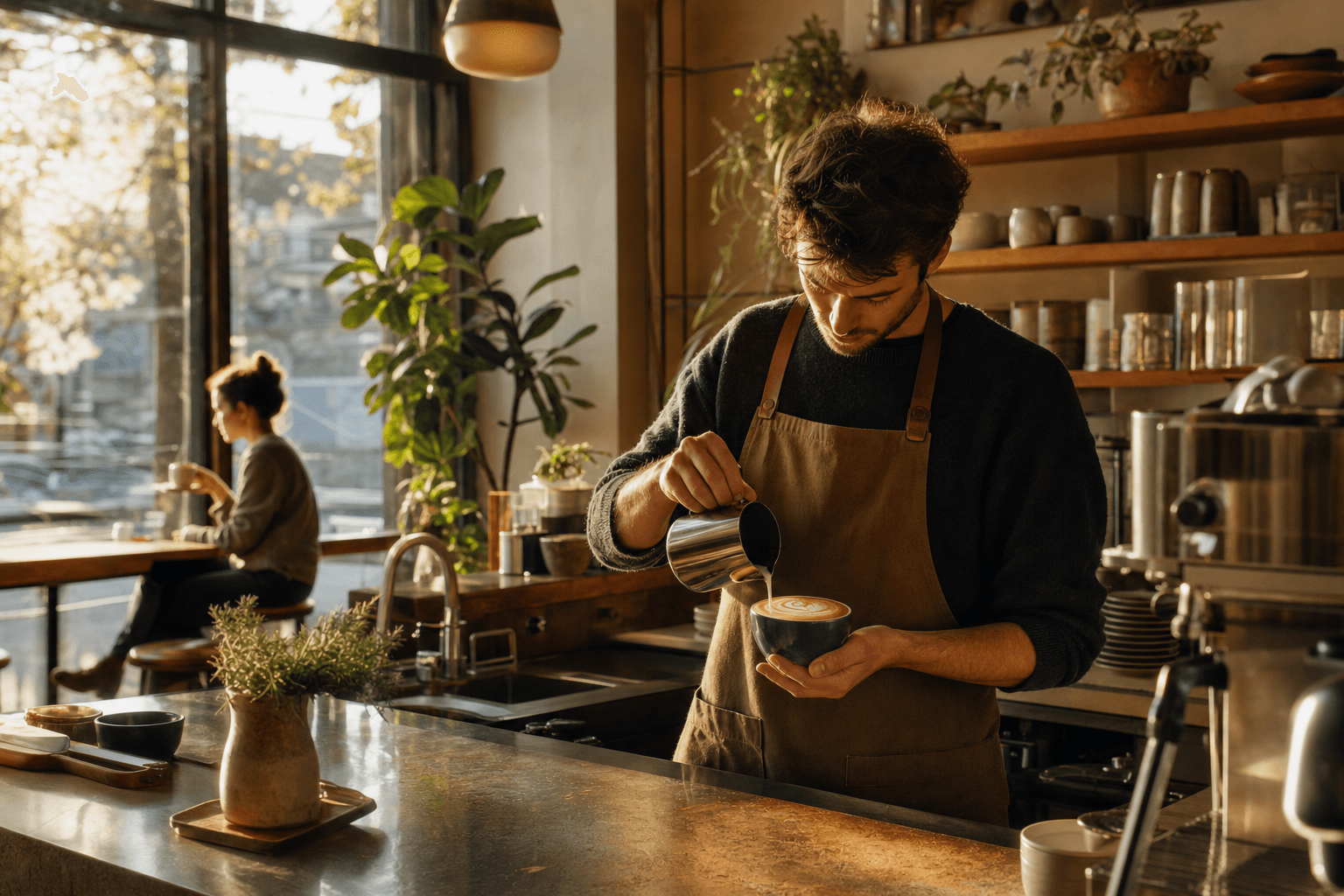
Starbucks has a loyalty app, a massive ad budget, and a drive-through on every corner. You have something they can never replicate: a specific place, a specific feeling, and the ability to actually know your customers by name. The question is whether you're deliberately building on that advantage — or hoping people will just keep showing up.
Discounts are the lazy answer to customer retention. They work in the short term, but they attract deal-hunters rather than devotees, and they train people to wait for the next offer before they come back. The better play — the one that actually compounds over time — is to make your cafe part of someone's morning ritual. When visiting you becomes a habit, price becomes almost irrelevant.
Here's how to engineer that habit intentionally.
Understand the Psychology of Morning Habits
Habits form through repetition in a consistent context. The morning is the single most habit-dense part of the day — people follow the same sequence of actions almost automatically. If your cafe can insert itself into that sequence, you stop competing on price or convenience and start competing on identity.
A regular who stops at your cafe every weekday morning isn't making a rational purchasing decision each time. They're executing a habit. The coffee is part of how they start their day, signal the transition from home to work, and feel like themselves. That's an emotional relationship, not a transactional one.
Chains understand this, which is why they invest heavily in consistency and convenience. But consistency doesn't have to mean sameness. Your version of consistency is a familiar face, a drink remembered, a vibe that feels like theirs. That's actually harder to replicate than a mobile app.
Design the Ritual Touchpoints Deliberately
A morning ritual isn't just about good coffee. It's a sequence of small sensory and social cues that together create a feeling. Your job is to design those cues on purpose rather than leaving them to chance.
The Arrival Experience
What does it feel like to walk in at 7:45 on a Tuesday? Is there music playing? Is it the same tempo as last week? Is the chalkboard updated? Does the person at the bar make eye contact and say something? Every one of these details either reinforces or disrupts the ritual feeling. Audit your opening routine the way a theater director would audit a stage set. Nothing should be accidental.
The Order Moment
Regulars want to feel known. Train your staff to remember orders — even just for the top 20 most frequent faces. A simple notebook or a note in your POS system goes a long way. When someone walks in and you say "the usual?" before they open their mouth, you've just made their morning. That moment costs you nothing and is worth more than any loyalty punch card.
The Wait and the Handoff
The 90 seconds between ordering and receiving a drink is underused real estate. This is when people look around, check their phone, or stare at your menu. Make sure what they see during that window reinforces your brand story — a small chalkboard note about your current single-origin bean, a framed photo of the farm, a quote from a regular. Small details that say: this place has a point of view.
The Physical Object
The cup matters. A drink served in a well-chosen ceramic mug or a branded paper cup with a thoughtful design becomes a small artifact of the ritual. People photograph their morning coffee constantly — that's free brand impressions if your vessel is worth photographing. If you're still using generic white cups with no identity, fix that before you spend a dollar on advertising.
Build a Menu That Anchors the Ritual
Your menu is a ritual tool, not just a product list. The items people order every morning become part of their identity. "I'm a flat white person" is a real self-concept that people hold. Your job is to give people menu anchors they can claim as their own.
This means a few things practically:
- Keep your core menu stable. Rotating everything constantly is exciting for food writers and exhausting for regulars. Your ritual customers want to know their drink will be there tomorrow. Save the experimentation for seasonal specials that layer on top of a reliable foundation.
- Name things in ways that stick. A drink called "The Commuter" or "The Slow Morning" does more ritual-building work than "Oat Milk Latte." Names create personality and give people something to say when they order.
- Make the menu easy to scan quickly. Regulars don't need to read the menu — but new customers do, and you want them to become regulars fast. A clean, well-organized cafe menu that's easy to navigate on a phone screen is essential, especially if people are checking it before they leave the house.
A digital menu also lets you update seasonal items, add limited-time morning specials, or feature the day's roast without reprinting anything — which means you can keep things fresh without disrupting the core ritual your regulars rely on.
Use Consistency as Your Competitive Moat
The biggest mistake independent cafes make when trying to compete with chains is trying to out-discount or out-convenience them. You won't win on price or drive-through speed. But you can win on consistency of experience — which is different from consistency of product.
Chains are consistent in a mechanical, interchangeable way. Your consistency should feel human and intentional. That means:
- Same opening music vibe every morning — not the same playlist, but the same energy. Calm and warm at 7am, slightly more upbeat by 9am.
- Same staff on the same shifts where possible. Nothing breaks a ritual faster than a completely unfamiliar face every day. If you have turnover, invest in onboarding that teaches new staff how regulars like to be greeted.
- Same quality standard, every single day. One bad coffee can crack a habit. The ritual is built on trust that the experience will deliver. Quality control isn't just about the product — it's about protecting the emotional contract with your regulars.
Create Ritual Signals Beyond the Coffee
The most powerful morning rituals aren't just about caffeine — they're about transition. Your cafe can be the place where someone mentally shifts from home mode to work mode. You can design for that transition explicitly.
The Daily Special as a Talking Point
A rotating daily special — a different pastry, a featured brew, a seasonal drink — gives regulars a reason to look forward to each morning specifically. It also gives them something to talk about with the barista, which deepens the social bond. Keep it simple: one item per day, clearly communicated. A QR code on the table linking to your updated menu makes this frictionless. If you're not already using a QR code menu, it's one of the easiest ways to keep your daily specials visible without a new chalkboard every morning.
The "Third Place" Atmosphere
Sociologist Ray Oldenburg coined the term "third place" for the social spaces between home and work where community forms. Cafes are the original third place. Lean into it. This means comfortable seating, reliable Wi-Fi, good lighting, and an atmosphere that says: you can stay a while. Regulars who linger in the morning become ambassadors. They bring colleagues, recommend you to neighbors, and post about you unprompted.
Seasonal Anchors
Seasons are natural ritual-refreshers. A pumpkin spice drink in October isn't a gimmick — it's a seasonal cue that signals the passage of time and gives the ritual a new chapter. Build a small seasonal rotation into your annual calendar. Announce it to your regulars before it launches. Make them feel like insiders. This creates anticipation, which is one of the most powerful drivers of habitual behavior.
Why This Beats Discounts: The Economics
Let's be direct about the numbers. A 20% discount on a $5 latte is a dollar off. If that customer comes in five days a week, you're giving away $260 a year per customer. And what have you bought? A customer who comes because it's cheap — and who will leave the moment someone offers a better deal.
A ritual customer, by contrast, is largely price-insensitive within reason. They're not comparing your latte price to the Dunkin' down the street every morning. They're executing a habit. Research on habitual behavior consistently shows that once a behavior is well-established, it becomes resistant to both price increases and competitive alternatives.
More concretely: if you raise your latte price by 50 cents and communicate it honestly — "our bean costs went up, we had to adjust" — your ritual regulars will barely flinch. Your discount-hunters will disappear. That's actually a good outcome. You've traded low-margin price-sensitive customers for high-margin loyal ones.
The investment in ritual-building — better cups, staff training on names, a well-designed digital menu, a thoughtful atmosphere — is a one-time or low-recurring cost. The discount is a permanent margin drain. The math isn't close.
Digital Tools That Support the Ritual
Building a morning ritual is mostly an in-person endeavor, but digital touchpoints matter too — especially for capturing new customers and keeping regulars engaged between visits.
- A clean, mobile-friendly menu page. Many people check the menu before they leave the house. If your menu is a PDF or a blurry photo on Facebook, you're losing people before they walk in the door. A proper hosted menu page that loads fast on a phone is table stakes in 2025.
- QR codes at every table and on your takeaway cups. A QR code on a cup that links to your menu, your seasonal specials, or a simple "join our list" page is a passive marketing tool that works every morning without any staff effort.
- A simple email or SMS list. You don't need a full loyalty app. A simple list of regulars who've opted in to hear about new seasonal drinks, special events, or early-bird offers is enormously valuable. Text them when the fall menu drops. Email them when you're hosting a coffee tasting. Keep it infrequent and worth opening.
- Online ordering for regulars who are running late. Offering online ordering for pickup means a regular can order on their way out the door and grab their drink without waiting. This removes friction from the ritual on busy mornings and keeps them coming to you instead of a chain app.
How to Start This Week
You don't need to overhaul everything at once. Here's a practical sequence:
- Audit your opening 30 minutes. Walk in as a customer would. What's the first thing you see, hear, and smell? Is it intentional? Write down three things you'd change.
- Pick your top 10 regulars and make sure every staff member knows their names and orders. Start a simple shared note. This is free and immediate.
- Review your menu for ritual anchors. Do you have 2-3 items that could become "signature" morning drinks? Are they named memorably? Is your menu easy to scan in under 30 seconds?
- Set up a QR code menu if you haven't already. It should link to a clean, fast-loading page that shows your current menu and any daily specials. Update it when things change — not monthly, but in real time.
- Plan one seasonal anchor for the next 90 days. One new drink, one new pastry, announced to your regulars two weeks before it launches. That's it. That's a ritual refresh.
Frequently Asked Questions
Won't customers leave if I stop offering discounts?
Some will — and those are likely your least loyal customers. Discounts attract price-sensitive shoppers who have no particular attachment to your brand. Customers who visit because of the experience, the atmosphere, and the habit rarely leave over a small price difference. Focus your energy on deepening loyalty, not subsidizing visits.
How long does it take to build a morning ritual habit with a customer?
Habit research suggests it takes anywhere from 21 to 66 days of consistent repetition for a behavior to become automatic. For a cafe, this means your first priority with any new customer is getting them back 3-4 times in the first two weeks. A great first visit plus a memorable follow-up experience is worth more than any discount coupon in driving that early repetition.
What if my cafe is too small to offer a "third place" atmosphere?
Third place doesn't require size — it requires intention. Even a tiny 8-table cafe can feel like a sanctuary if the music, lighting, and staff attitude are right. In fact, small spaces often feel more intimate and personal, which is an advantage. Focus on the quality of the welcome and the consistency of the experience over square footage.
How do I compete with chain loyalty apps without building my own?
You don't need an app. A simple punch card, a text list, or even just staff who remember orders creates more genuine loyalty than a points system. The chain app wins on convenience and gamification — you win on human connection. Lean into what you actually have. A handwritten note on a takeaway bag occasionally does more for loyalty than 50 app points.
Should I promote my morning ritual on social media?
Yes, but show don't tell. Post the steam rising from the espresso machine at 6:30am. Show the chalkboard being written. Feature a regular (with permission). Let people feel the ritual before they've experienced it in person. Avoid generic "come visit us!" posts and focus on content that makes someone feel the specific morning vibe of your cafe.
Ready to give your morning regulars a seamless, beautiful experience from the moment they scan your menu to the moment they order? Browse MenuHoster's cafe templates and get your digital menu live in minutes — no design skills needed. It's one of the easiest ways to make your cafe feel as polished as any chain, while keeping every bit of what makes you distinctly yours. See our pricing and start building the digital side of your morning ritual today.
MenuHoster Team
Helping restaurants go digital