How to Create a Loyalty Punch Card That Works in a Digital World
Updated:
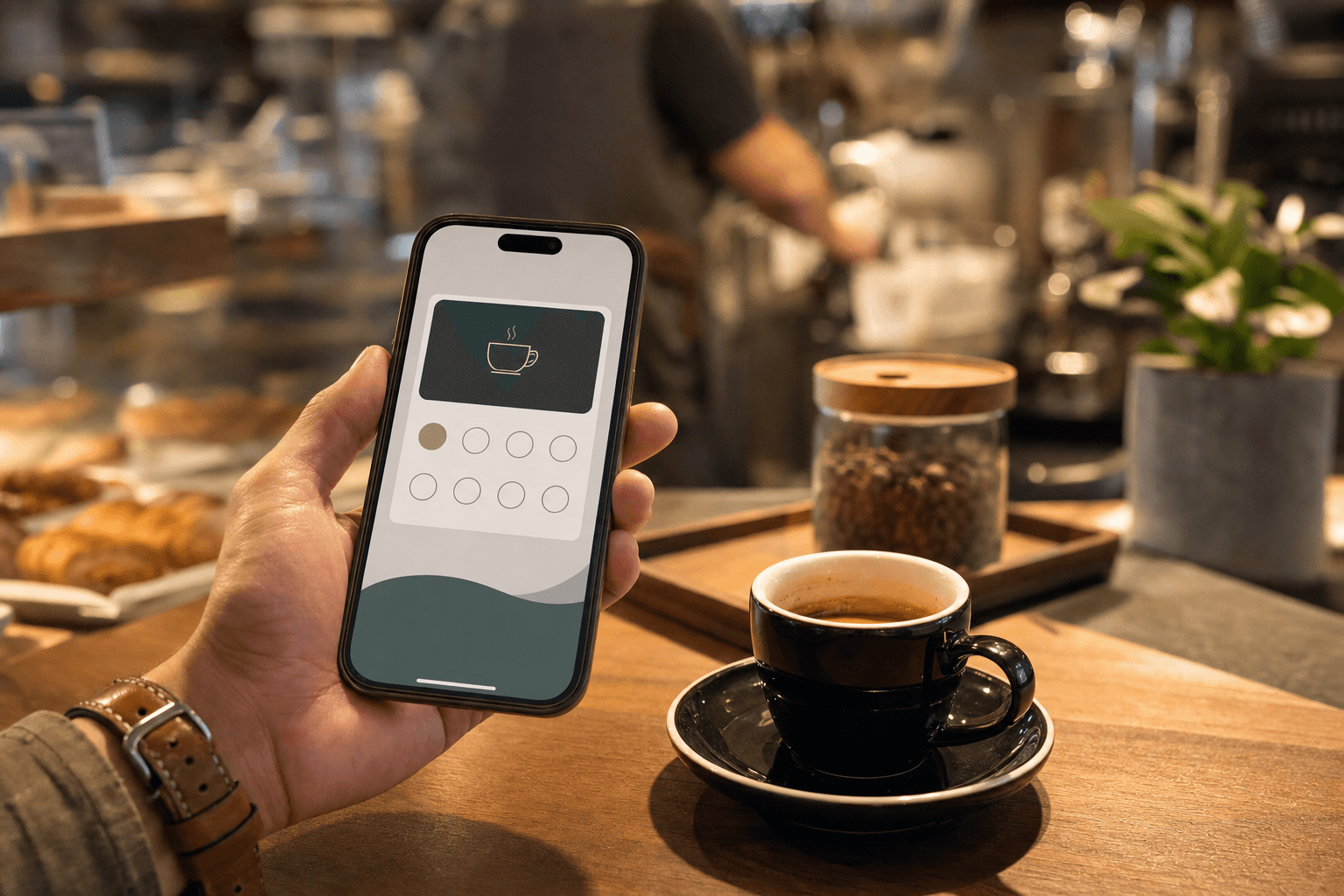
The paper punch card has been a staple of independent restaurants for decades. Buy nine coffees, get the tenth free. Stamp, stamp, stamp. Simple, cheap, and surprisingly effective — until a customer loses the card, or worse, shows up with a suspiciously full one they filled in themselves with a ballpoint pen.
The concept behind the punch card is still rock solid. Repeat visits are the lifeblood of independent restaurants, and a tangible reward for loyalty taps into a basic human drive to complete things. But the paper format has real limitations in a world where customers carry smartphones instead of wallets stuffed with loyalty cards.
This guide walks you through how to take everything that makes a punch card work — simplicity, clear rewards, low friction — and translate it into a digital format that fits how your customers actually behave today.
Why the Punch Card Concept Still Works
Before diving into digital tools, it's worth understanding why punch cards drive behavior. The psychology is well-documented: people are more motivated to complete something when they feel they've already made progress. A card with two punches already on it feels more urgent to complete than a blank one — even if the total required is the same. This is called the "endowed progress effect," and it's a free lever you can pull just by designing your program correctly.
Punch cards also work because they're low commitment for the customer. There's no app to download, no account to create, no password to forget. That low barrier to entry is something you need to preserve when you go digital. The moment your loyalty program requires three steps to sign up, you've already lost half your potential participants.
The goal of going digital isn't to make your program more complicated. It's to make it more durable, more trackable, and more connected to the rest of your marketing.
The Real Problems With Paper Punch Cards
If paper punch cards are so psychologically effective, why upgrade at all? A few concrete reasons:
- You collect zero data. A paper card tells you nothing about who your loyal customers are, how often they visit, or what they order. You can't follow up with them, you can't send them a birthday offer, and you can't identify who's about to churn.
- They're easy to fake. Pen fraud is real. Customers share cards. Staff accidentally double-stamp. You have no audit trail.
- Cards get lost. When a customer loses their half-punched card, the progress they made disappears — and so does some of their goodwill toward your business.
- You can't update the offer remotely. If you want to change the reward, you're reprinting cards and retiring old ones.
- There's no reminder mechanism. A paper card sitting in a drawer doesn't nudge anyone to come back.
Digital loyalty solves all of these problems without requiring you to build a mobile app or spend thousands on enterprise software.
Choosing the Right Digital Format
When most people hear "digital loyalty program," they picture a dedicated app. Ignore that instinct. For an independent restaurant on a tight budget, you have three practical options that don't require a development team:
1. Digital Stamp Cards via a Third-Party Platform
Tools like Stamp Me, Loopy Loyalty, Punchh (for larger independents), or even Square Loyalty let you create a digital punch card that lives on the customer's phone — either in a web browser or in Apple/Google Wallet. Customers scan a QR code to "stamp" their card after each visit or purchase. These platforms typically charge $20–$100/month depending on features.
2. QR Code + Simple Form (DIY Approach)
If you want the lowest-cost option, you can approximate a loyalty program using a QR code that links to a simple Google Form or a landing page. Customers scan the code after each visit, submit their name and email, and you track completions in a spreadsheet. It's manual, but it costs almost nothing and keeps you in full control of the data.
3. Email or SMS-Based Punch Cards
Collect a customer's email or phone number on their first visit and track their visits through your email platform (Mailchimp, Klaviyo) or an SMS tool. Each visit earns a "stamp" you track manually or through a simple tagging system. When they hit the threshold, you send the reward automatically. This approach doubles as a marketing list builder — which is its biggest advantage.
The right choice depends on your volume and your goals. If you're doing 200+ covers a day, a dedicated platform is worth the cost. If you're a 40-seat neighborhood spot, the DIY or email approach will serve you just fine.
Designing the Reward Structure
The most common mistake restaurant owners make with loyalty programs is either making the reward too hard to earn or too cheap to care about. Both kill participation.
Set the Right Threshold
Think about your average customer's visit frequency. If most regulars come in twice a month, a 10-visit punch card takes five months to complete. That's too long — motivation fades. A 6-visit card takes three months, which is much more achievable. As a rule of thumb, aim for a threshold your average regular can hit in 60–90 days.
Make the Reward Meaningful
A free item worth $2 on a card that requires $80 in spending to complete is not a loyalty program — it's a rounding error. A good loyalty reward should feel like a genuine thank-you. Free entrée, free dessert, $10 off, a complimentary drink — something with perceived value above $8–$10. The cost to you in food is usually 25–35% of that, making it very affordable relative to the retention value.
Use the Endowed Progress Effect
Give every new loyalty member a head start. If your card requires 8 stamps, enroll them with 2 already filled in. They now need 6 more, not 8 — but psychologically, they feel like they're already on their way. This single design choice measurably increases completion rates.
Consider Tiered Rewards
Instead of one reward at the finish line, add a smaller milestone reward halfway through. A free coffee at stamp 4 and a free entrée at stamp 8, for example. This keeps customers engaged through the middle of the program, where dropout rates are highest.
Collecting Customer Data the Right Way
The biggest upgrade digital loyalty gives you over paper is data. But only if you set it up to capture the right information from the start.
At minimum, collect:
- First name — for personalized communication
- Email address or phone number — your direct line to the customer
- Opt-in consent — required by law in most jurisdictions for marketing messages
Optional but valuable:
- Birthday month (for birthday offers)
- Preferred visit time (lunch vs. dinner)
- Dietary preferences
Don't ask for everything at once. A short enrollment form gets completed; a long one gets abandoned. Start with name and email, and collect additional data over time through follow-up messages.
Once you have a customer's email, you can connect your loyalty program to your broader marketing. Send a re-engagement email to anyone who hasn't visited in 45 days. Announce a new seasonal menu to your loyalty list before posting it publicly. Invite loyalty members to a soft-opening event for a new menu. This is where having a well-maintained digital menu pays dividends — you can link directly to it in every email you send.
Integrating Loyalty With Your QR Code Menu
If you're already using a QR code menu at your tables, you have a natural touchpoint to enroll customers in your loyalty program. Add a short note at the bottom of your menu — "Join our loyalty program and earn a free [item] after 6 visits" — with a QR code linking directly to your enrollment form.
This works because customers are already on their phones when they scan your menu. The friction of pulling out a phone has already been overcome. A second scan to join a loyalty program is a much smaller ask at that moment than it would be at any other point in the meal.
You can also use the QR code on table tents, receipts, takeout bags, and your front door — anywhere a customer has a natural pause and their phone in hand. Each placement is a low-cost enrollment opportunity that compounds over time.
Running the Program Day to Day
A loyalty program only works if your staff actually promotes it. That sounds obvious, but it's where most programs quietly die. Here's how to keep it alive:
Train Staff to Mention It at the Right Moment
The best time to mention the loyalty program is when a customer is paying — not when they're waiting for food. A simple script: "Are you part of our loyalty program? You'd be two visits away from a free [item]." That specificity ("two visits away") is far more effective than a generic "we have a loyalty program."
Make Redemption Frictionless
When a customer earns their reward, make it easy to redeem. Don't require them to print a coupon or remember a code. A text or email with a simple redemption link, or a note in your system that staff can verify in seconds, is all you need. Complicated redemption destroys goodwill at the exact moment you're trying to create it.
Review Your Numbers Monthly
Check enrollment rate, active participants, and redemption rate every month. If enrollment is low, your sign-up friction is too high or staff aren't mentioning it. If redemption is low, your threshold may be too difficult or customers are disengaging mid-program. These are fixable problems, but only if you're looking at the data.
Loyalty and Online Ordering
If you take online orders, your loyalty program should extend to those customers too. Online ordering customers are often your most valuable — they've already committed to your brand enough to order from home. Ignoring them in your loyalty program is a missed opportunity.
The simplest approach: include a loyalty enrollment link in every order confirmation email. "Thanks for your order! Join our loyalty program to earn rewards on every visit and every order." One sentence, one link, and you're converting one-time online customers into enrolled loyalty members.
If you use a platform that supports commission-free online ordering, you keep more margin on each order — which makes it much easier to afford meaningful loyalty rewards without eating into your bottom line.
Common Mistakes to Avoid
- Launching without a staff briefing. If your team doesn't understand or believe in the program, they won't promote it. Do a five-minute walkthrough before launch.
- Setting the reward too far out. A 15-punch card for a casual lunch spot is a multi-year commitment for most customers. Keep it achievable.
- Forgetting to communicate with enrolled members. Enrolling someone and never emailing them is worse than not having a program. Set up at least a welcome message and a reward notification.
- Not promoting the program on your digital channels. Your Instagram bio, your Google Business Profile, your website — all of these should mention that you have a loyalty program. It's a reason to choose you over the place down the street.
- Overcomplicating the points math. "Earn 1 point per dollar, redeem 100 points for $5 off" requires mental arithmetic at the register. "Visit 6 times, get a free lunch" does not. Simplicity wins every time.
Frequently Asked Questions
Do I need a special app to run a digital loyalty program?
No. Many independent restaurants run effective digital loyalty programs using nothing more than a QR code, a Google Form, and an email list. Dedicated apps add features like push notifications and in-app tracking, but they're not necessary to get started. Start simple, add complexity only if you need it.
How do I prevent customers from gaming a digital loyalty system?
The most common fraud prevention measure is tying each "stamp" to a verified purchase — either through a POS integration, a staff-controlled QR code that changes daily, or a receipt code the customer enters. If you're using a third-party platform, most of them have built-in fraud prevention. For DIY systems, a rotating daily code or a staff-verified scan is usually sufficient.
What's a realistic redemption rate for a restaurant loyalty program?
Industry benchmarks vary, but a well-run independent restaurant loyalty program typically sees 20–40% of enrolled members reach their first reward. That number sounds modest, but those customers are your most valuable — they visit more often and spend more per visit than non-members. Even a 20% completion rate on a 100-person enrolled list means 20 customers who've now visited at least 6–8 times.
Should I offer the loyalty program to both dine-in and takeout customers?
Yes, absolutely. Treating takeout customers as second-class members of your loyalty program is a mistake. They're often regulars who prefer the convenience of ordering ahead. Extend the same rewards to them and make enrollment just as easy — a QR code on your takeout bag is a simple starting point.
How do I re-engage loyalty members who haven't visited in a while?
Set up a simple automated email that triggers when a member hasn't visited in 45–60 days. The message should be direct: "We miss you — here's a bonus stamp to get you back on track." A small gesture like a bonus stamp or a one-time discount is usually enough to bring a lapsed customer back, and it costs far less than acquiring a new one.
Ready to build a stronger foundation for your loyalty program? MenuHoster gives independent restaurants a fast, professional digital menu and online presence — the perfect starting point for enrolling loyalty members right from your QR code. See our pricing and get set up in minutes, no technical skills required.
MenuHoster Team
Helping restaurants go digital