How to Use Menu Section Intros to Tell Your Restaurant's Story While Guests Browse
Updated:
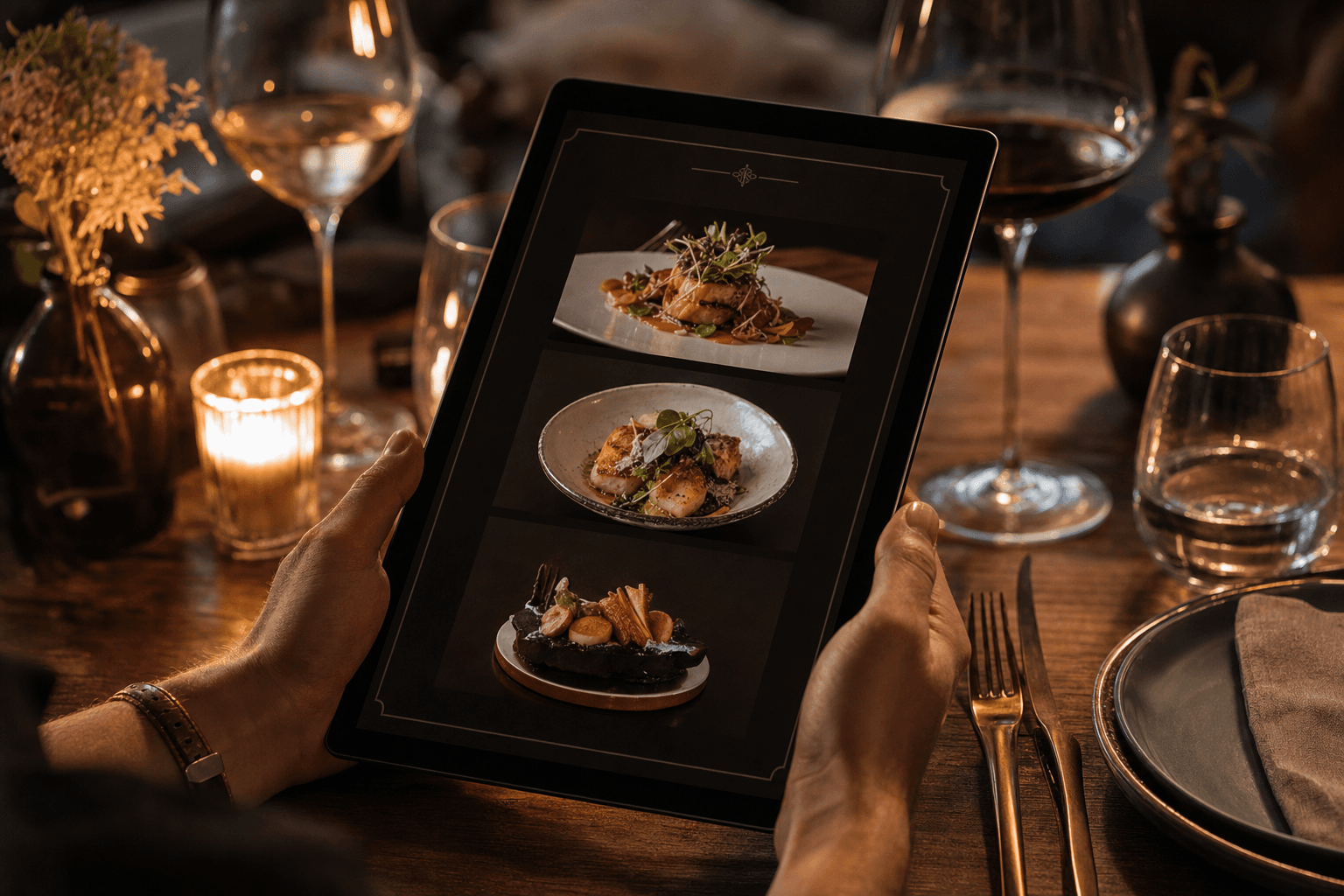
Most restaurant menus are lists. Appetizers. Mains. Desserts. A price. Maybe a short description. Guests scan, point, order. The exchange is transactional, and that's a missed opportunity — especially on a digital menu where you have unlimited space and no printing costs holding you back.
Menu section introductions — those one-to-four sentence blurbs that appear just before the items in a section — are one of the most underused storytelling tools in the restaurant industry. Done well, they give context, build anticipation, signal quality, and quietly communicate who you are as a restaurant. Done poorly (or skipped entirely), they leave guests with nothing but a price comparison.
This guide walks you through exactly how to write section intros that feel natural, serve your brand, and make guests more excited to order — without sounding like a marketing brochure.
Why Section Intros Matter More Than You Think
When a guest opens your menu — whether it's a printed booklet, a QR code on the table, or a page on your website — they're not just looking for food. They're orienting themselves. They want to understand what kind of place this is, what to expect, and whether they're going to enjoy themselves.
A well-crafted section intro does several things simultaneously:
- Sets expectations. "Our pastas are made fresh each morning in-house" tells the guest why the pasta costs what it costs and primes them to appreciate it more.
- Builds trust. Specificity signals authenticity. Vague superlatives ("the best burgers in town!") erode trust. Concrete details earn it.
- Guides ordering behavior. A subtle nudge like "These small plates are designed for sharing — most tables order three or four" reduces decision anxiety and increases average check size.
- Expresses your personality. Tone is a brand signal. A casual taco spot and a fine-dining tasting menu should sound completely different in their section intros — and both should sound like themselves.
On a digital menu, these intros are especially powerful because guests are often browsing alone, without a server to provide context. Your words have to do the work a great floor team does in person.
The Anatomy of a Strong Section Intro
There's no single formula, but effective section intros tend to include a combination of these elements:
1. Origin or sourcing detail
Where does the ingredient come from? Who makes it? How long have you been using them? Even one sentence of sourcing information — "Our beef comes from a single family farm forty miles north of here" — elevates the section and justifies premium pricing without you having to say a word about price.
2. A process or technique note
Guests rarely see what happens in your kitchen. Pulling back the curtain, even briefly, creates appreciation. "Our broths simmer for eighteen hours" or "Every dough is cold-fermented for 48 hours" tells a story of craft that a list of ingredients never could.
3. An ordering suggestion
Help guests navigate. "These are meant to be shared" or "One bowl is a satisfying meal on its own, but the sides were designed to complement" removes friction and subtly increases what people order.
4. A personal or historical note
Where did this section of the menu come from? A grandmother's recipe? A trip to a specific region? A chef's obsession? Personal context creates emotional investment. Guests who feel connected to the story behind a dish are more likely to order it — and to remember it.
5. A tone marker
The intro is a chance to signal how guests should feel in this section. Playful? Reverent? Nostalgic? Adventurous? Match the tone to the section and to your overall brand voice.
Matching Your Voice to Your Brand
Before you write a single word, get clear on your restaurant's voice. Not your personal voice — your brand's voice. These are often similar but not identical.
Ask yourself:
- If my restaurant were a person, how would they talk?
- What words would they never use?
- Are they formal or casual? Earnest or wry? Reverent or irreverent?
A neighborhood diner with regulars who've been coming for twenty years has a different voice than a new omakase counter. Both can use section intros beautifully, but they'll sound nothing alike.
Casual / neighborhood feel: "These are the sandwiches we grew up eating. Nothing fancy — just good bread, good meat, and enough pickles to make your eyes water. We've been making them the same way since 2009."
Elevated / ingredient-forward: "Our small plates rotate with the season and are built around whatever is at peak right now. The kitchen works closely with three local farms; what they harvest on Tuesday is often on the menu by Thursday."
Fun / irreverent: "Look, we know everyone comes for the tacos. We're not offended. The tacos are great. But please, for the love of everything, try the esquites first."
Each of these works because it's consistent with a specific kind of place. The worst section intros are the ones that sound like they were written by a committee trying to please everyone — bland, safe, and forgettable.
Section by Section: What to Say and Where
Different sections of your menu call for different types of storytelling. Here's how to think about the most common ones.
Appetizers / Starters / Small Plates
This is your first impression. Use the intro to set the tone for the meal and communicate your philosophy. Are these designed for sharing? Are they a preview of the kitchen's technique? Are they rooted in a specific culinary tradition? This is also a good place to make an ordering suggestion that increases check size without feeling pushy.
Soups and Salads
These sections often get skipped by guests who assume they're afterthoughts. An intro that highlights seasonal ingredients, house-made dressings, or a specific sourcing story can turn a low-engagement section into a genuine selling point.
Mains / Entrées
This is where the most money changes hands, so the intro should do real work. Focus on craft, sourcing, or a defining philosophy. If your mains are all built around a wood-fired grill, say so. If every protein is sourced within a hundred miles, say so. This is not the place for generic praise — it's the place for specific, credible detail.
Desserts
Dessert intros are often the most fun to write because guests are already in a good mood. This is a place for warmth, nostalgia, and a light touch. If your pastry chef is someone worth mentioning, mention them. If the desserts change weekly, say so — it creates urgency.
Drinks / Cocktails / Wine
Drink section intros are a chance to communicate curation. Why these wines? Why this cocktail list? A bar program with a point of view deserves an intro that explains it. Even something as simple as "We built this list around bottles we actually want to drink" signals intentionality.
Practical Writing Tips
Good section intros are short. Two to four sentences is usually the sweet spot. Here's how to keep them tight and effective:
- Lead with the most interesting thing. Don't warm up. The first sentence should earn the guest's attention immediately.
- Avoid adjective stacking. "Fresh, locally sourced, hand-crafted, artisanal" means nothing. Pick one specific detail and let it do the work.
- Use active verbs. "We ferment our own hot sauce" is stronger than "Our hot sauce is fermented in-house." Small difference, real impact.
- Read it out loud. If it sounds like a press release, rewrite it. It should sound like something a real person would say.
- Don't repeat what the item descriptions already say. The intro sets the stage; the individual dish descriptions handle the details.
Updating Intros for Seasonal Menus
One of the biggest advantages of a digital menu over a printed one is how easy it is to update. Section intros should evolve with your menu — especially if you run seasonal or rotating offerings.
A summer intro for your salads section might reference peak tomatoes and stone fruit. A winter version of the same section might lean into roasted root vegetables and warm grain bowls. These small updates signal to regulars that the menu is alive and that you're paying attention to what's in season. It's a low-effort way to keep the experience feeling fresh.
If you're managing a restaurant menu that changes frequently, building the habit of updating your section intros alongside your item changes takes maybe fifteen extra minutes — and it pays off in guest engagement.
Using Intros on a Digital Menu vs. a Printed One
On a printed menu, space is a constraint. You might have room for one sentence per section, if that. On a digital menu, you have more flexibility — but more flexibility doesn't mean more words. It means you can afford to include intros where a printed menu couldn't, without sacrificing readability.
The key difference with digital menus is context: guests are often browsing on their phones, sometimes before they even arrive. A section intro on a digital menu might be the first thing a potential guest reads when they're deciding whether to visit. That's a very different moment than a guest who's already seated and hungry.
For digital menus, consider writing intros that work in both contexts — they should make sense to someone browsing from home and to someone sitting at the table. Keep them short enough that they don't slow down the ordering process for a hungry guest, but substantive enough to add real value to someone who's exploring.
With a tool like MenuHoster's online menu maker, you can add and edit section descriptions directly in the menu builder — no developer needed, no reprinting required. That makes it practical to actually maintain these intros over time, which is the only way they stay relevant.
Common Mistakes to Avoid
- Writing the same tone for every section. Each section can have a slightly different energy while staying within your brand voice. Desserts can be warmer than mains. Cocktails can be more playful than wine.
- Making claims you can't back up. "The freshest ingredients" is a promise. If a guest has reason to doubt it, the intro works against you. Only say what you can genuinely stand behind.
- Ignoring the intro after launch. A section intro that references "this summer's harvest" in February is worse than no intro at all. Build a reminder into your menu update process.
- Writing for yourself instead of your guest. The intro should answer the guest's implicit question: "Why should I care about this section?" Keep that question in mind with every sentence.
- Overloading with information. The intro is a teaser, not a Wikipedia entry. Save the deep dives for individual dish descriptions or your website's About page.
Putting It Together: A Before and After
Here's what the difference looks like in practice.
Before (no intro):
Small Plates
Bruschetta — $9
Burrata — $14
Beef Carpaccio — $16
After (with intro):
Small Plates
These dishes come out as they're ready — we don't hold them. Most tables start with two or three to share while they settle in. The burrata comes from a small producer in New Jersey we've worked with for six years; we go through it fast, so if it's on the menu tonight, it's worth ordering.
Bruschetta — $9
Burrata — $14
Beef Carpaccio — $16
The second version takes fifteen seconds to read. It tells a sourcing story, gives ordering guidance, creates urgency, and communicates that the kitchen is run by people who care. That's a lot of work for three sentences.
If you're looking for inspiration on structure and layout, MenuHoster's menu templates include dedicated space for section descriptions — so you're not trying to retrofit copy into a design that wasn't built for it.
Frequently Asked Questions
How long should a menu section intro be?
Two to four sentences is the sweet spot for most restaurants. Long enough to add real context, short enough that a hungry guest doesn't feel like they're reading a novel before they can order. If you find yourself going beyond four sentences, cut the least specific one first.
Do I need an intro for every section?
No. Prioritize the sections that benefit most from context — typically your mains, small plates, and any section where guests might need guidance on how to order. A simple "Beverages" section with sodas and water probably doesn't need an intro. A cocktail program built around a specific philosophy does.
What if I'm not a good writer?
Start by talking, not writing. Record yourself explaining a section to a friend — what it is, where it comes from, why you're proud of it. Transcribe that, then edit it down. Authentic and slightly rough is almost always better than polished and generic. You can also ask a staff member who knows the menu well to take a first pass.
Can section intros help with SEO on my digital menu?
Yes, modestly. If your digital menu is publicly accessible (not behind a login or a PDF), search engines can index the text. Well-written section intros that include naturally relevant terms — your cuisine type, neighborhood, key ingredients — can contribute to your overall search presence. It's not a primary SEO strategy, but it's a free benefit of writing good copy.
How often should I update my section intros?
At minimum, whenever your menu changes significantly — new season, new concept, new sourcing relationships. If you're running a highly seasonal menu, consider a quick review every six to eight weeks. On a digital menu, updates take minutes, so there's no reason to let intros go stale.
If you're ready to give your menu the space it deserves to tell your story, try MenuHoster's online menu maker — it's built for independent restaurants that want a professional, easy-to-update digital menu without the tech headache. Your story is worth more than a list of prices. Give it room to breathe.
MenuHoster Team
Helping restaurants go digital