Salon Rebooking Strategies: How to Get Clients to Book Their Next Visit Before They Leave
Updated:
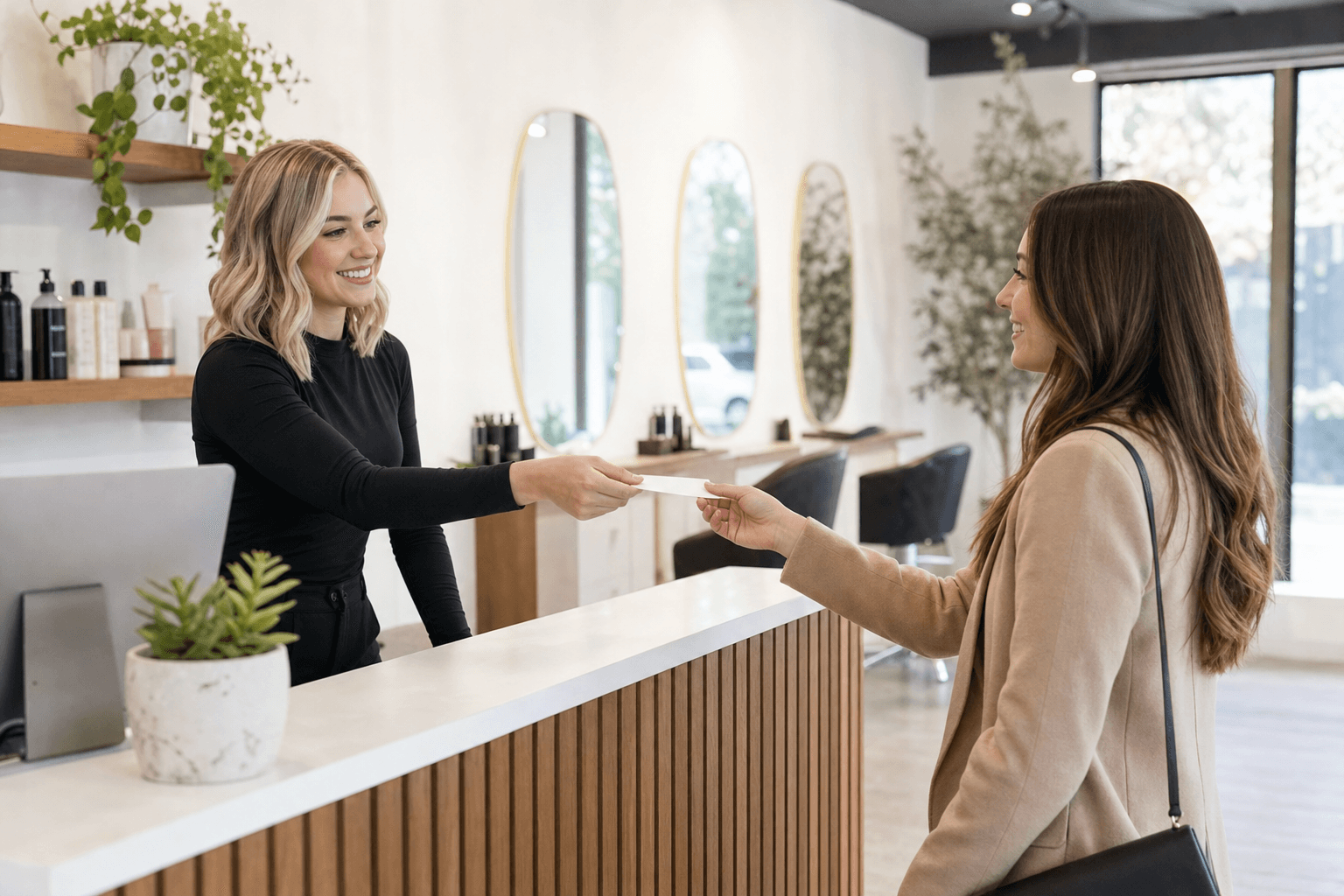
Empty slots on your calendar are lost revenue you can never recover. Yet most salons, barbershops, nail studios, and spas leave rebooking almost entirely to chance — they finish the service, say "see you next time," and hope the client remembers to call. They rarely do.
The good news: rebooking is a skill, not a personality trait. With the right systems, scripts, and tools in place, you can consistently convert a completed appointment into a confirmed future booking before the client even reaches the door. This guide gives you concrete, tested strategies to make that happen.
Why Rebooking Matters More Than New Clients
Acquiring a new client costs anywhere from five to seven times more than retaining an existing one. When you rebook a client at checkout, you are not just filling a slot — you are locking in guaranteed revenue, smoothing out your schedule, and reducing the mental overhead of constantly hunting for new business.
Consider the math. If your average service ticket is $80 and a client visits every eight weeks, that is roughly $520 per year. If you rebook even half your existing clients one appointment sooner — say every six weeks instead of eight — you add meaningful revenue without a single new customer walking through the door.
Beyond money, rebooked clients show up. They cancel less, they spend more on add-ons because they trust you, and they refer friends. Retention is the foundation every other marketing strategy is built on.
Set the Expectation During the Service
Rebooking starts long before you hand someone their coat. The conversation you have while you are working is what makes the ask feel natural rather than pushy.
Plant the seed early
Somewhere in the middle of the appointment — not at the end — mention the timeline for maintenance. For a color client: "This gloss is going to look incredible for about six weeks, and then you'll want to come back in to refresh it before it starts to fade unevenly." For a haircut client: "Your shape is going to stay sharp for about four weeks. After that it'll start to feel a bit heavy."
You are not selling. You are educating. You are telling the client what they need to know to maintain what they just paid for. That framing matters.
Use specific timeframes, not vague language
Avoid saying "come back when you feel like it" or "whenever you're ready." Be specific: "six weeks," "four weeks," "eight weeks." Specificity signals expertise and makes the rebooking conversation at checkout feel like a natural follow-through rather than a sales pitch.
Connect the rebooking to a result they care about
Clients do not care about your schedule. They care about their hair, nails, skin, or brows. Tie the rebooking to the outcome they want to maintain: "If you want to keep this coverage looking seamless, six weeks is your sweet spot." That is a reason to rebook, not just a request.
The Checkout Conversation: What to Say and How to Say It
The moment the service ends and the client moves to checkout is your highest-leverage rebooking window. Most salons waste it by asking a closed question: "Would you like to book again?" That makes it easy to say no.
Use assumptive language
Instead of asking if they want to book, ask when. Compare these two approaches:
- Weak: "Would you like to book your next appointment?"
- Strong: "So we said six weeks — that puts you around [specific date]. Do mornings or afternoons work better for you?"
The second version assumes the rebooking is happening and moves straight to logistics. Most clients will engage with the logistics question rather than stepping back to decline the whole premise.
Offer two specific options, not an open calendar
Open-ended choice creates decision fatigue. Instead of "what day works for you?" try: "I have a Tuesday at 10 AM or a Thursday at 2 PM in six weeks — which one is easier?" Two options are easy to choose between. An entire calendar is overwhelming, and overwhelm leads to "I'll call you."
Handle the "I'll call to book" response
This is the most common deflection. Have a ready response: "Totally — but my Thursdays fill up fast, especially around the holidays. If you lock in now you get first pick of the time. I can always move it if something comes up." You are removing the risk of committing (they can change it) while making the cost of waiting real (they might not get their preferred slot).
Build Systems That Do the Work for You
Scripts help, but systems scale. The salons with the highest rebooking rates do not rely on individual stylists remembering to ask — they build the process into the physical and digital environment of the salon.
Use a digital service menu clients can browse at checkout
Displaying your services clearly — with descriptions, timing, and pricing — gives clients something to engage with while they wait to pay. When they see a treatment they have been curious about, it becomes a natural opener for the stylist or receptionist to say, "That would actually be perfect to add on at your next visit." A well-designed salon menu on a tablet or QR code at the desk doubles as a rebooking prompt.
Create a rebooking prompt card
A small, branded card that reads something like: "Your next recommended visit: _____ weeks. Book before you leave and save your preferred time." The stylist fills in the timeframe at the end of the service and hands it to the client. It is a physical reminder that makes the rebooking conversation feel like part of the service, not an afterthought.
Set up automated reminders
Even clients who do not rebook at checkout can be recaptured. Build an automated text or email sequence: one message at the four-week mark ("Just a heads-up, your color is about six weeks old — want to lock in your next appointment?") and a follow-up at six weeks if they have not booked. Most booking software supports this natively. If yours does not, a simple email tool and a spreadsheet can get you 80% of the way there.
Display your QR code prominently
A QR code at your reception desk or on your mirrors that links directly to your booking page removes friction entirely. Clients who prefer to book themselves — and many do — can pull up your calendar on their phone in seconds. The fewer steps between "I should book" and "I just booked," the higher your conversion rate.
Train Your Team, Not Just Your Front Desk
In many salons, rebooking responsibility falls entirely on the receptionist. That is a mistake. The stylist or technician who just delivered the service has far more influence over the client's decision to rebook than anyone else in the building.
Make rebooking part of the service handoff
When a stylist walks a client to the desk, they should verbally hand off the rebooking: "Sarah, I told Jamie she should come back in six weeks for a toner refresh — can you find her a slot around [date]?" The receptionist is now executing a plan, not pitching a sale. The client hears confirmation from two people, which reinforces the recommendation.
Track rebooking rates by stylist
You cannot improve what you do not measure. Most booking software tracks this. Pull the numbers monthly and share them with your team — not to shame anyone, but to open a conversation about what the high performers are doing differently. Often it comes down to one or two small habits that can be taught.
Role-play the checkout conversation
This feels awkward, but it works. Run a ten-minute practice session at your next team meeting where stylists take turns playing the client and the stylist. The goal is to get the language feeling natural so it does not come out stilted during an actual appointment. Awkward scripts delivered awkwardly kill rebooking rates.
Use Your Digital Presence to Reinforce Rebooking
Your in-salon systems do not operate in a vacuum. Your digital touchpoints — your website, your social media, your online menu — can all reinforce the habit of regular visits.
Show your services and pricing clearly online
Clients who can see your full spa or salon service menu online are more likely to plan ahead. When they know exactly what a treatment costs and how long it takes, there is less friction to booking. Vague pricing or a bare-bones website creates hesitation.
Use your Google Business Profile strategically
Make sure your booking link is front and center on your Google profile. Clients who search for you between appointments should be able to rebook in under a minute. Every extra click is a drop-off point.
Post content that creates a reason to come back
Social media is not just for attracting new clients — it is for reminding existing ones that they are overdue. Before-and-after posts, "how your color looks at week eight" content, or seasonal treatment spotlights all serve as soft rebooking nudges. A client who sees a post about a scalp treatment on a Tuesday might book by Thursday.
Offer a digital service guide at checkout
A QR code that links to your full digital menu — including descriptions of treatments they have not tried yet — gives clients something to explore while they wait to pay. Curiosity about a new service is one of the strongest rebooking motivators. You can build this quickly using a digital menu that is easy to update as your offerings change.
Loyalty and Incentives: Use Them Sparingly
Some salon owners jump straight to discounts to drive rebooking. This is usually a mistake. Discounts train clients to wait for a deal rather than booking at full price, and they compress your margins on clients who would have rebooked anyway.
Reward frequency, not just spending
If you use a loyalty program, structure it around visit frequency rather than dollar amount. "Book your next appointment before you leave and earn double points" rewards the behavior you want — immediate rebooking — without conditioning clients to wait for a sale.
Priority booking as a perk
For your most loyal clients, offer early access to your calendar as a benefit of rebooking at checkout. "If you book now, you get first access to my new Thursday slots before I open them up." This works especially well for stylists with full books — exclusivity is a powerful motivator.
Seasonal packages
Pre-paid packages for a set number of visits — three blowouts, a color and two toners — encourage clients to commit in advance and keep them coming back until the package is used. Structure the package so the per-visit value is slightly better than paying à la carte, but not so deep a discount that it hurts your revenue.
Common Rebooking Mistakes to Avoid
- Asking at the wrong moment. Trying to rebook while the client is distracted — paying, checking their phone, talking to someone else — tanks your conversion rate. Get the rebooking confirmed before you move to payment, not after.
- Being vague about timing. "Come back in a few weeks" is not a rebooking. Give a specific date range and let them pick from two options.
- Making it feel like a sales pitch. If the rebooking conversation sounds scripted and transactional, clients feel sold to. Ground every recommendation in what is best for the result they came in for.
- Relying only on one channel. In-salon ask, automated reminder, and online booking availability should all work together. If a client slips through the in-person ask, the follow-up email should catch them.
- Not tracking the numbers. If you do not know your current rebooking rate, you cannot improve it. Set a baseline, set a target, and review monthly.
Frequently Asked Questions
What is a good rebooking rate for a hair salon?
Industry benchmarks vary, but most high-performing salons aim for a rebooking rate of 65–75% or higher. If you are currently below 50%, there is significant revenue being left on the table. Start by measuring your current rate, then implement the checkout conversation changes — those alone typically move the needle by 10–15 percentage points within a few months.
How do I rebook clients without sounding pushy?
The key is framing the rebooking as professional advice, not a sales tactic. When you say "I recommend coming back in six weeks to maintain this result," you are doing your job as an expert. Most clients appreciate the guidance. Use assumptive language, focus on their outcome, and make the logistics easy — two time options, the ability to reschedule if needed.
Should I offer a discount to get clients to rebook at checkout?
Generally, no. Discounts can work short-term but they train clients to expect reduced pricing and can erode your average ticket over time. Instead, focus on the value of securing their preferred time slot and the professional recommendation behind the timing. If you do use incentives, tie them to frequency (loyalty points, priority booking) rather than price reductions.
What if a client genuinely cannot commit to a date right now?
That is fine — do not force it. Instead, set up an automated follow-up: "No problem, I'll send you a reminder in five weeks so you can grab a slot before my calendar fills up." Then make sure your booking system actually sends that message. A client who leaves without booking is not a lost cause — they just need a different touchpoint.
How can a digital menu help with salon rebooking?
A digital service menu displayed at checkout — via tablet or QR code — gives clients something to browse while they pay. When they see a treatment they have been curious about, it creates a natural reason to book a follow-up appointment to try it. It also reinforces the professional range of your salon and makes it easy for clients to understand what else you offer beyond the service they just received.
Ready to make rebooking easier with a polished digital presence? Browse MenuHoster's salon templates and see how a clean, professional digital menu can turn your checkout desk into a rebooking tool. Set up your salon menu in minutes — no design skills required — and give every client a reason to come back before they leave.
MenuHoster Team
Helping restaurants go digital