SMS Marketing for Restaurants: How to Fill Seats With a Text Message
Updated:
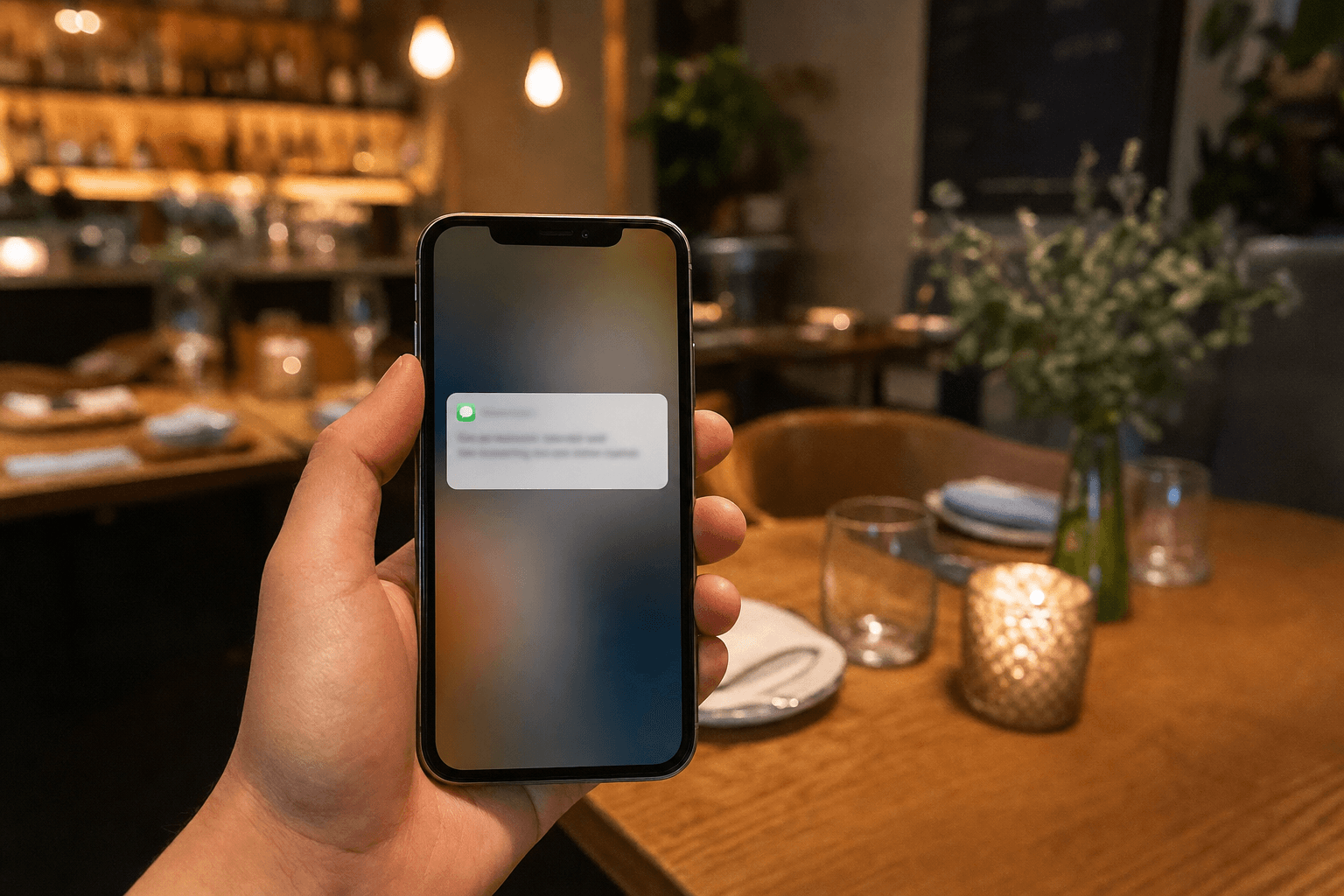
Email open rates hover around 20–25% on a good day. A text message? It gets opened 98% of the time — usually within three minutes of delivery. For a restaurant trying to fill tables on a slow Tuesday or move inventory before it spoils, that kind of reach is hard to beat.
SMS marketing isn't new, but most independent restaurants either ignore it entirely or do it badly — blasting generic "come eat here!" messages to a list they built three years ago. Done right, text marketing is one of the cheapest, fastest ways to put real people in seats on the days you need them most. This guide will show you exactly how to do it right.
Why SMS Works So Well for Restaurants
Restaurants are inherently local and time-sensitive. A person deciding where to eat dinner usually makes that call within a few hours of eating — sometimes within 30 minutes. SMS fits that window perfectly. You can send a message at 3 p.m. offering a two-for-one appetizer during happy hour, and by 5 p.m. you've got extra bodies at the bar.
Compare that to social media, where your post competes with hundreds of other things in someone's feed and might be seen days later. Or email, which many people batch-read once a day if at all. Text messages are immediate, personal, and — when done correctly — genuinely welcomed by the people receiving them.
The other advantage: your list is yours. Unlike a Facebook following or an Instagram audience, a phone number list isn't subject to algorithm changes or platform policy shifts. You own those relationships directly.
Building Your Subscriber List the Right Way
Before you send a single message, you need a list of people who have explicitly opted in. In the United States, the Telephone Consumer Protection Act (TCPA) requires written consent before sending marketing texts. Non-compliance can result in fines of $500–$1,500 per message. This isn't something to cut corners on.
Opt-in methods that actually work
- Text-to-join keyword: Put a sign at the host stand, on table tents, and at the register: "Text TACOS to 55555 for exclusive deals." Simple, fast, and customers can do it while waiting for their food.
- QR code opt-in: Add a QR code to your digital menu or printed receipts that links to a short opt-in form. Customers who are already engaged with your brand are the most likely to sign up.
- Online ordering checkout: If you have online ordering set up, include a checkbox at checkout: "Text me exclusive deals and early access to specials." Pre-check it, but make it easy to uncheck — transparency builds trust.
- In-store WiFi capture: If you offer guest WiFi, use a splash page that asks for a phone number as part of the login process.
- Social media: Run a short campaign: "DM us your number to get on the VIP text list." Works especially well if you offer a small incentive like a free dessert on their next visit.
What to offer in exchange
People don't hand over their phone numbers for nothing. Give them a reason: a discount on their next visit, early access to a new menu launch, a free item on their birthday, or first notice when a popular limited-time dish is back. The offer doesn't need to be expensive — it needs to feel exclusive.
Choosing the Right SMS Platform
You cannot legally or practically run restaurant SMS marketing from your personal cell phone. You need a dedicated platform that handles opt-ins, opt-outs, compliance, and scheduling. A few options worth looking at:
- SlickText — popular with small businesses, easy to use, affordable entry pricing
- EZTexting — good for beginners, solid template library
- Podium — more full-featured (reviews, messaging, payments), higher price point
- Klaviyo — if you're already using it for email, the SMS add-on integrates well
- SimpleTexting — clean interface, good analytics, reasonable cost
Most platforms charge per message or per subscriber per month. For a list of 500 people sending 2–4 messages per month, you're typically looking at $20–$50/month — a fraction of what you'd spend on a print ad or sponsored social post.
Key features to look for: scheduled sends, segmentation (so you can text only lunch regulars, or only people who haven't visited in 60 days), two-way messaging, and automatic opt-out handling.
What to Text — and When
This is where most restaurants go wrong. They either send too many messages (annoying), too few (forgettable), or messages that feel like spam. Here's a framework that works.
The right frequency
For most restaurants, 2–4 texts per month is the sweet spot. More than that and unsubscribe rates climb fast. Less than once a month and people forget they signed up. Think of your SMS list like a VIP relationship — you reach out when you have something genuinely worth saying.
Message types that drive action
- Flash deals for slow nights: "It's raining tonight and we've got a cozy table with your name on it. 20% off your whole check tonight only — show this text to your server." Sent Tuesday at 3 p.m., redeemable until close.
- New menu announcements: "Our fall menu just dropped — truffle gnocchi, braised short rib, and a new cocktail list. Come see what's new this week." Pair this with a link to your updated online menu so they can browse before they arrive.
- Limited-time items: "We've got 30 portions of our lobster bisque left this week. First come, first served." Scarcity works. People act when they think they might miss out.
- Event invites: "Live music Friday + Saturday, 7–10 p.m. No cover. Reserve your table now — link in text." Texting an event reminder 24–48 hours out beats posting on Instagram every time.
- Birthday messages: Most SMS platforms let you collect birthdays at opt-in and auto-send a message with a free item offer during their birthday week. This one message alone can drive serious loyalty.
- Re-engagement campaigns: "We miss you. It's been a while — here's 15% off your next visit, good through Sunday." Target subscribers who haven't redeemed an offer or visited (if you have data) in 60+ days.
Timing guidelines
Send lunch promos between 10–11 a.m. Send dinner promos between 2–4 p.m. Never text before 9 a.m. or after 8 p.m. — that's the fastest way to earn unsubscribes and resentment. Weekend messages work well on Friday afternoon when people are making plans. Avoid Monday morning; people are in work mode and not thinking about dining out.
Writing Texts That Get Results
You have 160 characters before a message splits into two (which costs more and looks sloppy). Even if your platform supports longer messages, shorter is almost always better. Here's what a high-performing restaurant text looks like:
- Lead with the offer or hook. Don't bury it. "Half-price wings tonight, 4–7 p.m." beats "Hey, just wanted to let you know that we're running a special..."
- Be specific. "20% off" is clearer than "a great deal." "Tonight only" is more urgent than "soon."
- Include a call to action. "Reply RSVP," "Show this text," or "Click to order" — tell them exactly what to do next.
- Use your restaurant's name. Don't assume they have your number saved. Start with your name: "Hi, it's [Restaurant Name] — ..."
- Keep the tone human. Texts that sound like corporate marketing copy get ignored. Write like a person, not a brand.
Example of a bad text: "Dear valued customer, we are pleased to inform you of our current promotional offerings available at our establishment this weekend."
Example of a good text: "Hey, it's Rosie's Kitchen — our short rib is back on the menu tonight only. Come grab it before it's gone. Show this text for a free glass of house wine. 🍷"
Segmenting Your List for Better Results
Not every message is relevant to every subscriber. A lunch crowd and a late-night bar crowd are different people with different habits. As your list grows, segment it:
- By visit time: Lunch regulars vs. dinner guests
- By location: If you have multiple locations, don't text everyone about a promotion at one spot
- By engagement: Active subscribers (opened/redeemed recently) vs. lapsed ones
- By preference: If someone opted in specifically for happy hour deals, don't send them brunch promos
Segmented campaigns consistently outperform blasts. Even a simple two-segment split — "active in the last 30 days" vs. "inactive" — lets you tailor the message and offer appropriately.
Connecting SMS to Your Broader Marketing
SMS works best when it's part of a system, not a standalone tactic. A few ways to tie it together:
Link your texts to your online ordering page so recipients can act immediately without having to call or show up first. If you offer zero-commission online ordering, every text-driven order goes straight to your bottom line without a third-party platform taking a cut.
Use your QR code menu as a tool to grow your SMS list. A well-placed prompt on your QR code menu — "Join our VIP text list for exclusive deals" — captures customers at the moment they're most engaged with your restaurant.
Coordinate SMS with your other channels. If you're running a weekend special, text about it Friday afternoon, post about it on Instagram Thursday night, and put it on your digital menu as a featured item. Repetition across channels reinforces the message without being annoying on any single channel.
Tracking What Works
You don't need fancy analytics to know if your SMS campaigns are working. Track these basics:
- Redemption rate: How many people showed the text or used the promo code? This is your most direct measure of ROI.
- Unsubscribe rate: If it spikes after a particular message, that message was off. High unsubscribes (above 2–3%) are a signal to dial back frequency or improve relevance.
- Click-through rate: If you include a link, your platform will show you how many people clicked. Low clicks on an online ordering link might mean the offer wasn't compelling enough.
- Revenue per campaign: On nights you run a text promo, compare covers and average check against a comparable night without a promo. Not perfect, but directionally useful.
Most SMS platforms give you these numbers automatically. Review them after each campaign and adjust. It takes 3–4 campaigns to find your rhythm.
Common Mistakes to Avoid
- Texting without consent. This is a legal issue, not just a best practice. Always collect explicit opt-ins.
- Sending too often. Once a week is usually too much for a restaurant. Stick to 2–4 per month unless you have a genuinely time-sensitive reason.
- Generic offers. "Come visit us!" is not a reason to leave the couch. Give people a specific, compelling reason to act now.
- Ignoring replies. If someone texts back a question, respond. Two-way messaging builds relationships. Ignoring it destroys them.
- Forgetting to mention the restaurant name. Always identify yourself. Most people don't save business numbers in their contacts.
- Not making it easy to opt out. Every message should include opt-out instructions ("Reply STOP to unsubscribe"). It's legally required and it keeps your list healthy.
Frequently Asked Questions
Is SMS marketing legal for restaurants?
Yes, but it requires explicit written consent from each subscriber before you send marketing messages. In the U.S., this is governed by the TCPA (Telephone Consumer Protection Act). Every message must also include clear opt-out instructions. Using a reputable SMS platform will handle most of the compliance mechanics automatically, but you're still responsible for collecting proper consent at sign-up.
How much does restaurant SMS marketing cost?
Most small-to-mid-size restaurants can get started for $20–$60 per month depending on their list size and message volume. That typically covers 500–2,000 subscribers sending 2–4 messages per month. Compare that to a single sponsored social post or a small print ad — the ROI on a well-executed text campaign is usually much better.
What's a good offer to use in a restaurant text message?
The best offers are specific, time-limited, and feel exclusive. A percentage discount (15–20% off) or a free item with purchase works well. "Tonight only" or "this weekend only" urgency drives action. Birthday offers, first-visit discounts, and early access to new menu items also perform consistently well. Avoid vague offers like "come check us out" — give people a concrete reason to act.
How do I grow my SMS subscriber list quickly?
The fastest growth comes from a combination of in-store prompts (table tents, receipts, host stand signs), a QR code opt-in linked from your digital menu, and a checkbox during online ordering checkout. Offering a small but genuine incentive — a free appetizer, a discount on their next visit — significantly increases sign-up rates. Promote the list on your social media channels as well.
How is SMS marketing different from email marketing for restaurants?
SMS has a much higher open rate (around 98% vs. 20–25% for email) and is read almost immediately, making it ideal for time-sensitive promotions. Email is better for longer content like newsletters, seasonal menus, or detailed event announcements. The two channels complement each other — use SMS for urgency and email for depth. Don't try to do the same thing on both channels.
Ready to build the digital infrastructure that makes SMS marketing work harder? Set up online ordering and a digital menu with MenuHoster so every text you send has somewhere compelling to land. MenuHoster makes it easy to keep your menu current, accept orders directly, and give customers a seamless experience from the first text to the last bite — with no commissions and no technical headaches. See our pricing and get started today.
MenuHoster Team
Helping restaurants go digital