Do You Need a Website If You Have a Hosted Menu Page?
Updated:
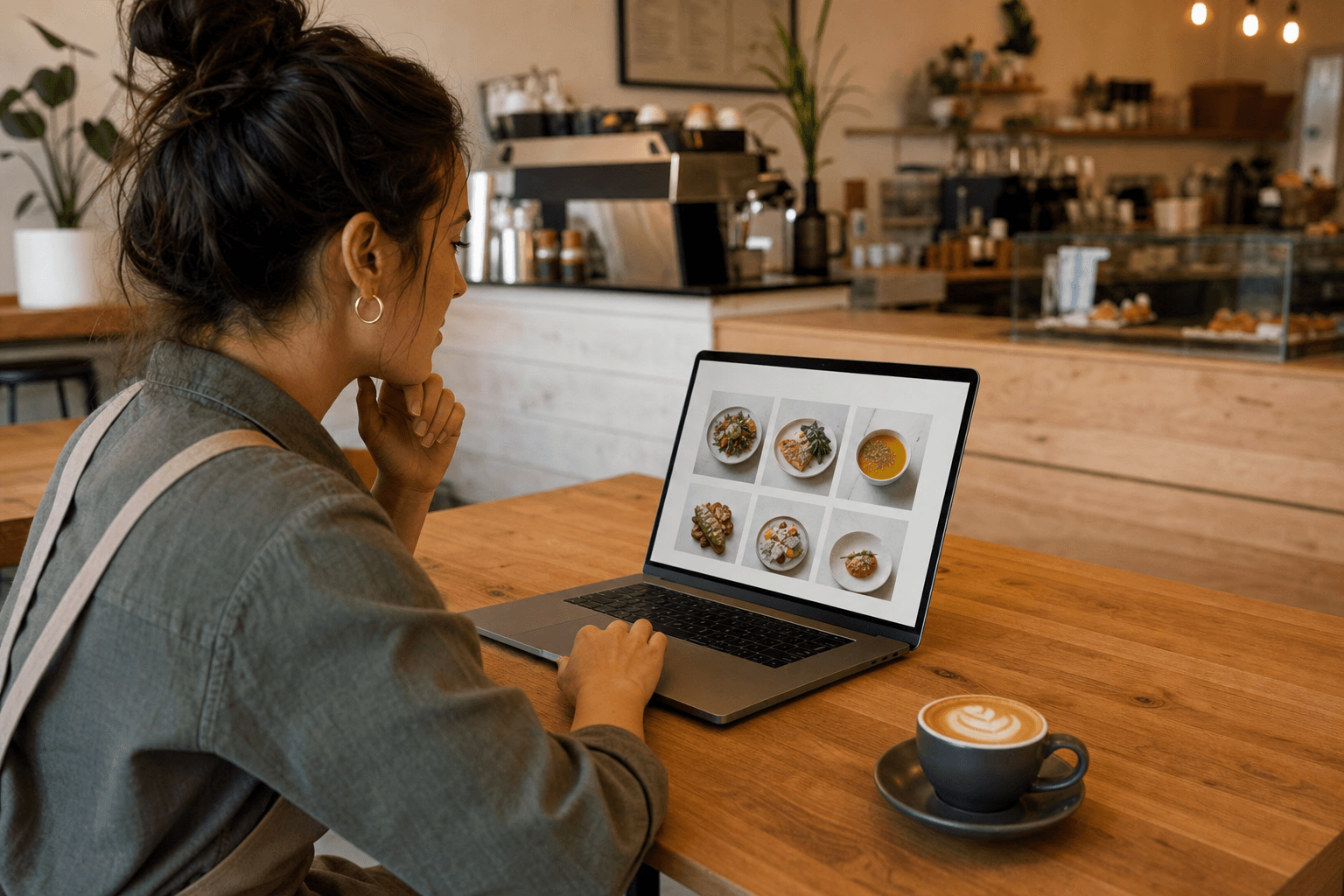
You set up a hosted menu page. Your food is on there, your hours are listed, and customers can scan a QR code at the table and browse everything you offer. It looks clean, it works on mobile, and you didn't need to hire a developer. So the question naturally follows: do you actually need a full website on top of that?
The honest answer is: it depends—but for many small restaurants, cafes, and bars, a well-built hosted menu page covers the majority of what a website would do. This guide breaks down exactly what a hosted menu page can and can't do, when you genuinely need a full site, and how to get the most out of what you already have before spending money you might not need to spend.
What a Hosted Menu Page Actually Does
A hosted menu page is more than a digital version of your printed menu. Depending on the platform, it can serve as a lightweight but functional web presence that covers most of the basics a potential customer needs before deciding to visit or order.
Here's what a solid hosted menu page typically handles:
- Displays your full menu — organized by category, with descriptions, prices, photos, and dietary labels.
- Shows your business info — name, address, hours, phone number, and a map link.
- Works as a QR code destination — customers scan at the table and land directly on your menu.
- Loads fast on mobile — critical, since most people searching for restaurants are on their phones.
- Can support online ordering — many platforms, including MenuHoster, let you add ordering capabilities directly to your digital menu.
- Can be shared as a link — on Instagram, Google Business Profile, WhatsApp, anywhere.
That's a meaningful list. For a new restaurant or a small operation that doesn't have a marketing team, this covers the core use case: someone hears about you, looks you up, and needs to quickly confirm you're worth visiting.
What a Hosted Menu Page Cannot Do
A hosted menu page is purpose-built. That's its strength—but it also means there are things it wasn't designed for. Being clear about these gaps helps you make a smarter decision.
Deep SEO content
A hosted menu page can show up in search results, especially if it's indexed and your business info is complete. But it won't rank for long-tail searches like "best brunch spot in [neighborhood] for groups" the way a full website with a blog, landing pages, and structured content can. If organic search traffic is a major part of your growth strategy, a full site gives you more surface area to work with. (More on restaurant SEO basics here.)
Long-form storytelling
Your hosted menu page can include a short description of your restaurant, but it's not the place for your origin story, chef bio, press mentions, or a detailed breakdown of your sourcing philosophy. If your brand story is a key part of why people choose you—think farm-to-table concepts, founder-driven brands, or restaurants with a strong cultural identity—a full website gives you the space to tell that story properly.
Multiple distinct audiences
A restaurant that handles dine-in, catering, private events, and corporate lunch delivery is serving four different audiences with four different needs. A hosted menu page can't easily serve all of them with tailored messaging and calls to action. A full website with separate pages for each service type does this much better.
Custom integrations
If you need a reservation widget, a gift card store, a loyalty program sign-up, a newsletter subscription form, or a careers page, a hosted menu page will hit its limits. Full websites can embed or integrate these tools more flexibly.
The Real Question: What Do Your Customers Actually Need?
Before deciding whether to build a full website, step back and ask: what are people actually trying to do when they look you up online?
For most casual dining restaurants, cafes, and bars, the customer journey looks like this:
- Hear about the place (from a friend, Instagram, Google Maps).
- Check the menu to see if there's something they want to eat.
- Confirm the hours and location.
- Decide to go—or order online.
A well-built hosted menu page handles all four of those steps. The customer doesn't need a five-page website to make that decision. They need a fast, mobile-friendly page that answers their questions immediately.
Where this changes is if your customers are doing more complex research—comparing you to competitors for a private event, vetting you for a corporate catering contract, or looking for detailed information about accessibility, parking, or group bookings. In those cases, the depth of a full website starts to matter.
When a Hosted Menu Page Is Genuinely Enough
There are real scenarios where a hosted menu page is not just a stopgap—it's the right tool for the job.
You're a new or early-stage business
If you've just opened or are about to open, your energy should go into operations, not web development. A hosted menu page gets you online in minutes, looks professional, and lets you focus on what actually matters in the first few months. You can always add a full site later once you know more about your customers and what they need from you online.
Your business is primarily discovery-driven
Many restaurants get the majority of their new customers through Google Maps, Instagram, or word of mouth—not through people searching their website. If that's your model, a hosted menu page linked from your Google Business Profile and social accounts is often sufficient. Customers land on your menu, see what you offer, and come in. Done.
You operate a single-concept, straightforward business
A neighborhood taco spot, a coffee kiosk, a food truck, a small ramen bar—these businesses don't need a sitemap. They need a clear, fast, good-looking menu that works on a phone. A well-designed online menu with your hours, location, and contact info covers it.
You have strong social media presence
If Instagram or TikTok is your primary marketing channel, your social profile is already doing a lot of the storytelling work. In that case, a hosted menu page as the link-in-bio destination is a smart, lean setup. It gives people the practical information they need without duplicating what your social content already does.
When You Should Build a Full Website
There are clear signals that a hosted menu page alone isn't going to cut it for your business goals.
You're actively pursuing catering or events revenue
Catering clients and event planners do real research. They want to see a dedicated page with package options, capacity information, past event photos, and a proper inquiry form. A hosted menu page doesn't give you the space to present this credibly. A full website with a dedicated events or catering section is worth the investment here.
You want to rank in organic search
If you want to show up when someone in your city searches "best coffee shop for remote work" or "gluten-free brunch near me," you need content—blog posts, landing pages, structured data. A hosted menu page can be SEO-friendly, but it can't compete with a full site that's been built with search in mind. Check out SEO basics for restaurants if this is a priority for you.
You have multiple locations
Managing two or more locations with separate menus, hours, and contact information gets complicated quickly without a proper website structure. A full site lets you create location-specific pages, which also helps with local SEO.
You're building a brand, not just a business
If you're working toward press coverage, wholesale partnerships, a cookbook, a second location, or a franchise model, your web presence needs to reflect that ambition. A hosted menu page reads as a single-location operation. A full website signals that you're building something bigger.
The Middle Path: Extend Your Menu Page Before You Build a Full Site
Before committing to the time and cost of a full website, consider how much more you can get out of your hosted menu page with a few additions.
Add online ordering
If you're not already taking orders through your menu page, that's the highest-value addition you can make. It turns a passive information page into a revenue-generating tool. MenuHoster supports QR code menus with ordering built in, so you don't need a separate platform to make this work.
Link your menu page from everywhere
Your hosted menu page is only as useful as the places it's linked from. Make sure it's in your Google Business Profile, your Instagram bio, your Facebook page, and any delivery platform profiles. This dramatically increases the number of people who actually see it.
Use a custom domain or subdomain
If your hosted menu page lives at a generic URL, see if you can map a custom domain to it. Something like menu.yourbusiness.com looks far more professional and is easier to share verbally or in print.
Connect it to your existing site if you have one
If you already have a website—even a basic one—you don't have to choose between the two. Connecting your hosted menu to your existing website is often the best of both worlds: your site handles the brand story and SEO, your menu page handles the practical customer experience.
Making Your Hosted Menu Page Work as Hard as Possible
Whether or not you eventually build a full website, there's no reason your hosted menu page should be doing the bare minimum. Here's how to make it as effective as possible right now.
- Use real photos. Even phone photos taken in good light are better than no photos. Menus with images convert significantly better than text-only lists.
- Write actual descriptions. Don't just list ingredients. Tell people why a dish is worth ordering. A sentence or two of genuine description does real work.
- Keep it current. An outdated menu is worse than no menu. If prices or items change, update the page the same day. This is one of the biggest advantages of a digital menu over a printed one—changes are instant.
- Include your full business info. Hours, address, phone number, and a link to Google Maps. Don't make people hunt for the basics.
- Add dietary and allergen labels. This serves customers with restrictions and reduces staff questions during service. It also signals that you're a thoughtful, professional operation.
- Pick a template that matches your brand. A menu page that looks like it belongs to your restaurant—right colors, right fonts, right feel—builds trust. Browse menu templates to find one that fits your concept.
The Practical Verdict
Here's the bottom line, stated plainly:
If you're a single-location restaurant, cafe, bar, or food business with straightforward customer needs, a well-built hosted menu page is a legitimate, professional web presence. You don't need to apologize for it or treat it as a placeholder. Millions of people will find your menu, see your hours, confirm your location, and decide to visit or order—all without ever needing a five-page website.
A full website becomes worth the investment when you're pursuing catering or events revenue, building for organic search, managing multiple locations, or developing a brand that needs more storytelling space than a menu page provides.
The worst outcome is spending months and money on a full website before you've validated your concept, optimized your menu, or figured out where your customers actually come from. Start with what works. Add complexity when the business demands it—not before.
Frequently Asked Questions
Can a hosted menu page rank on Google?
Yes. A hosted menu page can appear in Google search results, especially for branded searches (people searching your restaurant's name) and local searches via Google Business Profile. However, it has limited ability to rank for competitive, non-branded keywords compared to a full website with dedicated SEO content. For most small restaurants, this tradeoff is perfectly acceptable.
Is a hosted menu page professional enough for a serious restaurant?
Absolutely. The quality of your menu page depends on how well it's built, not on whether it's a "full website." A clean, well-organized, visually consistent menu page with accurate information, good photos, and fast load times is more professional than a poorly maintained multi-page website. Customers care about getting the information they need quickly—not about your site architecture.
What happens if I want to upgrade to a full website later?
You don't have to start over. Your hosted menu page can remain as the menu section of your new website, either embedded or linked. Many businesses run both in parallel—a full site for brand and SEO purposes, and a hosted menu page as the fast, mobile-optimized destination for QR codes and social links.
Do I need a hosted menu page if I already have a website?
It depends on how your website handles the menu. If your menu is a PDF download or a hard-to-navigate page, a hosted menu page is worth adding as a better customer experience—especially for QR codes at the table. If your website already has a fast, mobile-friendly, up-to-date menu section, you may not need a separate hosted page.
How do I make my hosted menu page show up in Google Maps?
Add the URL of your hosted menu page to your Google Business Profile under the "Menu" or "Website" field. This connects your menu to your Maps listing so customers can browse it directly from search results. Make sure your business name, address, and phone number on the menu page exactly match what's in your Google Business Profile.
Ready to build a hosted menu page that works as a complete web presence? Try MenuHoster free—no developer needed, no long setup, and your menu can be live today. Whether you're just getting started or looking to replace a clunky website with something that actually works on mobile, MenuHoster gives you a professional, fast, and easy-to-update menu page that your customers will actually use.
MenuHoster Team
Helping restaurants go digital