Getting Repeat Visits: How Independent Cafes Can Win the Weekday Habit
Updated:
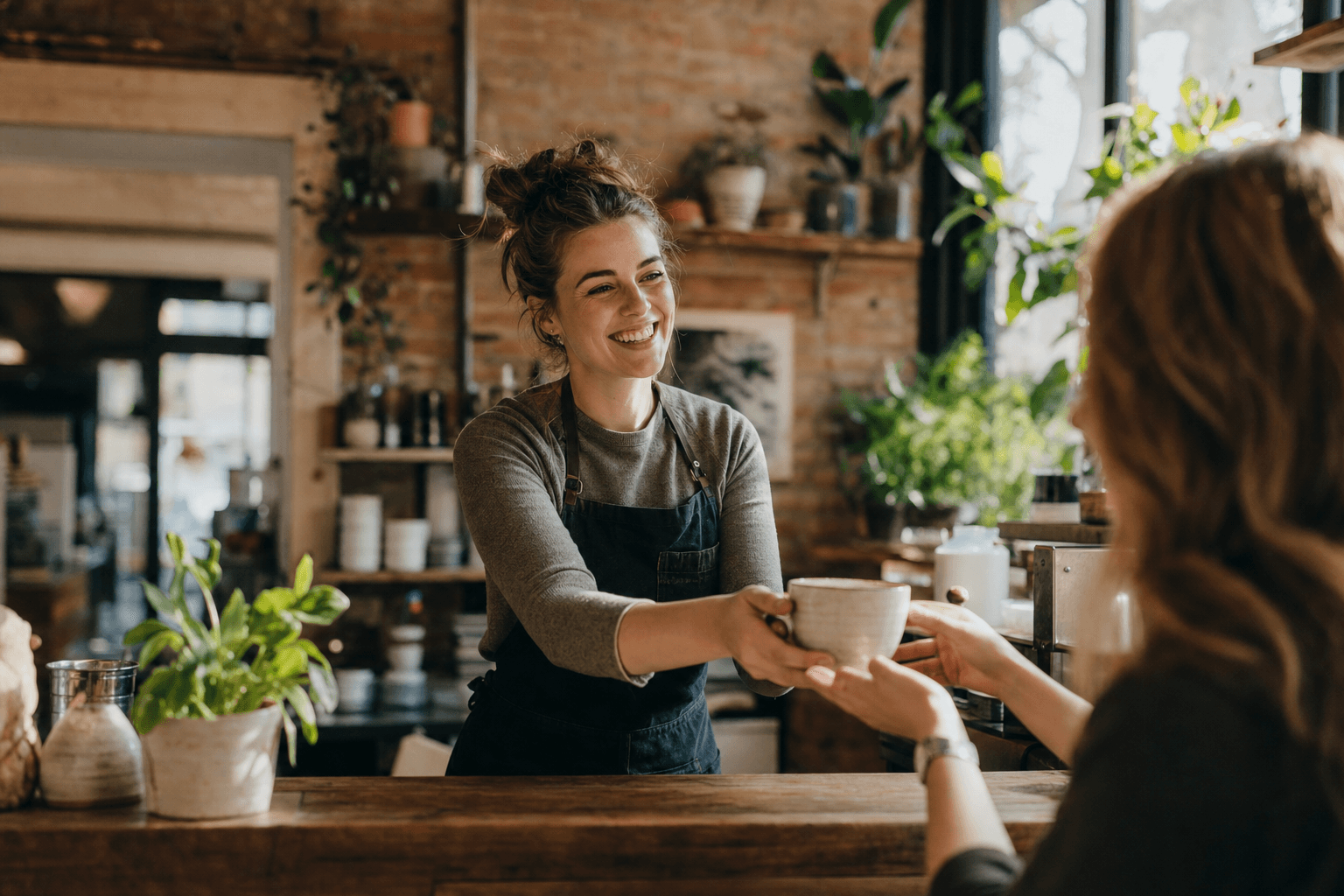
The weekday morning coffee run is one of the most valuable habits in retail. A customer who visits five days a week and spends $6 each time is worth over $1,500 a year — before you count afternoon pick-me-ups, weekend visits, or the friends they bring along. Chains have spent billions engineering that habit. But independent cafes have something chains can never buy: genuine human connection, real flexibility, and the ability to make a customer feel like they belong somewhere.
The problem is that most independent cafes leave habit-building entirely to chance. A great first visit happens, and then nothing is done to pull the customer back on Tuesday, Wednesday, and Thursday. This guide is about fixing that — systematically, without losing the authenticity that makes your cafe worth coming back to in the first place.
Understand What Actually Drives the Habit
Before you can engineer repeat visits, it helps to understand what makes a habit stick. Behavioral researchers break habits into three components: a cue, a routine, and a reward. For a coffee shop regular, that typically looks like this:
- Cue: A time of day, a commute route, or a mood trigger ("I need to focus")
- Routine: Walking into your cafe, ordering the usual, exchanging a few words with the barista
- Reward: The coffee itself, but also the feeling of being recognized, comfortable, and at ease
Chains dominate the cue and routine stages through sheer ubiquity and app-driven reminders. Where you win is the reward — specifically the emotional reward of being known. Your job is to make sure the cue and routine parts are frictionless enough that customers choose your cafe over a more convenient alternative, and then deliver a reward that no chain can replicate.
Make the First Three Visits Count
Research on habit formation consistently shows that early repetitions matter most. A customer who visits three times in their first two weeks is far more likely to become a regular than one who visits once and drifts away for a month. Your goal is to compress those early visits.
Give new customers a reason to return before they leave
When someone who looks new walks in — they're glancing at the menu longer than usual, they seem slightly uncertain — treat it as an opportunity. After you hand them their drink, mention something specific: "If you liked that, our oat milk cortado on Thursday is worth trying" or "We do a rotating single-origin pour-over on Fridays — different bean each week." You're not pitching. You're giving them a reason to be curious about coming back.
Use a simple new-customer offer
A stamped card that gives a free drink on the fifth visit is fine, but it's passive. A better tactic: hand new customers a small card that says "Your second visit is on us — show this next time." The psychology is different. It creates a specific, near-term reason to return rather than a distant reward. The cost is one drink; the potential return is a lifetime customer.
Learn their name and order
This sounds obvious, but most cafes don't do it deliberately. Train your team to repeat a customer's name when they pay by card, and to remember their order on the second visit. "The usual?" is one of the most powerful phrases in hospitality. It signals belonging. Chains try to simulate this with apps; you can do it for real.
Remove Friction from the Morning Routine
The number-one reason people default to chains on busy mornings isn't brand loyalty — it's friction reduction. They know exactly what they'll get, how long it will take, and how to order without thinking. Your job is to make your cafe just as frictionless, while being far more rewarding.
Pre-ordering for commuters
If your cafe sits on a commuter route, pre-ordering is a game-changer. A customer who can tap their phone on the way to the train and pick up a waiting drink has almost no reason to go anywhere else. Setting up a simple online ordering page for your cafe takes less time than you think and directly attacks the convenience advantage chains have built their empires on.
A clear, easy-to-scan menu
Decision fatigue is real at 7:45 a.m. A cluttered chalkboard or a laminated sheet with forty options slows people down and creates anxiety. A clean digital cafe menu that customers can browse before they arrive — or scan quickly at the counter — removes that friction entirely. When customers know what they want before they walk in, the visit feels smooth and efficient. That smoothness becomes part of why they come back.
QR menus that work without effort
A well-placed QR code on your table or counter lets customers browse at their own pace without flagging down a barista. It also gives you a channel to highlight daily specials, seasonal drinks, or "regulars' picks" — subtle nudges that make the experience feel curated rather than generic. A QR code menu that loads fast and looks good on mobile is a low-effort, high-return investment for any independent cafe.
Build Rituals, Not Just Transactions
The most habit-forming cafes don't just sell coffee — they sell a ritual. They give customers something to look forward to on specific days. Here's how to do that deliberately.
Weekly specials with a story
A rotating "Wednesday pour-over" or a "Monday morning muffin" creates a weekly anchor. It gives regulars a reason to come in on a specific day and something to talk about. The key is consistency — it has to happen every week, reliably, so customers can plan around it. Update your digital menu to reflect it, post about it the night before, and let your regulars know it's coming.
Seasonal drinks with a launch moment
Chains are expert at turning a seasonal drink into a cultural event. You can do the same thing at a local level with far more authenticity. When you introduce a new seasonal drink, treat it as a moment — tell the story behind it, involve your regulars in tasting it before launch, and give it a name that means something to your neighborhood. Customers who feel like insiders become advocates.
The "regulars' table" effect
Some of the most beloved independent cafes have unofficial regulars' spots — a corner table, a specific stool at the bar. You don't need to formalize this, but you can encourage it by remembering where people like to sit and greeting them accordingly. "Your usual spot is free" is a small thing that lands large.
Stay Visible Between Visits
Out of sight is out of habit. One of the biggest mistakes independent cafes make is doing nothing between a customer's visits to remind them you exist. You don't need to be aggressive about it — you just need to stay present.
Build an email list the right way
Email is still the highest-ROI marketing channel for local businesses. A short weekly email — "Here's what's new this week, here's the Wednesday special, here's a photo of the new beans we just got in" — keeps your cafe top of mind without being intrusive. Collecting emails doesn't have to be awkward; a simple sign-up prompt on your QR menu or ordering page is enough.
Use your Google Business Profile actively
Most cafes set up their Google listing and forget it. But customers who search "coffee near me" on a Tuesday morning are exactly the people you want to reach. Posting weekly updates, responding to reviews, and keeping your hours accurate all signal to Google — and to potential customers — that you're active and worth visiting. A well-maintained profile can drive significant foot traffic without any ad spend.
Create shareable moments
User-generated content is free marketing from your most loyal customers. A latte art photo, a beautiful seasonal drink, a cozy corner shot — these spread your cafe to people who've never heard of you. Make it easy by keeping your space photogenic, naming drinks in memorable ways, and occasionally prompting customers with a small sign or a mention on your QR menu. "Tag us for a chance to be featured" costs nothing and builds community.
Build a Loyalty Program That Feels Personal
Loyalty programs work — but only if they feel worth using. A paper stamp card is better than nothing, but it gets lost, forgotten, and offers no data. A digital loyalty program tied to your ordering or menu system lets you track visits, send targeted offers, and reward your best customers in ways that feel personal rather than transactional.
The key differentiator from a chain loyalty app is personalization. Starbucks knows you ordered a pumpkin spice latte; your cafe can know that Maria always gets an oat flat white and comes in on Tuesday and Thursday mornings. Use that knowledge. A message that says "We just got a new single-origin espresso we think you'd love — come try it this week" is infinitely more powerful than a generic "You have 50 points!"
Keep the program simple. Complicated tier systems with points, stars, and multipliers create cognitive load. A straightforward "every tenth drink is free" or "spend $50 this month and get a free pastry" is easy to understand and easy to act on. The goal is to lower the activation energy for the next visit, not to create a gamification system that requires a tutorial.
Train Your Team as Relationship Builders
Everything in this guide depends on your team. A barista who remembers names, notices when someone seems stressed and keeps the interaction light, or proactively mentions the Wednesday special is worth more than any marketing campaign. Retention is a hospitality problem before it's a marketing problem.
Invest in onboarding new staff with this mindset explicitly. Don't just train them on drink recipes and POS systems — train them on the names of your regulars, the stories behind your beans, and the culture you're trying to build. Give them permission to comp a drink occasionally when a regular has a rough morning. The cost is minimal; the loyalty it builds is substantial.
Also: reduce staff turnover. Customers build relationships with people, not with a brand. When a beloved barista leaves and is replaced by someone who doesn't know their name, regulars feel the loss. Paying your team well and creating a good working environment is a customer retention strategy, not just an HR one.
Measure What Actually Matters
You can't improve what you don't track. A few simple metrics will tell you whether your repeat-visit strategies are working:
- Return rate: What percentage of customers who visit once come back within 30 days? If you have a loyalty program or email list, you can track this directly.
- Visit frequency among regulars: Are your regulars coming in 3x a week or 1x a week? Small shifts in frequency have a large revenue impact.
- Average ticket size over time: Regulars who feel comfortable typically spend more per visit than new customers. If this number is flat, it may signal that your menu or upsell approach needs attention.
- Churn signals: If a regular who came in every Tuesday hasn't appeared in three weeks, that's worth noticing. A simple "We miss you" message can re-engage a lapsed customer before they're gone for good.
You don't need sophisticated software to track these. A simple spreadsheet, combined with data from your ordering system or loyalty program, is enough to spot trends and act on them.
Frequently Asked Questions
How long does it take to turn a new visitor into a regular?
Research suggests that habits form fastest when early repetitions are close together. If you can get a new customer back within the first two weeks — ideally two or three times — the probability of them becoming a regular increases dramatically. Focus your energy on that early window rather than trying to win back customers who've already drifted.
Do loyalty programs actually work for independent cafes?
Yes, but only when they're simple and feel personal. A complicated points system that mimics a chain app will lose to the real thing. A straightforward punch card or a digital equivalent that rewards customers in a way that feels human — a free drink on their birthday, a personal recommendation based on their usual order — outperforms generic loyalty mechanics every time.
How do I compete with the convenience of chains for morning commuters?
The most effective tool is pre-ordering. When a commuter can order ahead and walk in to a waiting drink, the convenience gap closes entirely. Combine that with a better product and a barista who knows their name, and the chain down the street loses its main advantage. Setting up a simple online ordering flow takes less than an hour and can pay for itself in the first week.
What's the single most important thing I can do to increase repeat visits?
Learn your customers' names and orders. It sounds almost too simple, but it's the thing chains cannot replicate at scale and the thing customers remember most. Being recognized is a deeply human need. When your cafe reliably meets that need, coming back becomes the path of least emotional resistance.
Should I use social media to drive repeat visits, or focus on in-store tactics?
Both, but in the right proportion. In-store tactics — recognizing customers, creating rituals, removing friction — drive the habit directly. Social media and email extend your presence between visits and keep your cafe top of mind. Think of in-store as the engine and digital channels as the fuel. Neither works as well without the other.
If you're ready to make it easier for your regulars to order ahead, browse your menu, and feel at home in your cafe, MenuHoster's digital menu tools are built for exactly this. Set up a beautiful cafe menu, enable online ordering, and create a seamless experience that keeps your best customers coming back — without the tech headaches. See our pricing and get started in under an hour.
MenuHoster Team
Helping restaurants go digital