How to Structure a Salon Package Menu That Increases Average Ticket Size
Updated:
The average salon visit is a missed opportunity. A client comes in for a haircut, pays for a haircut, and leaves. Meanwhile, they needed a deep conditioning treatment, their brows were overdue, and they would have said yes to a scalp massage if someone had mentioned it. The problem usually isn't the client's willingness to spend—it's that your menu never made the case.
Structuring a package menu changes that dynamic. Done right, packages don't feel like upselling. They feel like a recommendation from someone who knows what the client actually needs. This guide walks through how to build that menu from scratch—what to bundle, how to price it, how to display it, and how to get your team to use it consistently.
Why Packages Outperform Individual Service Listings
When every service is listed separately at its individual price, clients anchor on the lowest number they see. They pick one thing, feel like they've made a decision, and stop looking. A package menu reframes the choice: instead of "do I want this add-on?", the client is asking "which package fits me best?"
That's a fundamentally different buying decision—and it tends to result in higher spend almost automatically.
There's also a practical benefit for your team. A well-structured package menu reduces the need for staff to verbally pitch every add-on during a busy shift. The menu does the selling. Your stylists and technicians can focus on delivering a great experience rather than remembering to mention the hot oil treatment.
Finally, packages improve appointment predictability. When clients book a defined package, you know exactly how long the chair will be occupied and what products you'll need. That makes scheduling tighter and reduces costly gaps.
Start With Your Data, Not Your Intuition
Before you design a single package, pull your last three to six months of booking and sales data. You're looking for two things:
- Your most frequently booked services. These are your anchors—the things clients already come in for.
- Your highest-margin add-ons. These are the services that cost you little in time and product but carry strong pricing.
Map those two lists against each other. Where a popular anchor service sits next to a high-margin add-on that's logically related, you have a natural package. A blowout plus a shine treatment. A manicure plus a cuticle repair. A massage plus a scalp treatment. The combination has to make sense to the client—it can't feel like you're just tacking on whatever you want to sell.
If you don't have formal booking data, spend a week tracking manually. Ask your front desk to note what clients decline when offered an upgrade. That tells you where the friction is—and often, it's a pricing or presentation problem, not a demand problem.
The Three-Tier Structure That Works
The most reliable package menu format for salons is a three-tier model: a base package, a mid-tier package, and a premium package. This structure works because of a well-documented principle in consumer behavior—when given three options, most people choose the middle one.
Tier 1: The Entry Package
This is slightly above your most basic individual service. It should include your anchor service plus one low-cost, high-perceived-value add-on. Price it so the client feels they're getting a deal compared to booking both items separately. The goal here isn't maximum revenue per visit—it's getting clients comfortable with the package model and giving them a reason to upgrade next time.
Tier 2: The Core Package
This is where you want most clients to land. It should include your anchor service, one or two meaningful add-ons, and ideally a take-home product or a follow-up benefit (like a complimentary toner refresh at the next visit). Price it so the value is obvious: the client can clearly see they're saving compared to booking each item individually.
Tier 3: The Premium Package
This tier exists partly to make Tier 2 look like the smart choice, and partly to capture your highest-value clients. Load it with your most luxurious or time-intensive services, premium products, and any experience-level upgrades (longer massage time, private suite, champagne service). Don't be afraid to price it high. A premium package that only 10% of clients book still meaningfully lifts your average ticket.
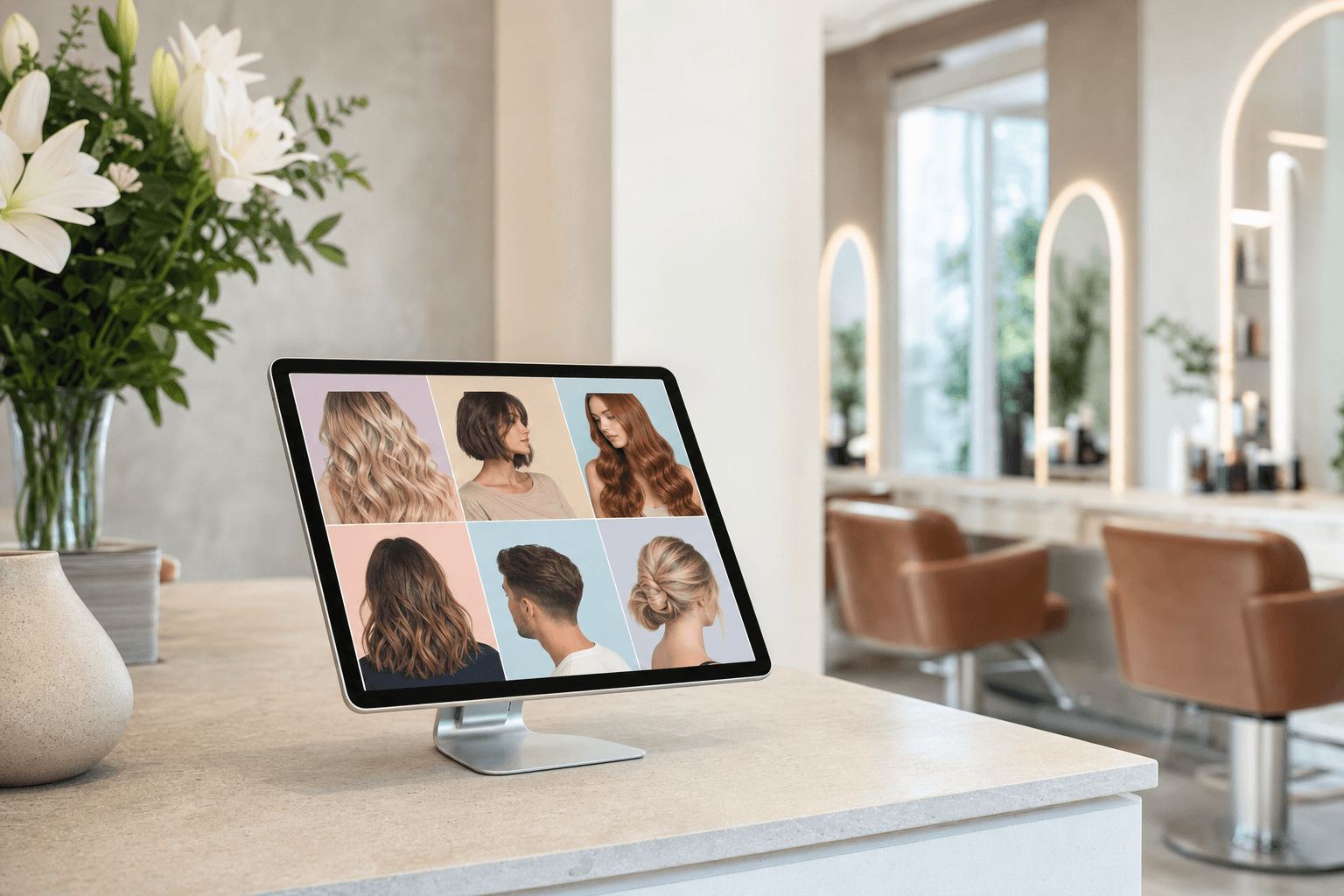
Once you have your tiers mapped out, present them visually in your digital salon menu so clients can compare them at a glance. A side-by-side layout with clear feature checkmarks is far more effective than a text list.
Naming Your Packages Matters More Than You Think
Generic names like "Basic," "Standard," and "Deluxe" do nothing for your brand and actively undermine the premium feel you're trying to create. Your package names should do two things: reflect your salon's personality and give the client an identity to aspire to.
A few approaches that work well:
- Experience-based names: "The Refresh," "The Reset," "The Full Treatment." These communicate outcome, not just service content.
- Time-based names: "The Express," "The Afternoon," "The Day." These help clients self-select based on how much time they have.
- Brand-specific names: Names tied to your salon's identity, neighborhood, or aesthetic. A salon called "Slate" might offer "The Slate Signature" as its premium tier.
Whatever you choose, be consistent. All three package names should feel like they belong to the same family. And keep descriptions tight—two or three sentences maximum. Clients don't read long descriptions. They scan for the key services and the price.
For guidance on writing service descriptions that actually convert, see our article on how to write salon service descriptions that sell.
Pricing Strategy: Show the Savings Clearly
The value of a package only lands if the client can see it. Don't make them do mental math. Show the à la carte total next to the package price explicitly:
"Individually: $145 | Package price: $119"
That $26 difference is your conversion engine. It's not a discount—it's a perceived gift for making a smarter choice. The key is that your package price still needs to be profitable. Run the numbers before you publish anything. Factor in product cost, time cost, and your target margin. A package that drives volume but erodes profit is worse than no package at all.
A good rule of thumb: package pricing should represent a 10–20% discount off the combined à la carte prices. Enough to feel meaningful, not so much that you're leaving money on the table.
Also consider whether to offer packages as one-time purchases or as prepaid series. A "buy 5 visits, get the 6th free" model locks in future revenue and dramatically improves client retention. If you're interested in how pricing presentation affects client perception, our guide on using a digital salon menu to justify premium pricing goes deeper on this.
Where and How to Display Your Packages
A package menu only works if clients see it at the right moment. That means placing it at every decision point in the client journey:
Before the Visit
Your booking confirmation email or text is prime real estate. Include a link to your package menu so clients can review options before they arrive. Many clients will upgrade before they even walk through the door.
At the Front Desk
A tablet or printed card at check-in showing your packages gives clients something to look at while they wait. This is especially effective for walk-ins who haven't pre-selected a service.
At the Chair or Treatment Table
Your stylists and technicians should be able to pull up the package menu on a phone or tablet during the consultation. Showing a client the visual comparison while discussing their needs is far more persuasive than a verbal description.
Using a QR code menu solves the display problem elegantly. Place a QR code at every station, in the waiting area, and on your reception desk. Clients scan it on their own phone, browse at their own pace, and often self-select into a higher tier without any staff prompting required.
Seasonal and Occasion-Based Packages
Your core three-tier structure should be permanent, but layering in seasonal or occasion-based packages on top of it is one of the fastest ways to drive incremental revenue.
Think about what your clients are preparing for: weddings, holidays, back-to-school, summer, Valentine's Day, prom season. For each of these moments, there's a natural package waiting to be built. A "Bridal Prep Package" that includes a trial blowout, brow shaping, and a lash tint. A "Holiday Glow Package" that bundles a facial, mani-pedi, and a complimentary lip treatment.
Seasonal packages also give you a marketing hook. You're not just updating your menu—you're launching something new. That's worth an email, a social post, and a conversation at the front desk. Clients who might never ask about your standard packages will respond to something that feels timely and relevant to their life.
Limit seasonal packages to a defined window. Scarcity is real motivation. "Available through December 31st" is more compelling than "available anytime."
Training Your Team to Present Packages Naturally
Even the best-designed package menu will underperform if your team doesn't know how to introduce it. The goal is to make package conversations feel like genuine recommendations, not sales pitches.
The simplest framework: during the consultation, ask one question about the client's goal or concern. Then connect a package to that goal.
"You mentioned your hair has been feeling dry lately—our Restore Package includes the deep conditioning treatment that would really help with that, and it's actually less than booking them separately."
That's it. No pressure, no script. The package menu does the visual work; the stylist just makes the connection personal.
Run a short team training session when you launch your new package structure. Walk through each package, explain the value story behind it, and practice the one-sentence introduction. Do a brief refresher every time you update or add a seasonal package.
Measuring Whether Your Packages Are Working
Track these metrics monthly once your package menu is live:
- Package attach rate: What percentage of appointments include a package vs. individual services? Aim to grow this number steadily over the first six months.
- Average ticket size: Compare the average spend per visit before and after launch. A well-structured package menu should lift this within 60 days.
- Package tier distribution: Which tier are most clients choosing? If almost everyone picks Tier 1, your Tier 2 value story may need work. If almost no one picks Tier 3, it may be priced too high or not differentiated enough.
- Rebooking rate by package: Clients who book packages often have higher lifetime value. Track whether package clients rebook more frequently than à la carte clients.
Review these numbers quarterly and adjust your packages accordingly. A package that isn't selling after 90 days either has a pricing problem, a presentation problem, or a relevance problem—and your data will tell you which.
Frequently Asked Questions
How many packages should a salon offer?
Start with three—one per tier. Adding more than five packages creates decision fatigue and dilutes the clarity you're trying to build. Once your core three are performing well, you can layer in one or two seasonal packages at a time without overwhelming clients.
Should I remove individual service pricing if I introduce packages?
No. Keep individual service pricing available, but don't lead with it. Structure your menu so packages are the first thing clients see, with individual services listed below or in a separate section. Most clients will default to the more prominent option.
What's the best way to introduce packages to existing clients?
A short email or text announcement works well: explain that you've simplified your menu, highlight the value of the new packages, and offer a first-time package booking incentive if your margins allow. Existing clients who already trust you are your easiest conversion.
Can packages work for a solo stylist or independent booth renter?
Absolutely. In fact, packages can be more impactful for solo operators because every upsell goes directly to your bottom line. Keep it simple—two or three packages maximum—and make sure your digital menu is easy to share via text or your booking link.
How do I handle clients who want to mix and match services outside my packages?
Always accommodate custom requests. Packages are a starting point, not a restriction. If a client wants to substitute one service for another, price it accordingly and note the adjustment. Flexibility builds loyalty; rigidity loses clients.
Ready to build a package menu that actually moves the needle? MenuHoster's salon menu builder makes it easy to create a polished, mobile-friendly package menu in under an hour—no design skills required. Browse our salon menu templates to find a layout that fits your brand, and start turning every appointment into a higher-value visit today.
MenuHoster Team
Helping restaurants go digital