How to Write Menu Item Names That Are Memorable, Searchable, and On-Brand
Updated:
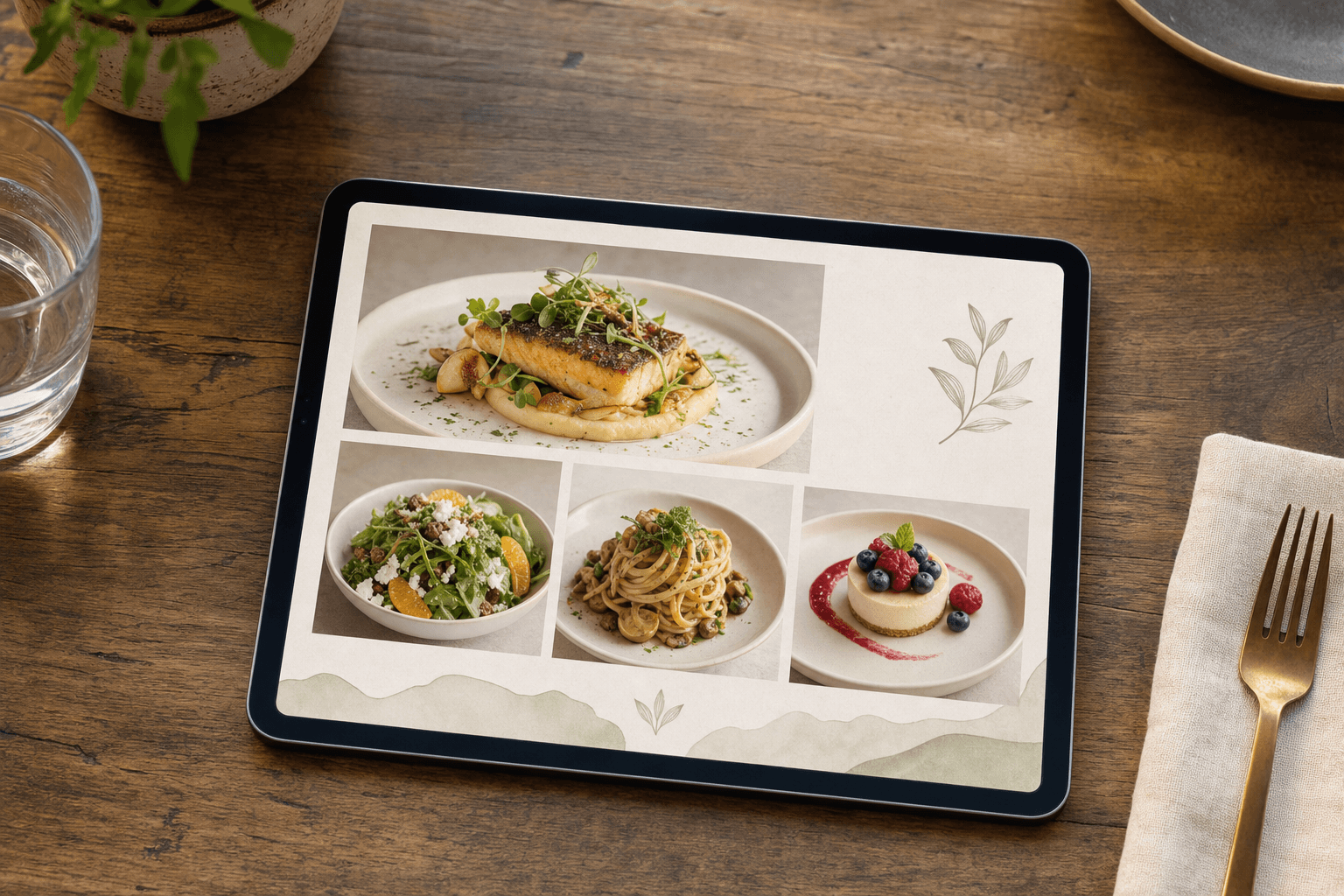
Most restaurant owners spend hours agonizing over recipes, plating, and pricing — then dash off the menu item names in ten minutes. That's a mistake. The name is the first thing a guest reads, the thing they repeat to their server, the phrase they type into Google, and the word they use when they tell a friend about your place. A weak name loses sales quietly. A strong name earns them just as quietly.
This guide breaks down exactly how to write menu item names that do three jobs at once: stick in guests' memories, reflect your restaurant's personality, and help your digital menu show up when people search online.
Why Menu Item Names Matter More Than You Think
A menu item name is not just a label. It's a micro-marketing message delivered at the exact moment a guest is deciding what to spend money on. Research in menu psychology consistently shows that descriptive, evocative names increase sales of individual items — sometimes by 25% or more compared to plain, generic names. "Slow-Braised Short Rib with Roasted Garlic Jus" outsells "Beef Ribs" every time, even when the dish is identical.
Beyond the table, names matter online. When a guest searches "best birria tacos in Austin" or "spicy ramen near me," your menu's text content is part of what search engines index. If your item is just called "Ramen #3," it contributes nothing to your discoverability. A name like "Hakata Tonkotsu Ramen" tells Google — and your guest — exactly what it is.
And then there's brand identity. Every word on your menu is a signal. Playful names say you're casual and fun. Precise, technique-driven names say you're serious about craft. Locally rooted names say you're part of the community. Inconsistency — a mix of cute nicknames and sterile ingredient lists — creates confusion about who you are.
Start With Your Brand Voice
Before you write a single name, define the tone your restaurant speaks in. This doesn't need to be a formal brand document. Just answer three questions honestly:
- How do your best regulars describe your place to friends? ("It's this cozy little spot" vs. "it's super upscale" vs. "it's a total dive but the food is insane")
- What's the vibe when someone walks in? Loud and social? Quiet and intimate? Fast and efficient?
- What do you want guests to feel when they read your menu? Excited? Comforted? Impressed? Curious?
Your answers define a naming register — the level of formality, playfulness, and specificity your item names should hit. A taco truck that calls its signature item "The Executive Filet Mignon Taco" is sending mixed signals. A fine-dining bistro that names a dish "The Piggy Wiggy" is doing the same. Alignment between your room, your food, and your words is what makes a brand feel coherent.
Write down five adjectives that describe your brand, then check every item name against them. If "approachable," "local," "bold," "unpretentious," and "seasonal" are your words, names should feel like they come from that world — not from a hotel banquet menu or a fast-food chain.
The Anatomy of a Strong Menu Item Name
Good menu item names usually contain at least two of these three elements:
1. A Concrete Identifier
This is the what — the ingredient, dish type, or cuisine reference that tells guests exactly what they're getting. "Mushroom Risotto," "Smash Burger," "Miso Glazed Salmon." Concrete identifiers anchor the name and make it searchable. Don't sacrifice clarity for cleverness. A guest who can't figure out what a dish is will default to something they recognize.
2. A Sensory or Origin Modifier
This is the detail that makes the name evocative rather than generic. Modifiers can be:
- Technique-based: Slow-roasted, wood-fired, hand-rolled, cold-pressed
- Origin-based: Calabrian, Oaxacan, Hokkaido-style, New England
- Texture or temperature: Crispy, silky, charred, chilled
- Time or process: 48-hour, house-made, dry-aged, fermented
A single well-chosen modifier does enormous work. "Crispy Duck Leg Confit" is more compelling than "Duck Leg" — and it's still only four words.
3. A Brand-Specific Hook (Optional but Powerful)
This is where personality lives. A hook can be a proper noun (a person's name, a place, a local reference), a playful phrase, or a nod to your story. "The Pitmaster's Brisket," "Mission District Carnitas," "Grandma Rosa's Meatballs." Hooks create emotional connection and make names memorable. They also give servers a story to tell — "That one's named after our head chef's grandmother; she's been making that sauce since 1987."
Not every item needs a hook. Reserve them for signature dishes, bestsellers, and items you want to push. Using hooks on everything dilutes the effect.
Searchability: Writing Names That Work Online
If your menu lives on a digital restaurant menu page, the words in your item names are indexed by search engines. That means thoughtful naming is a low-effort form of SEO.
Here's how to approach it without making names feel robotic:
- Use the actual dish name people search for. If you make a Neapolitan-style pizza, calling it "Margherita Pizza" is better for search than "The Classic" — even if "The Classic" is more on-brand. The fix: call it "The Classic Margherita" and get both.
- Include cuisine-specific terms when accurate. "Tonkotsu," "al pastor," "shakshuka," "pho" — these are real search terms. If you're making these dishes, use the right names.
- Avoid purely internal nicknames as primary names. "The #7" or "The Special" tells search engines nothing. If you love the nickname, use it as a subtitle or badge, not the primary name.
- Think about what a first-time visitor would type. They're searching for a dish type or cuisine, not your internal lingo. Meet them where they are.
This is especially important if you're using a QR code menu or have your menu embedded on your website. Every item name is a small piece of content that either helps or ignores your discoverability. There's no cost to making it help.
Common Naming Mistakes and How to Fix Them
The Generic Trap
"Chicken Sandwich," "Garden Salad," "Pasta of the Day." These names are invisible. They don't differentiate, they don't sell, and they don't stick. Fix: Add at least one specific modifier. "Buttermilk Fried Chicken Sandwich," "Shaved Fennel and Citrus Salad," "Bucatini all'Amatriciana."
The Overcrowded Name
"Pan-Seared Atlantic Salmon with Lemon-Caper Beurre Blanc, Haricots Verts, and Fingerling Potatoes." This isn't a name — it's a description masquerading as one. Long names are hard to say, hard to remember, and slow down ordering. Fix: Trim to the two or three most distinctive elements and move the rest to the description line. "Seared Atlantic Salmon, Lemon-Caper Beurre Blanc" works. The sides live in the description.
The Pun That Only You Understand
Internal jokes and hyper-local references can be charming — but only if guests are in on it. "The Hendersons" means nothing to a first-time visitor. Fix: If you use a proper noun or reference, give it a subtitle that grounds it. "The Hendersons — Smoked Brisket Tacos" gives you the personality and the clarity.
Inconsistent Register
One section uses poetic, evocative names; the next reads like a grocery list. This happens when menus are built incrementally, with different people writing different sections at different times. Fix: Audit your full menu in one sitting and rewrite for consistent tone. Use your five brand adjectives as a filter.
Ignoring Dietary Language
Guests with dietary needs scan menus fast. If your plant-based dishes are buried under names that give no hint of their nature ("The Garden"), you're making their experience harder. Fix: You don't need to lead with "Vegan" — but a name like "Roasted Cauliflower Steak" signals what it is immediately, which is both honest and useful.
A Practical Naming Process
Here's a repeatable workflow for naming any new menu item:
- Write the plain name first. What is it, technically? "Duck leg, braised, served with lentils."
- Add the most distinctive detail. What makes your version specific? The technique, the origin, the key flavor? "Slow-braised duck leg, Puy lentils."
- Check against your brand voice. Does this sound like you? Is it too formal, too casual, too generic?
- Consider a hook if warranted. Is this a signature dish? Does it have a story? "The Farmhouse Duck — Slow-Braised Leg, Puy Lentils."
- Say it out loud. Can a server say it naturally? Can a guest repeat it? If it's awkward to say, it's awkward to order.
- Check searchability. Would someone search for any of these words? Are you using the correct culinary term for the dish?
This process takes three minutes per item once you're used to it. It's worth every second.
Names, Descriptions, and the Division of Labor
A common mistake is trying to make the name do everything. The name and the description are a team. The name earns attention and creates desire; the description closes the sale with specifics — allergens, preparation details, portion notes, and secondary ingredients.
Think of the name as a headline and the description as the body copy. A strong headline is short, punchy, and intriguing. It doesn't try to explain everything. That's what the description is for. When you build your menu online, you have room for both — use that structure intentionally.
If you're working with a tight format (a chalkboard, a QR code menu with limited space), prioritize the name and let it carry more weight. If you have room for descriptions, keep the name lean and let the description do the detail work.
Keeping Names Consistent Across Channels
Whatever names you settle on, use them everywhere — your in-house menu, your website, your Google Business Profile, your social media posts, your receipts, and your staff's verbal recommendations. Inconsistency erodes recognition. If your signature burger is "The Smokehouse Stack" on the menu but your Instagram calls it "our famous smash burger," you're splitting the brand equity between two names.
When you update your menu, update every channel simultaneously. This is one of the strongest arguments for a digital menu platform — change the name once, and it's updated everywhere guests see it. Menu templates that pull from a single source of truth make this easy and reduce the risk of stale names living on forgotten pages.
Frequently Asked Questions
How long should a menu item name be?
Aim for two to five words for most items. Short enough to say naturally, long enough to be specific. If you find yourself going past six or seven words, you're writing a description, not a name — move the extra detail to the description field.
Should I use foreign-language terms in my menu item names?
Yes, when they're accurate and meaningful. Culinary terms in their original language (al pastor, beurre blanc, tonkotsu, shakshuka) are often the most precise and searchable option. Avoid using foreign terms decoratively when there's no culinary basis — it reads as inauthentic and can confuse guests.
Can I name menu items after people or places?
Absolutely — it's one of the most effective ways to add personality and story. Just make sure the name is paired with a subtitle or description that tells guests what the dish actually is. "Aunt Clara's Lasagna" is charming; "Aunt Clara's Lasagna — slow-baked with house ricotta and San Marzano tomatoes" is charming and useful.
How often should I revisit and update my menu item names?
Do a full audit at least once a year, or whenever you do a significant menu overhaul. Also revisit names when you notice a dish consistently underperforming — sometimes a rename is the cheapest fix available. Track whether renamed items see a sales bump; it's a quick feedback loop.
Do menu item names affect my restaurant's SEO?
Yes, directly. If your menu is published online — whether on your own website or through a platform — search engines index the text. Specific, accurate item names that match what people search for (dish types, cuisine styles, key ingredients) improve your chances of appearing in local food searches. Generic or nickname-only names contribute nothing to that discoverability.
Ready to put better names to work on a menu that looks as good as it reads? MenuHoster's digital menu platform makes it easy to build, update, and publish your menu across every channel — so your carefully crafted names reach guests wherever they're looking. See our plans and get started free — no design experience required.
MenuHoster Team
Helping restaurants go digital