Turning Your Cafe Window Into a Street-Level Marketing Asset
Updated:
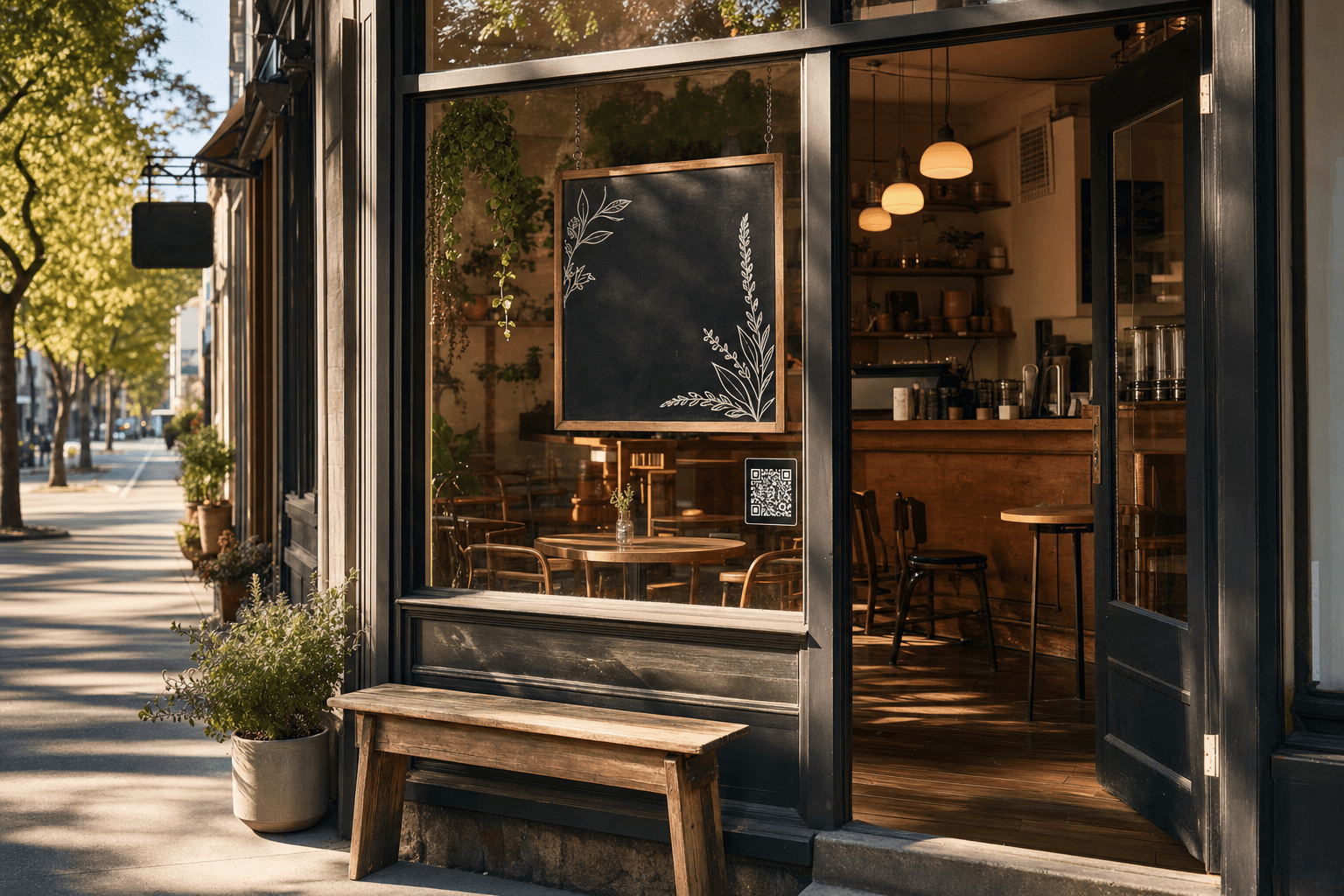
Every morning, dozens — maybe hundreds — of people walk past your cafe. Some of them are already customers. Most of them aren't yet. Your window is the single piece of real estate you have that talks to every single one of them, for free, every day. And most independent cafes waste it.
A faded paper sign, a half-peeled sticker, or an empty pane of glass isn't neutral — it actively signals that nothing interesting is happening inside. But a well-thought-out window display? That's a silent salesperson working 24/7. This guide will show you exactly how to turn that glass into a genuine marketing asset, without a big budget or a design degree.
Understand Who's Actually Walking By
Before you put anything in your window, spend five minutes thinking about who's passing it. Your window audience isn't the same as your seated customer base — it includes:
- Commuters on autopilot who need a reason to break their routine
- Neighborhood regulars who already like you but need a nudge to come in more often
- Visitors and tourists who are actively looking for somewhere to stop
- Remote workers scouting for a place to sit for a few hours
- People who've walked past a dozen times but never had a specific reason to come in
Each of these groups responds to different messages. A commuter needs speed and simplicity ("Oat flat white ready in 90 seconds"). A remote worker needs permission ("Fast Wi-Fi, no time limit"). A first-timer needs social proof ("Voted Best Independent Cafe — City Guide 2024"). Knowing who's outside helps you decide what to say.
Think in Zones: The Hierarchy of Window Space
Your window isn't one surface — it's several, and each one has a different job.
Eye-level zone (roughly 4–6 feet from the ground)
This is prime real estate. It's where a walking adult's gaze naturally lands. Use it for your single most important message: a rotating daily special, a seasonal launch, or your core value proposition. Keep it to one idea. One. The moment you try to say three things at eye level, you say nothing.
Below eye-level zone (2–4 feet)
This is where QR codes live. People slow down, they're curious, they pull out their phones. A QR code placed here — linking to your digital cafe menu or your online ordering page — can convert a passerby into an order before they've even opened the door. More on this below.
Upper zone (above 6 feet)
This is for brand identity — your logo, your tagline, the visual language that makes you recognizable from half a block away. It's not for detailed information. Nobody tilts their head back to read small text.
Corner and edge zones
Often ignored. These are great for directional cues ("Order inside →"), social handles, or a small loyalty card prompt. Small touches that reward people who are already slowing down to look.
Messaging That Actually Pulls People In
The most common mistake cafe owners make with window signage is writing for themselves instead of for the person outside. "Proudly serving specialty coffee since 2018" is about you. "The best cortado in a ten-minute walk" is about them.
Here are message frameworks that consistently work at street level:
The specific promise
Vague is invisible. "Great coffee" doesn't make anyone stop. "Single-origin Ethiopian pour-over, brewed to order" does. The more specific you are, the more credible you sound — and the more you filter for exactly the customer who wants what you have.
The time-sensitive hook
"Today only: Brown butter croissant" or "Autumn menu — back for four weeks only." Scarcity and time pressure are powerful at street level because the decision window is literally three seconds. If someone can come back tomorrow and get the same thing, there's no reason to stop now.
The social proof signal
A single quote from a real customer, a local press mention, or a recognizable award badge builds instant trust with strangers. Keep it short and attribute it clearly. "The only place I come to work" — @username is more believable than a generic five-star graphic.
The problem-solver
Speak directly to a pain point the person outside probably has right now. "Grab-and-go breakfast in under 2 minutes." "Quiet corner tables, no booking needed." "Nut-free kitchen." These messages work because they answer a question the customer was already asking.
QR Codes in Your Window: The Underused Conversion Tool
A QR code in your cafe window sounds simple, but the execution matters enormously. Done right, it can drive pre-orders, grow your social following, and let curious passersby browse your menu before they commit to walking in.
The key rules:
- Make it large enough to scan from standing distance — at least 3 inches square on the glass, ideally larger. A tiny QR code is useless.
- Add a one-line instruction above or below it: "Scan to see today's menu" or "Order ahead — skip the queue." Without context, most people won't bother.
- Link it somewhere worth landing. A QR code that goes to your homepage is a missed opportunity. Link it directly to your QR code menu or your online ordering page so the person can take action immediately.
- Use a vinyl decal, not a printed sheet. A laminated A4 page taped to the inside of the glass looks like an afterthought. A professionally cut vinyl decal at below-eye-level looks intentional and permanent.
- Test it monthly. Links change, menus move, platforms update. A broken QR code in your window is worse than no QR code — it signals disorganization.
The window QR code is especially powerful for the "I'll come back later" crowd. They scan it, browse your menu on the bus, and actually do come back — because now they have something specific they want to order.
Seasonal and Rotating Displays: Keep Regulars Paying Attention
One of the biggest mistakes independent cafes make is setting up a window display and leaving it for six months. Your regulars walk past every day. If nothing ever changes, they stop seeing it. A window that rotates — even slightly — keeps your most loyal customers curious.
You don't need a full redesign every week. A simple system works well:
- Monthly anchor: One main seasonal theme (autumn harvest, winter warmers, spring refresh). This drives the overall look — colors, props, the central message.
- Weekly swap: One element that changes, usually the featured item or special. A chalkboard insert, a swappable card, or a digital screen makes this easy.
- Daily detail: A small handwritten element — today's batch brew, a quote, the day's pastry. This rewards people who look closely and signals that a real human runs this place.
Seasonal displays also give you content. When you change your window, photograph it. Post it. Tag your location. The window becomes a content engine, not just a static sign. This ties directly into how you present your cafe's menu and offerings across every touchpoint — physical and digital should reinforce each other.
Lighting and Visibility After Dark
Most cafe owners optimize their window for daytime and forget that evenings — especially in autumn and winter — are when foot traffic is highest in many neighborhoods. If your window goes dark at 5pm, you're invisible to the after-work crowd.
Simple upgrades that make a real difference:
- Backlit signage or LED strip lighting behind or around your key message makes it readable after dark without being garish.
- Warm internal lighting visible from outside is one of the most powerful "come in" signals there is. If your interior looks warm and inviting from the street, the window itself becomes the ad.
- Illuminated menu boards near the window let people browse before entering — which reduces hesitation and increases conversion, especially for new customers.
What Not to Put in Your Window
Equally important is what to leave out. Cluttered windows are worse than empty ones because they create cognitive overload — the eye doesn't know where to look, so it moves on.
- Avoid stacking too many promotions. One strong message beats five weak ones every time. If everything is promoted, nothing is.
- Remove anything faded, peeling, or out of date. A Christmas promotion still visible in February doesn't just look lazy — it actively damages trust.
- Don't block the view inside. People want to see the atmosphere before they commit to entering. A window that's 80% covered with signs removes that preview and makes the space feel closed-off.
- Skip generic stock imagery. A printed poster of a generic latte with a Shutterstock watermark says "chain." Real photos of your actual drinks, your actual space, your actual team say "independent."
Connecting Your Window to Your Digital Presence
Your window doesn't operate in isolation. The most effective cafes treat it as the first step in a customer journey that continues online. Someone sees your window, scans a QR code, lands on your digital menu, places an order, follows you on Instagram, and becomes a regular — all because of one good piece of glass.
To make that journey seamless:
- Make sure your QR code links to a mobile-optimized menu. A menu that's hard to read on a phone will kill the conversion before it starts. A well-designed digital menu loads fast, looks clean, and makes ordering easy.
- Include your social handle in the window — but only if your account is active and worth following. An Instagram handle that leads to a profile with 12 posts from 2021 is worse than no handle at all.
- If you run a loyalty program, mention it in the window. "Join our loyalty program — ask inside" is a low-effort prompt that can meaningfully increase sign-ups from walk-ins.
Low-Budget, High-Impact Window Ideas
You don't need to hire a designer or spend hundreds of dollars to make your window work harder. Here are practical ideas that independent cafes have used to great effect:
- A single oversized chalkboard insert with a hand-lettered daily special. Imperfect handwriting is more charming than a printed font — it signals human craft.
- A "right now" board — a small sign that says what's freshly made at this moment. "Banana bread just out of the oven" is irresistible to the right person.
- A customer photo wall visible from outside. A curated collection of customer photos (with permission) creates social proof and curiosity simultaneously.
- A "what we're listening to" board. Small, costs nothing, but tells passersby something about your personality. Music is a powerful vibe signal.
- A countdown or teaser for a new menu item. "Something new arriving Thursday" builds anticipation among regulars without giving anything away.
Frequently Asked Questions
How often should I change my cafe window display?
At minimum, refresh the main seasonal theme monthly and swap at least one element weekly. Daily changes — even small ones like a handwritten special — keep regular passersby engaged. The goal is to make people feel like something new might be happening each time they walk by.
What size should a QR code be in a cafe window?
For reliable scanning from a standing position (roughly 18–24 inches from the glass), your QR code should be at least 3–4 inches square. If you want it scannable from the sidewalk (3–6 feet away), go larger — 6 inches or more. Always test it yourself from the distance a passerby would realistically stand.
Should I put my full menu in the window?
No. A condensed "greatest hits" version — your signature drinks, a featured food item, and a price anchor — is far more effective than a full menu. Full menus create decision fatigue before someone has even walked in. Use a QR code to let curious people access the full menu on their phone.
How do I make my window stand out from the chain cafe next door?
Lean into specificity and personality — the two things chains can't do. Use real photos of your actual products, real quotes from real customers, and handwritten elements that signal a human is behind the counter. Chains optimize for consistency; you should optimize for character.
Can my window display drive online orders?
Absolutely. A QR code linking directly to your online ordering page can capture pre-orders from people who don't have time to stop right now but want to pick up later. This is one of the highest-ROI uses of window space — it converts foot traffic that would otherwise just walk on by.
Your cafe window is working every hour your doors are open — and even when they're not. If you're not being intentional about what it says and who it's saying it to, you're leaving real revenue on the table. Start with one clear message, one strong QR code, and a commitment to refresh it regularly. The results will show up in your daily count.
Ready to make your window's QR code worth scanning? Build your digital menu on MenuHoster — it's fast to set up, looks great on mobile, and gives passersby a reason to walk through your door. See our pricing and get started today.
MenuHoster Team
Helping restaurants go digital