YouTube Shorts and Reels vs. TikTok: Which Short-Form Video Platform Is Worth Your Time as a Restaurant Owner
Updated:
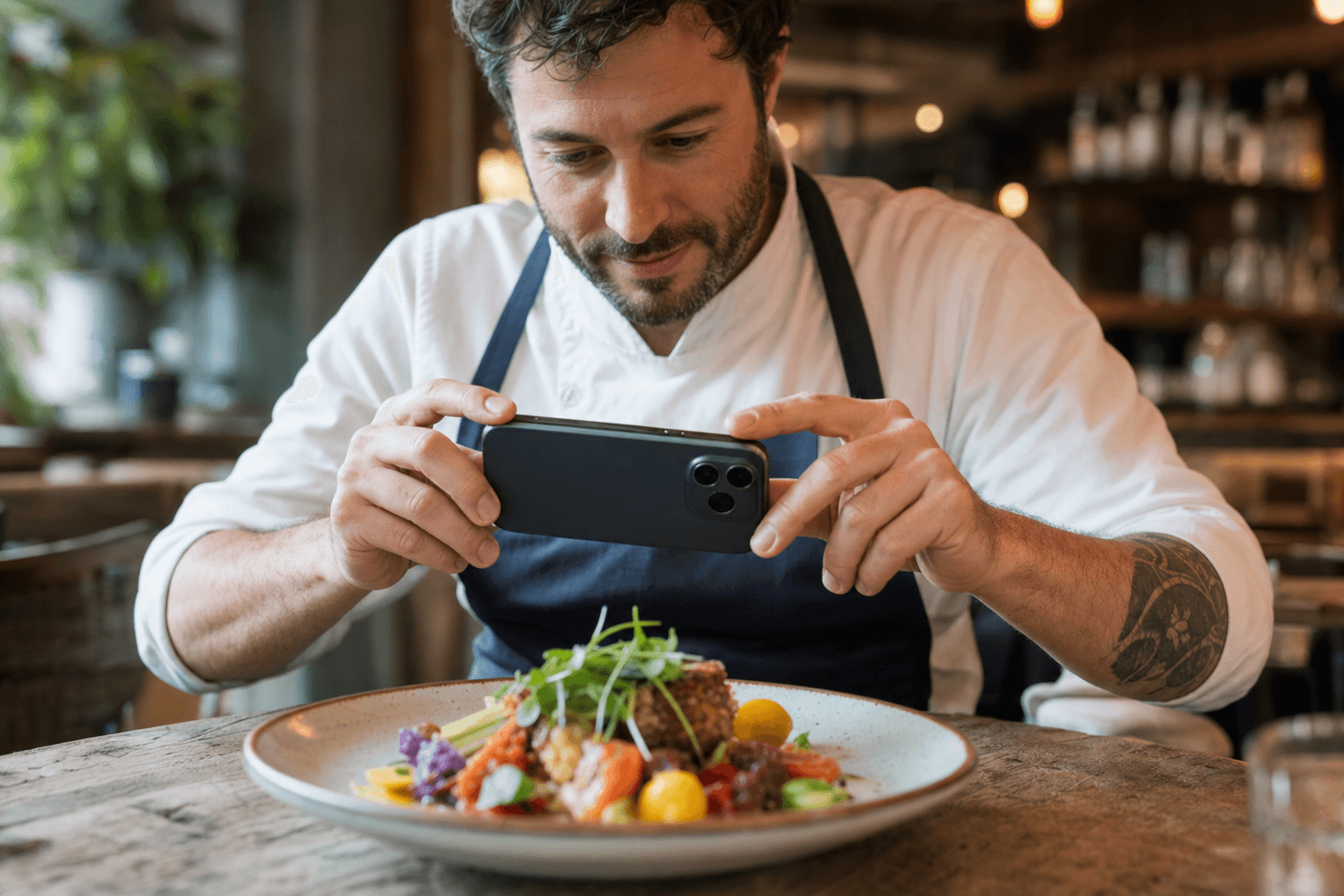
Short-form video is no longer optional for restaurants. A 30-second clip of a cheese pull or a sizzling skillet can generate more new customer interest than a month of flyer drops. But the big question independent restaurant owners ask is: which platform is actually worth my time?
TikTok, Instagram Reels, and YouTube Shorts each promise massive reach. They each have real differences in audience, algorithm behavior, discoverability, and longevity. Spreading yourself thin across all three is a fast track to burnout and mediocre content on every platform. This guide breaks down each one honestly so you can make a focused choice—and actually execute it.
The Case for TikTok
TikTok remains the most powerful discovery engine for food content. Its algorithm is uniquely aggressive about showing your video to people who don't follow you yet. That's the core advantage for a restaurant with zero existing audience: you don't need followers to get seen.
Who's on TikTok
TikTok skews younger—heavily 18–34—but that demographic has shifted older over the past two years. If your restaurant targets millennials or Gen Z, or if you're in a metro area or college town, TikTok's user base lines up well with your potential guests. If your core customer is 50+, the fit is weaker.
How the algorithm works in your favor
TikTok's For You Page (FYP) is interest-based, not follower-based. A brand-new account with 12 followers can post a video of a perfectly executed birria taco and get 80,000 views in 48 hours. This has happened to real independent restaurants, repeatedly. The algorithm watches completion rate, replays, and shares more than likes. Practical implication: make your first three seconds irresistible, and make your content short enough that people watch it twice.
TikTok's real drawbacks
- Regulatory uncertainty. The U.S. ban saga has been unresolved for over a year. Building your entire marketing presence on TikTok carries platform risk that Reels and Shorts don't.
- Content shelf life is short. TikTok videos spike fast and fade fast. A video that goes viral this week is largely invisible next month.
- It rewards volume. Posting 3–5 times per week produces better results than posting once. For a solo operator running a kitchen, that's a real time commitment.
The Case for Instagram Reels
Reels live inside Instagram, which means they benefit from everything Instagram already does well for restaurants: visual storytelling, location tagging, DM-based reservations, and a user base that actively follows food accounts. If you already have an Instagram presence, Reels is the lowest-friction place to start with video.
Who's on Instagram
Instagram's active user base skews 25–44—slightly older than TikTok. This is often the exact demographic that books Friday-night dinner reservations or plans weekend brunch. If your restaurant already has Instagram followers, Reels get surfaced to them first, which gives you a built-in warm audience that TikTok newcomers don't have.
How the algorithm works
Instagram's Reels algorithm has improved significantly, but it still leans more on your existing follower base than TikTok does. Discovery through the Explore tab and the Reels feed does happen, but it's less explosive for unknown accounts. The upside: content has a longer tail. A Reel you posted six months ago can still drive profile visits and follows if it gets reshared. Instagram also lets viewers click directly to your bio link, which is critical for driving traffic to your digital menu or ordering page.
Reels' real drawbacks
- Instagram is pay-to-play at scale. Organic reach has declined for static posts; Reels get more organic push, but boosting still helps.
- Production expectations are slightly higher. Instagram audiences are accustomed to polished visuals. Raw, shaky phone video performs worse here than on TikTok, where authenticity is a feature.
- Cross-posting from TikTok hurts you. Instagram's algorithm actively deprioritizes Reels with a TikTok watermark. If you're repurposing content, remove the watermark first.
The Case for YouTube Shorts
YouTube Shorts is the most underrated platform for restaurants right now, precisely because most restaurant owners ignore it. YouTube is the world's second-largest search engine. Shorts get surfaced in regular YouTube search results, not just in the Shorts feed—which means a video titled "best birria tacos in Austin" can appear when someone literally searches for that phrase.
Who's on YouTube
YouTube has the broadest demographic reach of the three platforms. Ages 18–65+ all use it regularly. If your restaurant serves a wide age range, YouTube Shorts gives you access to an audience TikTok simply doesn't reach.
The search advantage
This is the single biggest differentiator. TikTok and Reels are discovery platforms—the algorithm pushes content to users. YouTube is also a search platform. Titling your Shorts with specific local search terms ("best brunch spot in [your city]," "try our new ramen," "how we make our smash burger") gives your content a discoverability layer that compounds over time. A Short you posted a year ago can still bring in new viewers today if it ranks for a search term.
YouTube Shorts' real drawbacks
- Lower immediate virality. You're unlikely to get 100K views overnight the way TikTok can deliver. Growth is slower but stickier.
- Smaller food community. The food discovery culture on YouTube Shorts is less developed than on TikTok or Instagram. Food content does well, but the community engagement (comments, duets, stitches) is quieter.
- Requires more intentional titling and description. The SEO benefit only kicks in if you treat your titles and descriptions like search content, not just captions.
Head-to-Head: What Actually Matters for a Restaurant Owner
Discovery potential for a brand-new account
TikTok wins. If you have no audience anywhere and want the fastest path to eyeballs, TikTok's algorithm is the most democratic. A single strong video can change your week's reservation count.
Long-term content value
YouTube Shorts wins. Content that ranks in search keeps working for you without additional effort. For operators who can't post consistently, a library of well-titled Shorts builds cumulative value over time.
Driving direct action (orders, reservations, menu views)
Instagram Reels wins. The bio link, DM functionality, and location tagging make it the easiest platform to convert a viewer into a customer. Pair your Reels with a clean link in bio pointing to your online ordering page, and you have a direct path from video to transaction.
Ease of production for a busy operator
TikTok wins (barely). The platform's own editing tools are excellent, raw authenticity is rewarded, and the creative bar is lower. You don't need a ring light and a tripod. A phone held steady over a plate, good natural light, and a trending audio track is genuinely enough.
Audience age match for most restaurants
Instagram Reels is the safest bet for most independent restaurants serving a 25–55 demographic. YouTube Shorts is the right call if you want to reach older diners or if local search visibility is a priority.
What Content Actually Works on Each Platform
TikTok content that performs
- Behind-the-scenes prep: butchering, sauce-making, dough-stretching
- Satisfying food shots: cheese pulls, sauce pours, stacks being cut
- Day-in-the-life of a restaurant owner (authentic, unscripted)
- Responding to comments with a video ("you asked for the recipe...")
- Trend participation—using trending audio with your food as the visual
Reels content that performs
- Polished dish reveals with clean lighting
- Seasonal menu announcements
- Short staff spotlights or origin stories
- Before/after plating transformations
- User-generated content reposts (with permission)
YouTube Shorts content that performs
- Titled how-tos: "How we make our [signature dish]"
- Local search-optimized clips: "[City]'s best [dish type]"
- Menu walkthroughs and new item reveals
- Short documentary-style clips about your restaurant's story
The Honest Recommendation: Pick One and Go Deep
Every platform will tell you to post everywhere. That advice is written for brands with a social media team. You are a restaurant owner who also cooks, manages staff, handles inventory, and deals with health inspections. You have maybe 30–45 minutes a week for video content.
Here's a practical framework:
- If you're starting from zero and want fast results: Start with TikTok. Post 3x per week for 60 days. Measure whether you're seeing new faces mention TikTok when they come in. If yes, double down. If not, pivot.
- If you already have an Instagram following: Prioritize Reels. You have a warm audience. Use it. Make sure your bio link goes somewhere useful—your restaurant menu page or ordering link, not just your homepage.
- If you want low-maintenance, long-term discoverability: Post to YouTube Shorts with intentional titles. Even 1–2 Shorts per week, consistently titled with local search terms, will build a searchable library that works while you sleep.
Once you've established a rhythm on one platform, cross-posting to the others takes about five extra minutes per video (just remove the watermark). But don't let cross-posting be the reason you start—it leads to lowest-common-denominator content that doesn't perform well anywhere.
Connecting Your Video Content to Actual Revenue
Views are vanity if they don't convert. The most common failure mode for restaurant video marketing is a broken chain between the video and the next step. Someone watches your taco video, wants to order, taps your profile, and finds a dead link or no link at all.
Fix this before you post a single video:
- Every platform bio should link to a page where someone can view your full menu or place an order.
- Your menu page should load fast on mobile. A PDF menu or a poorly formatted page loses customers who found you through video.
- If you take online orders, make sure the path from video to checkout is three taps or fewer.
A zero-commission online ordering setup means every customer your video drives to an order is money that stays in your pocket—not split with a third-party delivery app. That math changes quickly when a video starts performing.
It's also worth thinking about how your video content supports your broader digital presence. If you're using your menu page as a link-in-bio destination, make sure it's a page you'd be proud to send someone to—not a clunky PDF or an outdated printout scan.
Frequently Asked Questions
Do I need professional equipment to make good restaurant videos?
No. A modern smartphone in good natural light is sufficient for all three platforms. The biggest production upgrade you can make is free: shoot near a window during daylight hours instead of under fluorescent kitchen lights. A $20 phone clamp for overhead shots is useful for plating videos. That's genuinely all you need to start.
How long should my restaurant videos be?
For TikTok and Reels, 15–30 seconds tends to get the best completion rates for food content. YouTube Shorts max out at 60 seconds, and 45–60 seconds works well if you have a story to tell (like a dish origin or a behind-the-scenes process). Avoid padding. If the interesting part is over at 20 seconds, end at 20 seconds.
Should I use trending audio on every video?
On TikTok, using a trending audio track does give your video a small algorithmic boost, and it's worth doing when it fits naturally. Don't force it if the audio clashes with your brand. On Instagram Reels, trending audio also helps with reach. On YouTube Shorts, audio trends matter less—search optimization matters more.
What if I post and get no views?
Low initial views are normal, especially on a new account. Give it 48–72 hours before judging performance—TikTok in particular can resurface videos days after posting. If consistent posting over 4–6 weeks yields nothing, look at your hook (the first three seconds), your audio choice, and whether your content matches what's performing in your niche. Don't interpret slow starts as proof that video doesn't work for restaurants. It does—the execution usually needs adjusting.
Can I just cross-post the same video to all three platforms?
Yes, with one rule: remove the TikTok watermark before posting to Reels or Shorts. Apps like SnapTik or InShot let you download your TikTok video without the watermark. Beyond that, the same video works fine on all three—just write a platform-specific caption and title for YouTube to capture search value.
Ready to make sure every view your videos generate actually leads somewhere? MenuHoster gives your restaurant a fast, mobile-optimized menu page and online ordering link that's built to be your link-in-bio destination. Set it up once, point all your social profiles at it, and let your video content do the rest. Try MenuHoster free and turn your next viral moment into a full table.
MenuHoster Team
Helping restaurants go digital