How to Create a Signature Dish That Becomes Your Best Marketing Tool
Updated:
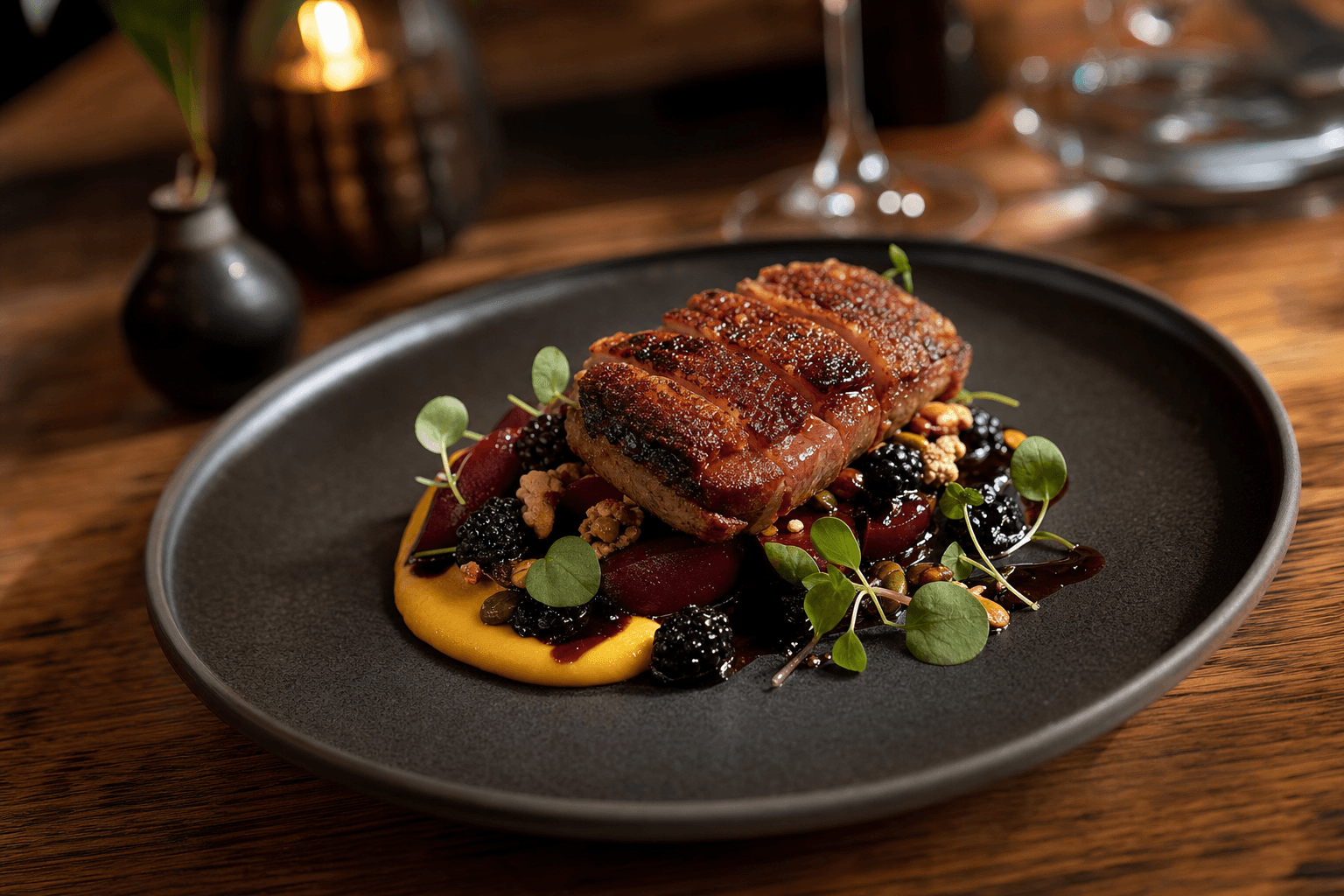
Every restaurant owner knows the feeling: a guest finishes a plate, looks up, and says, "I have to bring my friends here just for this." That moment—when a single dish turns a customer into a walking advertisement—is the most cost-effective marketing you will ever do. It costs nothing extra, scales infinitely through word of mouth, and no algorithm can take it away from you.
But a signature dish doesn't happen by accident. It's engineered. This guide walks you through exactly how to build one, present it, and turn it into a self-sustaining marketing engine for your independent restaurant.
What Actually Makes a Dish a "Signature"
The word gets thrown around loosely. Every chain restaurant claims a signature burger. But a true signature dish has three qualities that set it apart from the rest of your menu:
- It is distinctly yours. Guests can't easily replicate it at home or find it down the street. There's a specific combination of technique, ingredient, or presentation that feels proprietary.
- It tells a story. Whether it's rooted in your family history, your chef's travels, or a hyper-local ingredient, there's a reason it exists on your menu that goes beyond "it sells well."
- It is consistently remarkable. Not just good—remarkable. Guests remark on it. They tell other people. That's the bar.
If a dish meets all three criteria, you have the raw material for a marketing asset. If it only meets one or two, keep developing it.
Start With What You Already Have
You don't need to invent something from scratch. Your signature dish is often already hiding in your kitchen. Here's how to find it:
Look at your reorder data
Which items do tables order a second time in the same visit? Which ones prompt guests to ask, "What was that again?" before they leave? If you're using a digital menu, you may already have click and order data that reveals which items get the most attention. That's your starting shortlist.
Ask your regulars directly
Pick five of your most loyal customers and ask them one question: "If you were sending a friend here for the first time, what would you tell them they absolutely have to order?" Their answers will be more honest than any focus group. If three out of five say the same dish, you have your answer.
Audit your reviews
Go through your Google, Yelp, and social media reviews and highlight every time a guest mentions a specific dish by name. Tally them. The dish that gets named most often is already behaving like a signature—it just may not be positioned as one yet.
Develop the Dish With Marketing in Mind
Once you have a candidate, refine it deliberately. Great food is the foundation, but a signature dish that markets itself has a few additional design requirements.
Make it visually distinct
Guests eat with their eyes first—and they photograph with their phones second. Your dish needs a visual hook: an unusual color, a dramatic height, a striking garnish, a unique vessel, or an unexpected tableside element. Think about what makes someone stop scrolling when they see it on Instagram. That visual hook doesn't need to be gimmicky; it just needs to be unmistakably yours.
Ask yourself: if someone posted a photo of this dish with no caption, would a regular customer recognize it as yours? If yes, you're on the right track.
Give it a name worth repeating
Generic names don't travel. "Grilled Salmon" doesn't get mentioned in conversation. "The Fisherman's Revenge" does. A name that's evocative, slightly mysterious, or tied to a real story gives guests something to say when they recommend it. Keep it short enough to remember and specific enough to be yours alone.
Build in a story guests can retell
The best marketing copy for your signature dish is what your servers say at the table. Give them two or three sentences: where the recipe came from, what makes the ingredient special, why you put it on the menu. Guests who hear a good story become storytellers themselves. That's free PR with every table turn.
This story also belongs on your menu. A well-written dish description that conveys personality and provenance can dramatically increase orders. If you want to sharpen your copy skills, check out the guidance on how to write a menu description that sells—the principles apply directly here.
Position It Prominently on Your Menu
A signature dish that's buried in the middle of a long menu is a missed opportunity. Menu placement and design directly influence what guests order. Here's how to give your signature dish the spotlight it deserves:
- Feature it first or in a callout box. The upper-right area of a printed menu and the top of a digital menu section both receive the most visual attention. Put your signature there.
- Use a "Chef's Pick" or "Our Famous" badge. A simple label signals to first-time guests that this is the dish to try. It removes decision fatigue and gives them permission to order confidently.
- Give it more real estate. A slightly longer description, a photo, or a visual separator all say "this one matters" without a single word of explanation.
If you're managing a restaurant menu online, updating the placement and adding a badge or featured image takes minutes—no reprinting required. That flexibility means you can test different presentations and see what drives more orders.
Turn It Into a Social Media Asset
Your signature dish should have its own content strategy, even if that strategy is simple.
Invest in one great photo
You don't need a professional photographer on retainer. You need one excellent photo of your signature dish—shot in good natural light, styled carefully, from the angle that shows it best. That single image can anchor your Instagram profile, your Google Business listing, your menu page, your website header, and every piece of paid advertising you ever run. It's worth spending $100–$200 to get it right if you can't do it yourself.
Make it easy for guests to photograph
Lighting matters. If the corner where your best-looking dish gets served is poorly lit, guests' photos will look bad and they won't post them. Consider a small ring light or a brighter bulb in key areas. Make sure the plating is consistent every time—you want every guest photo to look like an advertisement, not a liability.
Create a reason to tag you
A small table card, a line on your menu, or a verbal prompt from your server asking guests to tag your restaurant when they post can meaningfully increase your organic social reach. You can also run a simple monthly contest: "Post a photo of [Dish Name] and tag us for a chance to win a free dessert." Low cost, high return.
User-generated content is one of the most powerful and underused tools available to independent restaurants. If you want to build a full system around it, the article on using user-generated content to market your restaurant for free is worth reading alongside this one.
Use It as a Hook Across All Your Marketing Channels
Once you have a defined signature dish with a great photo and a compelling story, use it consistently everywhere you market your restaurant.
Google Business Profile
Upload your signature dish photo to your Google Business Profile and add it to your "menu" section. When someone searches for restaurants near them, a striking food photo in your listing can be the difference between a click and a scroll-past.
Your online ordering page
If you offer online ordering, feature the signature dish at the top of your menu with its photo and full story. First-time online customers haven't been to your restaurant yet—your signature dish is the first impression that builds trust and drives the first order.
Local press and food bloggers
When you pitch a local food writer or blogger, lead with your signature dish. "We have a [Dish Name] that's unlike anything else in the neighborhood" is a much stronger hook than "we'd love to have you review us." Give them the story, the photo, and an invitation to come try it. A single feature in a local publication or blog can drive more new customers than months of paid social ads.
Neighborhood partnerships
Consider partnering with nearby businesses to cross-promote your signature dish. A local coffee shop could display a card about your restaurant's famous weekend brunch dish. A gym could mention your post-workout protein bowl. These partnerships cost little and reach people who are already in your neighborhood and looking for places to eat.
Protect Consistency at All Costs
A signature dish that is outstanding 80% of the time and mediocre 20% of the time will eventually damage your reputation rather than build it. Consistency is non-negotiable.
- Write a detailed recipe card with exact weights, cooking times, and plating instructions. Every cook who touches this dish should follow it precisely.
- Designate a quality check. Before the dish leaves the kitchen, someone—ideally you or your head cook—should visually confirm it meets the standard. Every time.
- Protect the key ingredient. If your signature depends on a specific supplier or a seasonal ingredient, build backup sourcing relationships now. Running out of the one thing that defines your restaurant is a reputational risk.
- Train your entire front-of-house team to describe it the same way. The story should be consistent whether it's told by your most experienced server or a new hire on their second shift.
Know When to Evolve It—and When Not To
Once a dish becomes your signature, resist the urge to change it significantly. Guests who return specifically for that dish are emotionally invested in it. Small refinements are fine; wholesale changes can feel like a betrayal to loyal customers.
That said, if a key ingredient becomes unavailable or cost-prohibitive, you'll need to adapt. Do it carefully, test the new version with trusted regulars before you roll it out publicly, and communicate the change honestly. "We've had to update our recipe slightly, but the spirit of the dish is the same" is far better than hoping no one notices.
If you want to retire a dish entirely someday, handle it with care. The article on how to sunset discontinued menu items without confusing loyal customers offers a practical framework for doing this without backlash.
Measure Whether It's Working
A signature dish should be measurable, not just celebrated. Track these indicators over time:
- Order frequency: What percentage of tables order it? Aim for at least 25–30% penetration. If it's lower, the problem may be placement, description, or server recommendations—not the dish itself.
- Review mentions: Are guests naming it in online reviews? Set up a Google Alert for your restaurant name and the dish name so you catch every mention.
- Social tags: How often is it appearing in tagged posts? Even a handful of organic posts per week compounds significantly over months.
- New customer attribution: Ask new guests how they heard about you. "I saw a photo of your [Dish Name] on Instagram" or "a friend told me I had to try the [Dish Name]" are the answers you're building toward.
Frequently Asked Questions
How long does it take to establish a signature dish?
There's no fixed timeline, but most restaurants see a dish start to gain word-of-mouth traction within three to six months of consistently promoting it. The key is repetition: every server mention, every social post, every review that names the dish compounds over time. Don't expect overnight results, but don't wait years to start either.
Should I have more than one signature dish?
You can, but start with one. Trying to build awareness for multiple "signature" items simultaneously dilutes your message and confuses potential guests. Establish one dish as the clear reason to visit, then—once it's firmly associated with your restaurant in the community's mind—you can develop a second. Many successful independent restaurants are known for exactly one dish for years before expanding their signature lineup.
What if my best dish is expensive to make?
Price it accordingly. A signature dish doesn't have to be your highest-margin item—it's your highest-marketing-value item. If the dish drives new customers through the door who then order drinks, appetizers, and desserts, the overall table spend justifies a thinner margin on the hero item. Run the full table economics, not just the per-dish food cost.
Can a drink or dessert be a signature item?
Absolutely. Some of the most viral restaurant content features cocktails, specialty coffees, or over-the-top desserts. The same principles apply: visual distinctiveness, a compelling name, a good story, and consistent execution. Drinks in particular photograph beautifully and tend to generate high social sharing rates.
How do I promote my signature dish without it feeling forced?
The best promotion feels like a recommendation, not an advertisement. Train your servers to mention it naturally: "A lot of our regulars start with the [Dish Name]—it's kind of what we're known for." That phrasing is honest, low-pressure, and effective. On social media, let guest photos and genuine stories do the heavy lifting rather than promotional copy.
Ready to make your signature dish impossible to miss? MenuHoster's digital menu platform lets you feature your best dish with photos, badges, and a compelling description—all without a designer or a developer. See our plans and get your signature dish in front of every guest, in-house and online, starting today.
MenuHoster Team
Helping restaurants go digital