How to Market a New Cafe in a Crowded Neighborhood
Updated:
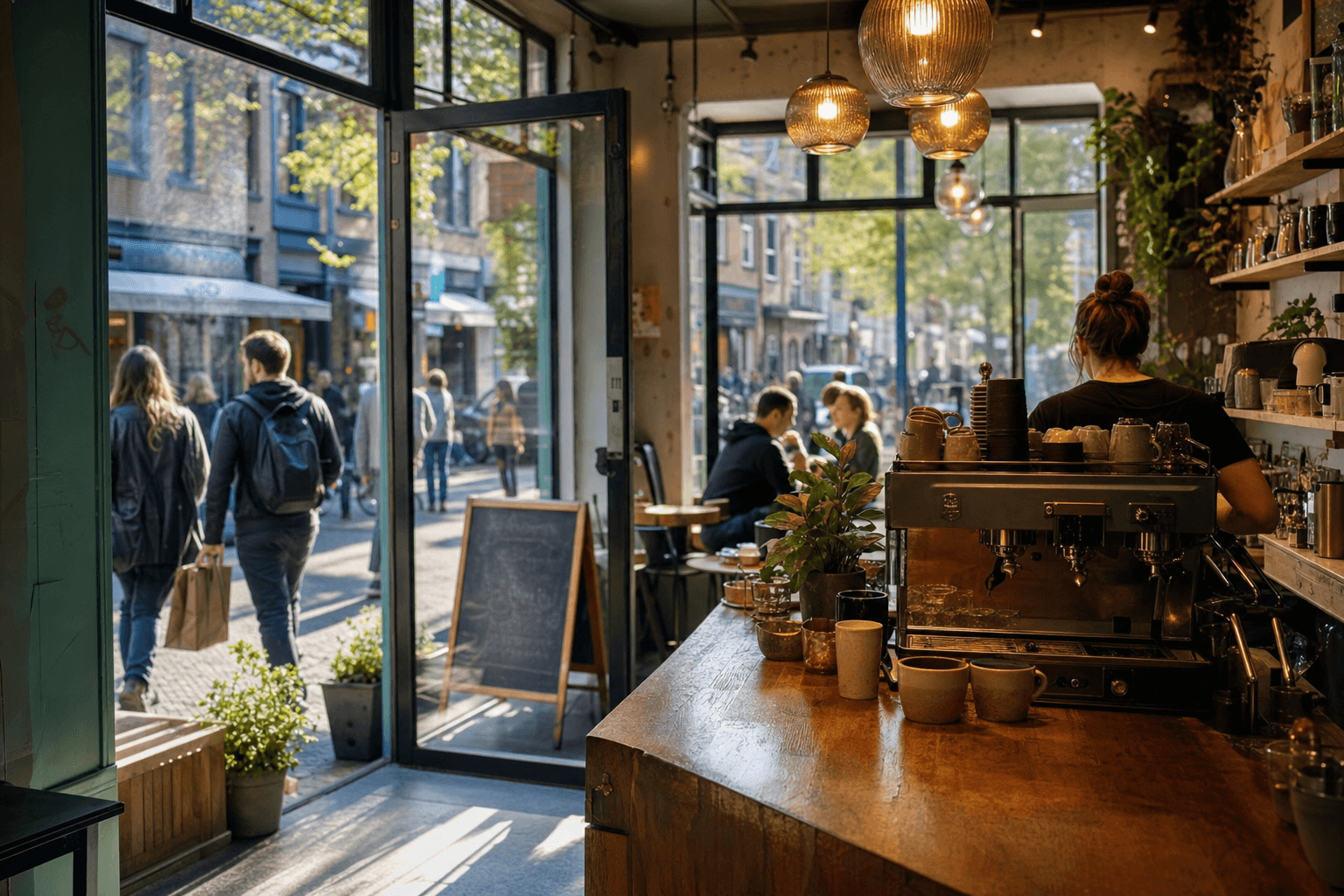
Opening a new cafe in a neighborhood that already has three coffee shops, a chain on the corner, and a bakery that does espresso is not a death sentence — but it does demand a smarter marketing approach than simply unlocking the door and hoping foot traffic does the work. The good news: independent cafes have a structural advantage over chains. You can be personal, flexible, and genuinely embedded in the community in ways that a franchise never can. The challenge is making sure the right people know you exist, understand what makes you different, and feel enough pull to walk through your door instead of the familiar one down the block.
This guide covers the concrete steps to market a new cafe in a competitive neighborhood, from pre-opening groundwork to the tactics that compound over months and years.
Define Your Positioning Before You Spend a Dollar
Marketing without positioning is just noise. Before you print a flyer or post on Instagram, you need a clear answer to one question: Why would someone choose your cafe over every other option within walking distance?
This is not about having a gimmick. It is about identifying the genuine combination of things you do better or differently. Common positioning angles for independent cafes include:
- Origin and craft: Single-origin beans, in-house roasting, a specific brewing method you specialize in.
- Atmosphere: The quietest place to work in the neighborhood, the most dog-friendly patio, a space designed for conversation rather than laptops.
- Community identity: A gathering place for a specific crowd — parents, creatives, remote workers, the early-morning running club.
- Menu specificity: A tight, confident menu that does fewer things exceptionally well, or a niche that nobody else covers (excellent matcha, house-made pastries, a rotating seasonal drink menu).
Write your positioning in one sentence. Every marketing decision you make should pass a simple test: does this reinforce that sentence, or does it muddy it?
Nail Your Digital Presence Before Opening Day
Most people discover new local businesses through their phone. If your digital presence is weak or incomplete on opening day, you are losing customers you never even knew you had.
Google Business Profile
Claim and fully complete your Google Business Profile. Add your hours, address, phone number, a description that reflects your positioning, and at least a dozen high-quality photos of your space, drinks, and food. This is the single highest-leverage free action you can take for local visibility. Customers searching "coffee near me" or "cafe in [neighborhood name]" will find you here before they find your website.
A clean, fast menu page online
Your menu is often the first thing a potential customer wants to see after they find you on Google or Instagram. A menu that is buried in a PDF, hard to read on mobile, or simply missing will cost you visits. A dedicated digital cafe menu that loads fast and looks good on a phone signals that you are professional and makes it easy for people to decide to come in. It also gives you something concrete to link to from every platform.
Instagram and Google Maps photos
Before you open, post 6–10 behind-the-scenes photos to Instagram showing your space coming together, your equipment, your team, and your first test drinks. Tag your location in every post. This builds a small audience before you open and seeds Google Maps with visual content that makes your listing more appealing.
Run a Pre-Opening Buzz Campaign
The two to four weeks before you open are a marketing opportunity most new cafes waste. Use them deliberately.
- Put up a window sign that announces your opening date and gives people a reason to follow you online (a free drink for the first 50 customers, a soft-opening invite for neighbors who sign up).
- Distribute a simple flyer to the 10–15 businesses closest to you. A short personal note to the owner or manager goes further than a generic flyer in a stack.
- Reach out to local newsletters and community groups. Most neighborhoods have a Facebook group, a Nextdoor community, or a local email newsletter. A genuine, non-spammy introduction post ("We're opening a cafe on [Street] next month and we'd love to meet our neighbors") almost always gets a warm response.
- Host a soft opening for neighbors and local business owners. Invite 20–40 people for a free coffee morning before your official launch. These people become your first word-of-mouth advocates.
Make Your Physical Space Do Marketing Work
The interior and exterior of your cafe are marketing assets. Many independent owners underinvest here because they think of it as décor rather than strategy.
Exterior visibility
Your signage, window display, and sidewalk presence should communicate your vibe instantly to someone walking by. A-frame signs on the sidewalk with your daily special or a clever line are cheap and effective. Clean windows, good lighting, and visible activity inside all pull people in.
Instagrammable moments
You do not need a neon sign or a flower wall. You need one or two genuinely photogenic elements — a beautiful latte art pour, a distinctive cup, a well-designed corner, a seasonal drink that looks as good as it tastes. When customers photograph these and post them, they are doing your marketing for you. Make it easy by having your Instagram handle visible near those spots.
QR code menus that impress
A well-designed QR code menu on your tables and counter is not just a convenience — it is a signal that you are a modern, thoughtful operation. It also removes the friction of customers waiting for a physical menu, which matters during a busy rush. Make sure the menu it links to is clean, mobile-optimized, and up to date.
Build Community Ties That Chains Cannot Replicate
This is your biggest structural advantage. Use it.
Partner with neighboring businesses
Identify five to ten non-competing businesses nearby — a bookshop, a yoga studio, a hair salon, a florist — and propose simple cross-promotions. A "show your receipt for 10% off" exchange costs almost nothing and introduces each business's customers to the other. These partnerships also build goodwill that translates into referrals.
Become the third place
The sociologist Ray Oldenburg coined the term "third place" for spaces that are neither home nor work but serve as community anchors. Libraries, barbershops, and local cafes are the classic examples. Lean into this deliberately: host a weekly open mic, a book club, a board game night, a local artist's rotating exhibit on your walls. These events give people a reason to come back on a schedule and to bring friends who have never visited.
Support local causes visibly
Sponsor a local youth sports team, donate coffee to a neighborhood event, or run a "pay it forward" board. These actions cost relatively little but generate genuine goodwill and local press coverage that paid ads rarely achieve.
Start a Loyalty Program From Day One
A loyalty program is not a nice-to-have for an independent cafe — it is a retention engine. The math is simple: a customer who visits twice a week is worth roughly ten times more per year than one who visits twice a month. A well-designed loyalty program nudges infrequent visitors toward becoming regulars.
Keep it simple at the start. A digital stamp card (tenth coffee free) is easy to understand and has almost no barrier to sign-up. As you grow, you can layer in more sophisticated rewards. The key is to launch it on opening day so your first customers are enrolled from the beginning, rather than trying to retrofit it onto an existing customer base later. For more on structuring this, see our guide on how to start a cafe loyalty program that customers actually use.
Use Social Media With a Specific Strategy
Instagram and TikTok are powerful for cafes, but only if you post content that is genuinely interesting to the people you are trying to reach. Posting a flat-lay of your latte every day is not a strategy.
Content that works for independent cafes
- Process content: Show how you make your signature drinks, where your beans come from, how you train your baristas. People are curious about craft.
- Seasonal and limited items: Announce a new seasonal drink with a short video. Scarcity and novelty drive both engagement and visits.
- Your team: Introduce your baristas. People come back to cafes partly because of the people who work there. Humanizing your team builds loyalty.
- Community moments: Photos from your events, shoutouts to neighboring businesses, local neighborhood content that your audience cares about.
Consistency over volume
Three good posts per week beats seven mediocre ones. Set a realistic posting schedule and stick to it. Inconsistency signals to both the algorithm and your audience that you are not reliable.
Invest in Local SEO Early
Local search engine optimization is the long game that pays dividends for years. The goal is to appear at the top of Google results when someone in your neighborhood searches for "coffee shop near me," "best latte in [neighborhood]," or "cafe open early [city]."
The foundations are straightforward:
- Fully complete your Google Business Profile and keep it updated.
- Get your cafe listed accurately on Apple Maps, Yelp, and TripAdvisor.
- Actively collect Google reviews. Ask every satisfied customer directly. Respond to every review, positive or negative. Reviews are a significant local ranking factor.
- Make sure your website or menu page mentions your neighborhood name, city, and nearby landmarks naturally in the text.
For a detailed checklist, our local SEO step-by-step checklist covers everything from citation building to on-page optimization.
Use Email to Build a Direct Line to Regulars
Social media algorithms decide who sees your posts. Email goes directly to the people who asked to hear from you. Start collecting email addresses from day one — through your loyalty program sign-up, a simple paper sign-up sheet at the counter, or a link on your receipts.
A monthly email with your current seasonal offerings, an upcoming event, and a small exclusive offer (free pastry with any drink this weekend) keeps your cafe top of mind with your best customers. It does not need to be elaborate. A clean, short email sent consistently outperforms a beautifully designed one sent occasionally.
Measure What Is Working and Cut What Is Not
Marketing without measurement is guessing. You do not need sophisticated analytics — you need a few simple signals:
- How many people found you on Google this month (Google Business Profile Insights shows this)?
- Which Instagram posts drove the most profile visits or direct messages?
- How many loyalty program members do you have, and how often are they redeeming?
- Where are new customers saying they heard about you? Ask at the counter. It takes five seconds and the data is invaluable.
Review these numbers monthly. Double down on what is bringing people in. Stop spending time on what is not.
Frequently Asked Questions
How long does it take to build a regular customer base for a new cafe?
Most independent cafes see their first wave of genuine regulars within 60–90 days of opening, assuming consistent quality and active community engagement. Building a truly stable base — where regulars make up 40–50% of daily traffic — typically takes six to twelve months. The key is not to slow down on marketing after the opening excitement fades.
Should I offer discounts to attract new customers?
Use discounts strategically and sparingly. A free drink for first-time visitors or an opening-week promotion is reasonable. Ongoing heavy discounting trains customers to expect low prices and devalues your product. A better long-term approach is to add value through loyalty rewards, events, and exceptional service rather than competing on price with the chain down the street.
How important is Instagram for a new cafe?
Very important, but not the only thing that matters. Instagram is excellent for discovery — people searching for cafes in your area will often check your profile before visiting. However, Google Business Profile and word-of-mouth typically drive more first visits than Instagram for local cafes. Invest in both, but do not neglect your in-person experience in favor of chasing social media metrics.
Do I need a website, or is a Google Business Profile enough?
A Google Business Profile is essential and often does more work than a full website for a local cafe. That said, having a clean, mobile-optimized page — even a simple one — that shows your menu, hours, and location gives you more control over your first impression and helps with SEO. A digital menu page linked from your Google profile is often the most practical starting point.
What is the single most effective marketing tactic for a new cafe?
Consistently delivering an excellent product and experience, then actively asking happy customers to leave a Google review. Word-of-mouth and reviews are the highest-trust signals a new local business can accumulate. Every other tactic in this guide amplifies that foundation — but nothing replaces it.
Ready to give your new cafe a professional digital presence from day one? MenuHoster makes it easy to create a beautiful digital menu, set up a QR code for your tables, and get your cafe online in minutes — no developer needed. See our pricing and start building the foundation your cafe deserves.
MenuHoster Team
Helping restaurants go digital