Pricing Specialty Coffee: How to Explain Value to Customers
Updated:
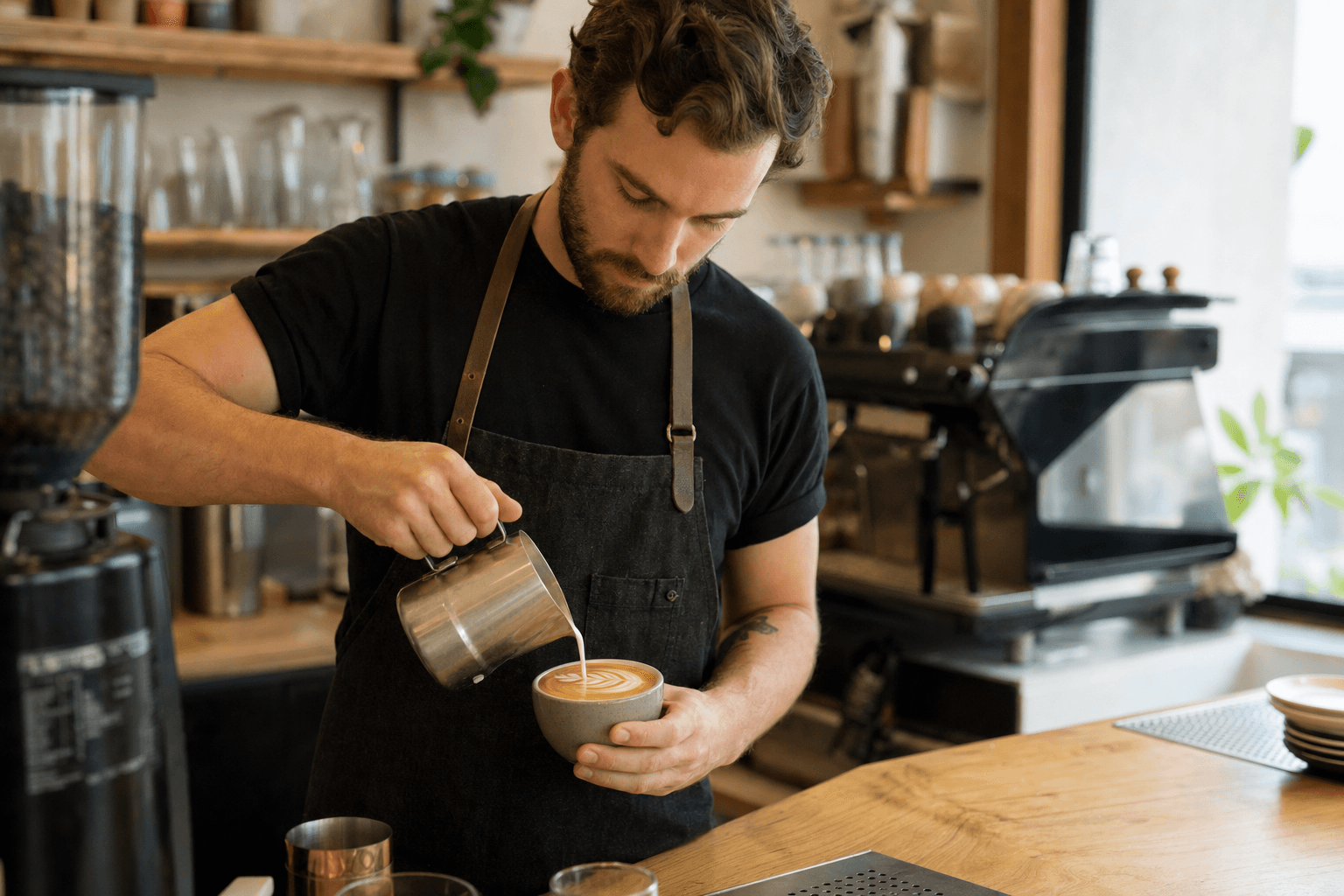
You already know your $6.50 pour-over is worth it. The single-origin beans were sourced from a small farm in Ethiopia, roasted locally three days ago, and brewed to order with precision. But the customer who just walked in from the Starbucks across the street doesn't know any of that—and if your menu and staff can't tell the story quickly and clearly, you're going to lose that sale, or worse, make it while leaving the customer feeling like they overpaid.
Pricing specialty coffee is only half the battle. The other half is communication. This guide covers both: how to set prices that keep your cafe profitable, and how to present those prices so customers feel informed and excited rather than sticker-shocked.
Understand Your Actual Costs First
Before you can defend your prices to a customer, you need to understand them yourself. Many independent cafe owners underprice because they only count the cost of beans, not the full picture.
The real cost of a cup
A rough cost breakdown for a single specialty espresso drink typically includes:
- Coffee beans: $0.75–$1.50 per drink depending on dose and bean cost
- Milk or milk alternative: $0.40–$1.20 (oat milk adds up fast)
- Cup, lid, sleeve: $0.15–$0.35
- Labor: Often the biggest variable—factor in your barista's time per drink
- Overhead allocation: Rent, utilities, equipment maintenance, insurance divided across every cup sold
When you add it all up honestly, a well-made specialty latte in a mid-cost city often has a true cost of $3.00–$4.50 before you've paid yourself anything. A $6–$7 price point isn't greedy—it's sustainable. The problem is that customers don't see that math unless you help them.
Know your target food cost percentage
Most cafes aim for a beverage cost ratio of 25–35% of the menu price. That means if your true ingredient cost for a drink is $1.80, you'd price it around $5.50–$7.20. Use this as a floor, not a ceiling—your labor and overhead still need to be covered on top of ingredient costs.
Why Customers Push Back on Specialty Coffee Prices
Price resistance at independent cafes almost always comes down to one of three things:
- Comparison to chains. Customers anchor their expectations to Starbucks or Dunkin' prices, even though those are mass-produced products with entirely different supply chains.
- Lack of context. They don't know what "single-origin" or "washed process" means, so those words feel like marketing fluff rather than a reason to pay more.
- No visible differentiation. If your menu looks like every other coffee menu, there's nothing to justify a premium in the customer's mind.
The good news: all three of these are communication problems, and communication problems are solvable.
Build Your Pricing Story Into the Menu Itself
Your menu is your most powerful sales tool. It's working even when your staff is busy, and it reaches every single customer. A well-designed cafe menu doesn't just list items and prices—it frames the value of what you're selling.
Write descriptions that do the selling
Compare these two menu entries:
- Version A: "Pour Over — $6.50"
- Version B: "Pour Over — Ethiopia Yirgacheffe, washed process, notes of jasmine and stone fruit. Brewed to order. $6.50"
Version B tells the customer exactly why this costs more than a drip coffee. It signals craft, origin, and intentionality. You don't need a paragraph—two or three specific details are enough. Avoid vague words like "premium" or "artisan" that have lost all meaning. Use concrete details: the farm, the region, the flavor notes, the brewing method.
Anchor with a range of price points
Menu psychology is real. If your most expensive drink is $8 and your least expensive is $3.50, customers mentally anchor to the middle. Offering a clear entry-level option (a well-made drip coffee or simple espresso) alongside your premium offerings makes the premium items feel like a considered upgrade rather than the baseline expectation. This also gives price-sensitive customers a reason to walk in the door—and once they're in, your environment and staff can do the rest.
Highlight your sourcing on the menu
A short "About Our Coffee" section—even just three sentences—on your menu or on a table card can do enormous work. Mention your roaster, your sourcing philosophy, or a specific farm relationship. This isn't bragging; it's context. Customers who understand the supply chain are dramatically less likely to balk at the price.
Train Your Staff to Talk About Value Naturally
Your baristas are your brand ambassadors. They don't need to deliver a lecture on coffee terroir, but they should be able to answer "why does this cost $7?" without hesitation or defensiveness.
Give them three talking points per key item
For each signature or premium item, make sure every staff member knows:
- Where the coffee comes from (origin, roaster)
- What makes the preparation different (brewing method, dose, technique)
- What it tastes like (two or three specific flavor descriptors)
When a customer asks "what's good?" a barista who can say "Our house pour-over right now is from a small farm in Colombia—it's bright and sweet, almost like orange zest and milk chocolate" is doing more for your pricing than any sign ever could.
Normalize the price conversation
Coach your team to be matter-of-fact about prices. Apologetic body language or a hesitant tone when quoting a price signals to the customer that even you think it's too high. Confidence is contagious. If your barista hands over a $7 latte the same way they'd hand over a $4 drip coffee—with a smile and a brief note about what's in it—most customers will receive it the same way.
Use Your Digital Menu to Tell the Story at Scale
A digital menu gives you space and flexibility that a printed board simply doesn't. You can include origin notes, brewing method icons, allergen information, and photos without cluttering a physical board. A digital menu also lets you update descriptions seasonally—when your roaster changes a single-origin offering, you can update the menu in minutes without reprinting anything.
QR menus at the table or counter
A QR code menu lets customers browse at their own pace before they reach the counter. This is especially valuable for specialty coffee, where the menu is more complex than a chain's. Customers who've already read about your Ethiopia natural process and your locally roasted espresso blend before they order are primed to see the value—they're not learning about it under pressure while a line forms behind them.
QR menus also let you link out to your roaster's website, include a short video of your brewing process, or display a "how we source" page. None of that is possible on a chalkboard.
Photography that earns its keep
Good photography on a digital menu converts. A clear, well-lit photo of a beautifully made cortado or a layered cold brew communicates craft instantly. You don't need a professional photographer—a decent phone camera in natural light is enough. Just make sure the cup, the crema, and the finish look intentional. Customers eat (and drink) with their eyes first.
Create Price-Anchoring Moments in Your Space
Your physical environment does pricing work too. An independent cafe that feels thoughtfully designed—good music, clean equipment visible behind the counter, staff who clearly care about what they're making—sets an expectation of quality before a single word is spoken.
Make the craft visible
If you're pulling shots on a $10,000 espresso machine and using a precision grinder, make sure customers can see it. Don't hide your equipment behind a wall. The visible presence of serious tools tells a story about why your coffee costs what it costs. The same goes for your brewing process—if you're doing a manual pour-over, do it where customers can watch.
Small details that signal quality
Ceramic cups for dine-in orders, a small card on the table describing the current espresso blend, a chalkboard noting the origin of this week's feature roast—these are low-cost signals that reinforce a premium price point. They tell the customer: this place takes coffee seriously. That context makes a $6.50 price feel earned rather than arbitrary.
Loyalty Programs and Perceived Value
One of the most effective ways to make your pricing feel fair is to reward repeat customers. A well-designed loyalty program doesn't just drive return visits—it reframes the price. A customer who knows their tenth drink is free is mentally calculating a lower effective price per cup, even if the math works out the same for you.
If you don't have a loyalty program yet, it's worth building one. Check out our guide on how to start a cafe loyalty program that customers actually use for a practical walkthrough. The key is keeping it simple—a punch card or a digital stamp system is enough. Complexity kills participation.
Seasonal and Rotating Menus as a Value Signal
Chains offer the same menu year-round. You don't have to. A rotating seasonal menu—whether it's a new single-origin pour-over each month or a limited summer cold brew—signals that your cafe is dynamic, engaged with the craft, and offering something that literally cannot be found elsewhere. Scarcity and exclusivity are powerful value drivers.
When you rotate offerings, communicate it clearly. A small sign, a social post, and a menu update are all it takes. "This month only: a washed Guatemalan from our friends at [Local Roaster]" is a sentence that justifies a $7 price point in a way that "House Pour Over" never can.
What Not to Do
A few common mistakes that undermine your pricing story:
- Apologizing for your prices. Never say "I know it's a bit pricey, but..." That's a signal to the customer to feel overcharged.
- Competing on price with chains. You will lose. Compete on quality, experience, and community instead.
- Hiding your sourcing. If you use exceptional beans, say so. Loudly. On the menu, on social media, on a table card.
- Inconsistent quality. Nothing destroys a value argument faster than a drink that tastes different every visit. Consistency is the foundation of trust.
- A menu that doesn't reflect your quality. If your menu design looks like a fast-food printout, it undercuts everything else you're doing. Your menu's visual quality should match your coffee's quality.
Frequently Asked Questions
How do I respond when a customer says my coffee is too expensive?
Don't get defensive—get informative. Briefly explain what goes into the drink: the origin of the beans, the roasting approach, the brewing method. Most price objections come from lack of context, not genuine unwillingness to pay. A calm, confident explanation almost always defuses the moment. If they still don't want to pay, that's okay—not every customer is your customer.
Should I list prices prominently or make customers ask?
Always display prices clearly. Hidden or hard-to-find prices create anxiety and erode trust. Customers who have to ask for prices often feel ambushed when they hear the answer. Clear, upfront pricing—ideally with brief descriptions that justify the cost—sets the right expectation before the purchase decision is made.
How often should I update my coffee menu prices?
Review your pricing at least twice a year, and any time your input costs change significantly—which they have for most cafes in recent years given bean and milk price volatility. Small, incremental increases are easier for customers to absorb than large, sudden jumps. A digital menu makes this much easier since you can update prices instantly without reprinting.
Is it worth offering a cheaper "entry-level" option to attract price-sensitive customers?
Yes, as long as it doesn't undercut your brand. A well-made drip coffee or a simple espresso at a lower price point gives budget-conscious customers a reason to walk in. Once they're in your space, experience your quality, and interact with your staff, many will trade up over time. Think of it as a gateway, not a compromise.
How can my menu design help justify specialty coffee prices?
Menu design sends strong signals about quality before a customer even reads a word. A clean, well-organized menu with thoughtful typography, clear sections, and specific item descriptions tells customers they're in a place that takes its product seriously. A cluttered or generic menu does the opposite. Investing in good menu design—whether physical or digital—is one of the highest-ROI moves an independent cafe can make.
Ready to build a menu that tells your coffee's story and justifies your prices at a glance? MenuHoster's cafe menu tools make it easy to create a beautiful, informative digital menu—complete with descriptions, photos, and QR codes—in under an hour. See our pricing and start building a menu that works as hard as you do.
MenuHoster Team
Helping restaurants go digital