How to Handle Peak-Hour Lines Without Losing Customers
Updated:
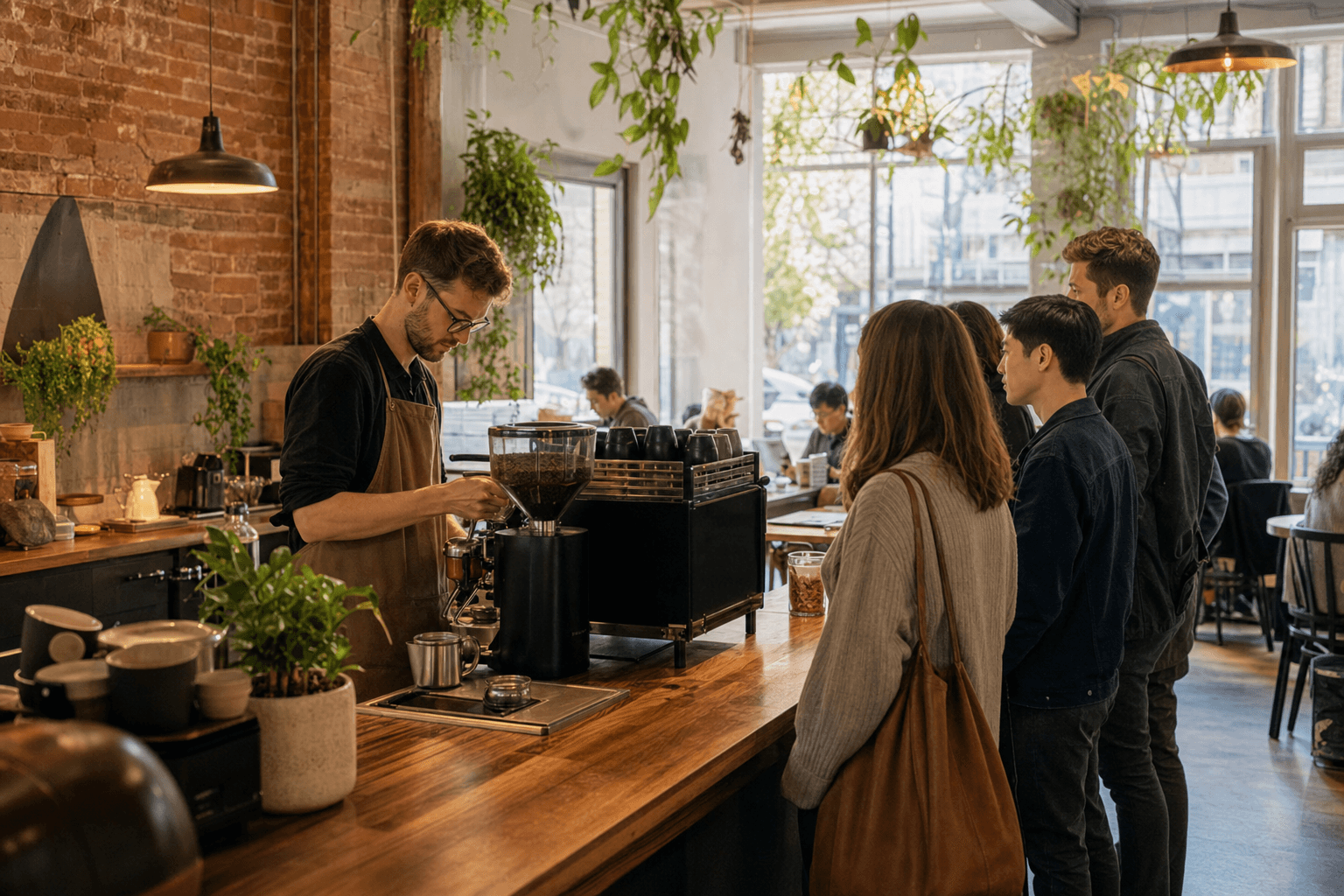
The morning rush is both the best and worst thing about running an independent cafe. It means people want what you're making — but a line that stretches out the door is a double-edged sword. Some customers will wait. Many won't. And the ones who leave without ordering rarely come back to try again.
Chains have an advantage here: they've invested millions in operational systems designed to move volume fast. But independent cafes have something chains don't — flexibility, personality, and the ability to implement smart changes quickly without a corporate approval chain. This guide covers practical, low-cost strategies to manage your busiest hours without sacrificing the experience that makes your cafe worth visiting in the first place.
Understand Where Your Bottlenecks Actually Are
Before you change anything, spend a week watching your rush with fresh eyes. Most cafe owners assume the bottleneck is at the espresso machine. Often it's not. Common culprits include:
- The decision point: Customers standing at the register for 45 seconds reading the menu board before they order.
- Payment friction: Fumbling for cards, asking about tap-to-pay, splitting bills.
- Order handoff confusion: Customers crowding the pickup counter and asking "Is that mine?" every 30 seconds.
- Customization overload: Complex drink modifications that slow down the bar and increase error rates.
- Understaffing at the wrong station: One barista on the bar while a cashier stands idle.
Time your transactions during peak hours. If the average time from "hello" to "here's your drink" is over four minutes, you have a problem. If it's under two, your bottleneck is probably volume, not process. Knowing the difference changes everything about how you respond.
Get Customers to Decide Before They Reach the Counter
The single biggest time-waster in a cafe line is indecision at the register. The fix is simple: give customers the menu before they get to the front.
Use a QR code menu in the queue
Place a QR code on a small tent card or poster at the entrance to your queue — not just on the table. When customers scan it while waiting, they arrive at the counter with their order ready. A well-structured QR code menu loads in under two seconds, shows your full drink and food menu clearly, and can highlight your most popular items so first-timers don't freeze up.
Design your physical menu board for speed, not beauty
Many indie cafe menu boards are gorgeous but slow to read. During rush hour, legibility beats aesthetics. Group items into clear categories. Put your top three or four drinks at eye level in a "Most Popular" section. Remove items you rarely sell — a shorter menu is faster to scan and easier to prepare. If you're unsure what to cut, check your POS data for the bottom 20% of SKUs by volume.
Train staff to prompt decisions
A simple "Have you had a chance to look at the menu?" when a customer steps up can shave 15–20 seconds off a transaction. Staff who can also confidently recommend one or two items ("The cortado is really good today, and most people get it with an almond croissant") reduce decision paralysis and often increase the average ticket size at the same time.
Implement Pre-Ordering and Pickup Lanes
If your cafe sees a predictable rush — 7:30 to 9:00 AM on weekdays, for example — pre-ordering is one of the highest-leverage changes you can make. It shifts the decision and payment friction entirely out of the physical queue.
Setting up online ordering for your cafe doesn't require a complex system or a third-party app that takes a 30% cut. A simple hosted ordering page lets customers place and pay for their order in advance, then walk in and pick it up without waiting. For your regulars — especially commuters — this is a game-changer. They get their coffee faster. You get a confirmed sale before they even leave home.
Create a dedicated pickup area
If you run pre-orders, designate a clear pickup spot that's separate from the walk-in counter. Label it. Put a small sign on it. This prevents pickup customers from accidentally joining the walk-in queue and prevents walk-in customers from grabbing the wrong drink. Even a simple "Online Orders" label on a shelf reduces confusion significantly.
Set realistic pickup windows
Don't promise 5-minute pickup during your busiest 30 minutes. Set honest windows — "Ready in 10–15 minutes" — and pad them slightly. Customers who get their order early are delighted. Customers whose order is late are annoyed even if the wait was short. Manage expectations and you'll get fewer frustrated faces at the pickup counter.
Staff Smarter, Not Just More
Hiring an extra person for peak hours is expensive, but deploying the staff you already have more intelligently is often free.
Float a "line buster" during peak windows
Chains use this trick constantly: one staff member walks the queue with a tablet or notepad, takes orders from customers waiting in line, and passes them to the bar before those customers even reach the register. By the time they pay, their drink is nearly ready. You don't need a tablet — a notepad works fine. The psychological effect on customers is also significant: someone acknowledging them in the queue makes the wait feel shorter.
Cross-train everyone on the bar
If your cashier can also pull shots in a pinch, you have a safety valve when the bar falls behind. Cross-training takes time upfront but pays off every single rush. Even partial skills help — a cashier who can steam milk while the lead barista shots and assembles doubles your effective throughput on milk-based drinks.
Pre-batch what you can
Cold brew, batch-brewed drip coffee, pre-portioned pastry bags, and pre-made syrups all reduce the number of steps per transaction. Review your top 10 items and ask: what prep can happen before 7 AM that makes each of these faster to execute during the rush? Even shaving 15 seconds per drink adds up to dozens of extra transactions per hour.
Reduce Friction at Payment
Payment is a surprisingly large contributor to slow lines. A few small changes make a meaningful difference:
- Prioritize contactless payment. Tap-to-pay transactions take under three seconds. Chip-and-PIN can take 15–20 seconds. If your terminal supports tap, make it the default and encourage it verbally.
- Remove cash if you can. Going cashless is a controversial choice, but if 90% of your customers already pay by card or phone, handling cash is slowing down the other 90% to accommodate 10%. At minimum, consider cash-free hours during peak windows.
- Use a loyalty system that doesn't require fumbling. Punch cards slow things down. A phone number lookup or a QR-based digital loyalty program is faster and gives you customer data you can actually use.
Manage the Psychology of Waiting
Research on queue psychology is consistent: how a wait feels matters as much as how long it actually is. An unmanaged, silent, uncertain wait feels twice as long as a wait where someone acknowledges you and gives you a time estimate.
Acknowledge customers in the queue
A simple "We'll be right with you — it's moving fast this morning!" from a staff member costs nothing and immediately reduces perceived wait time. Customers who feel seen are more patient. Customers who feel ignored leave.
Give the queue something to do
A QR code linking to your menu (or even your Instagram, a local event you're hosting, or a seasonal specials page) gives waiting customers something to engage with. This isn't just about passing time — it's a marketing touchpoint. A customer browsing your menu in the queue is more likely to add a pastry to their order. A customer scrolling your Instagram might follow you and come back next week.
Be transparent about unusual delays
If your espresso machine is running slow or you're down a staff member, tell people. "Hey, we're a little backed up today — it'll be about five minutes" is almost always received better than silence followed by a longer-than-expected wait. Customers are forgiving when they're informed. They're not forgiving when they feel like they've been ignored or misled.
Use Your Menu as a Throughput Tool
Your menu isn't just a list of what you sell — it's an operational tool. The items you promote, the order you present them, and the language you use all affect what customers order and how quickly those orders can be fulfilled.
During peak hours, you want customers ordering drinks that are fast to make. Batch drip coffee and cold brew take seconds to pour. A 12-ingredient signature latte takes three minutes. You don't need to remove slow drinks from your menu, but you can use your menu design to steer customers toward faster options during rush hour.
A well-designed digital cafe menu lets you highlight specific items, add "popular" or "quick pick" badges, and feature your fastest-to-make drinks prominently. You can also run a "morning special" that's a fast-to-prepare combo — drip coffee plus a pre-packaged pastry, for example — at a slight discount. Customers get a good deal; you move volume faster.
It's also worth auditing your menu for complexity. If you offer 14 milk alternatives, 8 syrup flavors, and 5 sizes, you're creating a combinatorial explosion of possible orders that's hard to communicate, hard to remember, and slow to execute. Simplifying your customization options — or at least how you present them — can meaningfully reduce average transaction time without losing the flexibility customers actually care about. For more on this, see our guide on building a digital menu that works for your cafe.
Build Habits That Reduce Peak-Hour Pressure
The best long-term solution to peak-hour congestion is spreading demand more evenly across the day. This sounds hard, but it's more achievable than it sounds.
Incentivize off-peak visits
A simple "happy hour" pricing window — 10 AM to noon, when foot traffic typically drops — can shift a meaningful percentage of your regulars out of the morning rush. Even a 10% discount or a free pastry upgrade during slow hours is enough to change behavior for price-sensitive customers. You don't need a complex loyalty program to do this; a simple sign and a verbal mention at the register is a start.
Use email and SMS to promote off-peak specials
If you have a customer email or phone list, a brief weekly message highlighting a midweek special or afternoon deal can drive real traffic shifts. Keep it short, personal, and useful — not a marketing blast. "Hey, we're doing $1 off cold brew every Tuesday from 2–4 PM this month" is the kind of message that gets saved and acted on.
Reward regulars who pre-order
If you set up online ordering, consider offering a small perk — a loyalty stamp, a priority pickup window, or a free flavor shot — to customers who pre-order during peak hours. This shifts your most frequent customers (who are also your highest-value customers) out of the physical queue, which benefits everyone.
Frequently Asked Questions
How long is too long for a customer to wait in a cafe line?
Research suggests most customers will abandon a queue after about 5–7 minutes if they haven't been acknowledged or given any indication of wait time. If your average wait from joining the line to receiving a drink exceeds 5 minutes during peak hours, you're likely losing walk-aways. The goal for most independent cafes should be 3–4 minutes from queue entry to drink in hand.
Do I need expensive technology to speed up my morning rush?
No. Many of the highest-impact changes — menu board redesign, line-busting with a notepad, pre-batching prep, and a QR code in the queue — cost little to nothing. Online ordering and a digital menu are low-cost tools that pay for themselves quickly in recovered sales and increased ticket sizes.
Will a QR code menu actually help during a busy rush?
Yes, when placed correctly. A QR code at the entrance of your queue — not just on tables — gives waiting customers time to browse and decide before they reach the counter. This consistently reduces average transaction time at the register. The key is placement and visibility; a QR code customers don't notice won't help.
Should I go cashless to speed up service?
It depends on your customer base. If the vast majority of your customers already pay by card or phone, going cashless during peak hours can meaningfully speed up transactions. However, cash-only customers do exist, and excluding them entirely can damage goodwill. A middle path — accepting cash but actively encouraging contactless payment — is often the most practical approach for independent cafes.
How do I handle a customer who's frustrated by a long wait?
Acknowledge them directly and honestly. A brief, sincere apology and a realistic time estimate go a long way. If someone has been waiting significantly longer than expected, a complimentary drink upgrade or a discount on their next visit costs you very little and almost always turns a frustrated customer into a loyal one. Don't ignore visible frustration — address it proactively before it becomes a negative review.
Peak-hour pressure is a solvable problem, and solving it is one of the highest-ROI things you can do for your cafe's growth. Ready to start? Set up your digital cafe menu on MenuHoster — it takes under 10 minutes, and your QR code is ready to deploy in the queue by tomorrow morning. Explore our cafe menu templates and see how easy it is to give your customers a faster, smoother experience from the moment they join your line.
MenuHoster Team
Helping restaurants go digital