How to Turn First-Time Diners into Regulars
Updated:
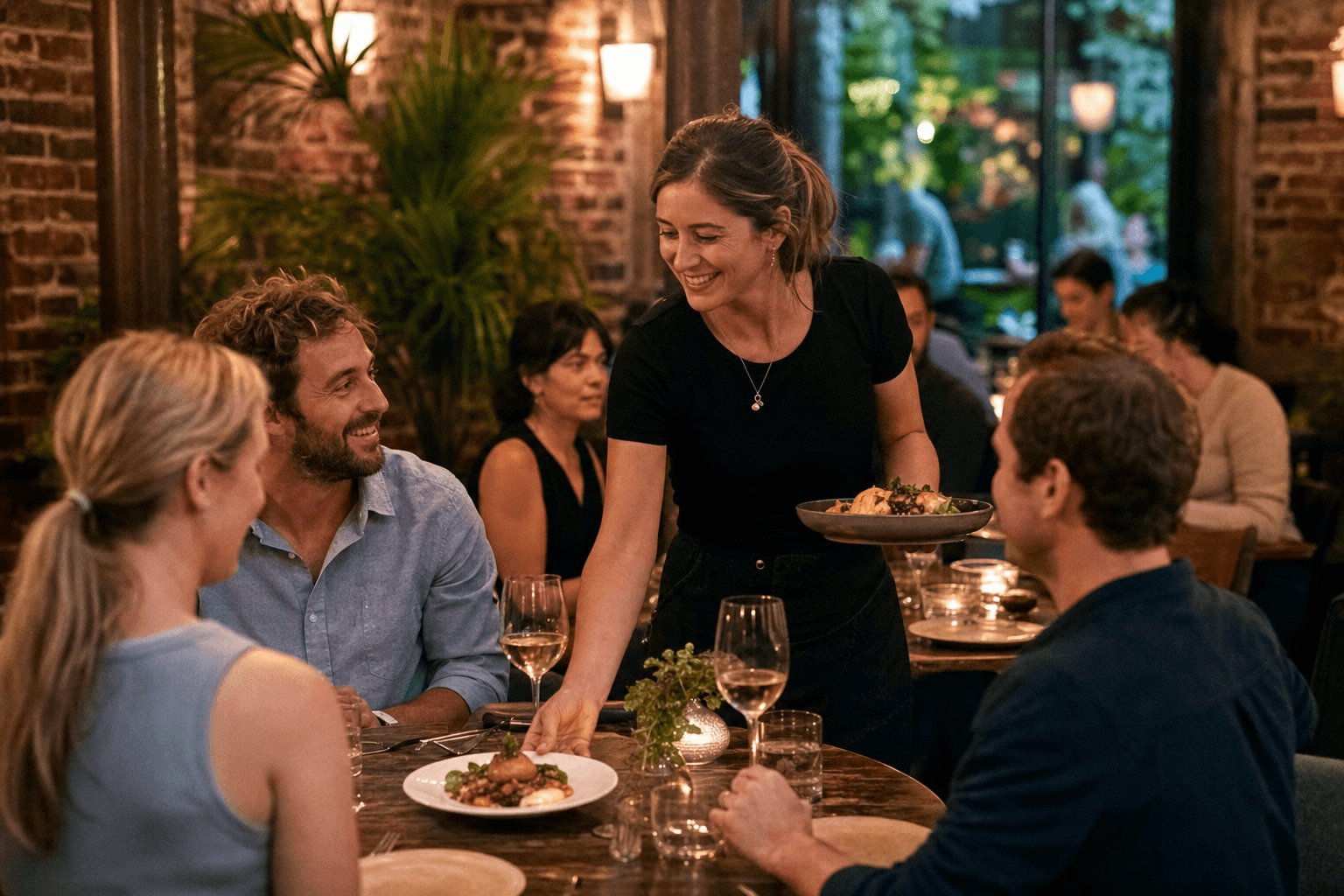
Getting a new diner through the door is hard work and real money — paid ads, social posts, word-of-mouth campaigns, maybe a discount on a delivery app. But once someone sits down, eats, and leaves satisfied, most independent restaurants do almost nothing to make sure that person ever comes back. That's a costly mistake.
Research consistently shows that returning customers spend more per visit, require less marketing spend to reach, and are far more likely to recommend you to friends. For a small restaurant operating on thin margins, shifting even 20% of your one-time guests into regulars can meaningfully change your bottom line. Here's how to do it — practically, affordably, and without a marketing degree.
Why First Visits Rarely Convert Automatically
Most first-time guests don't return simply because nothing pulled them back. They had a fine experience, but "fine" isn't a reason to choose you over the dozen other options they have on any given Tuesday. The restaurants that build loyal followings do so intentionally — they create moments, systems, and touchpoints that make returning the natural next step.
Before you can fix the problem, it helps to understand the three main reasons a satisfied first-timer doesn't become a regular:
- They forgot about you. Life is busy. Without a reminder, you slip out of mind within days.
- They have no reason to choose you over a new option. Novelty is a powerful draw. You need to compete with it.
- You didn't give them anything to come back for. No loyalty program, no upcoming event, no reason tied to their specific visit.
Each of these is solvable. Let's go through them one by one.
Nail the First Visit Experience
Retention starts before the meal is over. If the first experience isn't genuinely good, no loyalty program in the world will drag someone back. But "good" is more specific than you might think.
Consistency over perfection
First-timers are forming a mental template of what your restaurant is. If the burger is exceptional on visit one but just okay on visit two, you've broken trust. Consistency — in food quality, portion size, service pace, and atmosphere — is what allows guests to confidently recommend you and confidently return. Build checklists, train your staff on standards, and taste your own food regularly.
Make them feel noticed
You don't need to memorize every face. But small gestures go a long way: a server who checks back after the first bite, a manager who stops by a table to ask how everything is, or even a simple "Is this your first time with us?" opens a conversation that makes guests feel like more than a transaction. When people feel seen, they come back to feel that way again.
End on a high note
The last moment of a meal is disproportionately memorable. A slow check drop, a rushed goodbye, or a card machine that doesn't work can undo an otherwise great evening. Train your team to close visits warmly. A simple "We hope to see you again soon" — said genuinely — plants a seed.
Capture Contact Information Before They Leave
You cannot market to someone you have no way to reach. Collecting an email address or phone number from first-time guests is one of the highest-value things you can do, and most restaurants never ask.
Make it easy and low-pressure
A QR code on the table that links to a simple sign-up form — "Join our list for exclusive specials" — is far less intrusive than asking verbally. A tablet at the host stand works too. The key is that the ask feels like a benefit to them, not a data grab for you. Offer something tangible: 10% off their next visit, early access to a new menu, or a free dessert on their birthday.
Use your digital menu as a capture point
If you're already using a digital menu, you have a natural touchpoint. Guests are already on their phones scanning your menu — that's the perfect moment to invite them to subscribe. A well-placed link or embedded signup prompt at the bottom of your menu page requires no extra hardware and converts passively throughout every service.
Wi-Fi sign-in
If you offer guest Wi-Fi, configure it to require an email address to connect. Most customers accept this trade-off without hesitation. Just make sure your privacy policy is clear and you're not spamming them — that will destroy trust faster than it builds it.
Follow Up Within 48 Hours
The window for a meaningful follow-up is short. Within 48 hours of a first visit, a short, personal-feeling email or text message can dramatically increase the chance of a return. After a week, the moment has largely passed.
What to say
Keep it simple and human. Something like: "Thanks for joining us at [Restaurant Name] on Friday — we hope you enjoyed the pasta. We're running a new weekend special next week and would love to see you back." That's it. No novel, no discount code wall, no corporate tone. The goal is to remind them you exist and that you noticed them.
Automate it without losing the human feel
Most email marketing tools — Mailchimp, Klaviyo, even basic CRMs — let you set up an automated welcome sequence triggered by a new sign-up. Write it once in a warm, personal voice, and it runs itself. For more detail on building this kind of list, see our guide on restaurant loyalty program ideas for small businesses.
Build a Loyalty Program That Actually Gets Used
A loyalty program is not a magic retention tool — most fail because they're too complicated or the reward is too distant. But a simple, well-designed program gives guests a concrete reason to choose you over a competitor.
Keep the mechanics simple
Punch cards still work. Digital stamp apps work. Points systems work — but only if the math is obvious. If a guest has to calculate whether their points are worth anything, you've already lost them. The best programs have a clear, short path to a reward: "Buy 9 coffees, get the 10th free" or "Spend $100 across visits, get $10 off."
Reward early, not late
Behavioral research shows that people are more motivated when they feel like they're already partway to a goal. If your card has 10 stamps to fill, start new members with two already filled. Same effort required from the guest, but the perceived progress makes them more likely to continue.
Tie rewards to return visits, not just spend
A reward that can only be redeemed on a return visit — not on the same day it's earned — guarantees another visit. "Earn a free appetizer on your next visit" is more effective for retention than "get a free appetizer today."
Use Your Menu as a Retention Tool
Your menu is one of the most underused marketing assets you have. A well-structured menu doesn't just help guests order — it gives them reasons to come back.
Rotating specials and seasonal items
If your menu never changes, there's no discovery waiting on a second visit. A rotating weekly special, a seasonal dish, or a limited-time dessert creates urgency and curiosity. Guests who know you change things up have a reason to return just to see what's new. Mention it explicitly: "Ask your server about this week's special" or highlight it prominently on your digital menu.
Let the menu tell your story
Brief, genuine descriptions of dishes — where ingredients come from, why a recipe exists, what inspired it — create emotional connection. Guests who feel connected to your food and your story are guests who want to come back and bring friends.
Make online ordering part of the loop
A guest who orders delivery directly from you — rather than through a third-party app — is in your ecosystem. You have their contact info, you control the experience, and you can market to them again. Setting up online ordering directly through your own page closes this loop and keeps your margins intact. If you're currently paying commissions to delivery platforms, consider switching to a zero-commission ordering setup — what you save can fund your retention marketing.
Create Reasons to Return
Beyond the meal itself, recurring events and programming give guests a calendar reason to come back.
Weekly recurring events
Trivia night, live music on Thursdays, a Sunday brunch special, a monthly wine dinner — these create habits. When a guest associates your restaurant with a recurring ritual, you become part of their routine rather than an occasional treat. Start small: one recurring event, promoted consistently, builds more loyalty than five sporadic ones.
Birthday and anniversary programs
If you've captured birthdates at signup, a well-timed birthday email with a genuine offer ("Come celebrate with us — dessert is on the house") is one of the highest-converting messages you can send. People want to mark milestones at places that feel personal. You're not just offering a free dessert; you're positioning your restaurant as a place worth celebrating at.
Involve regulars in new things
Invite your email list to a soft launch of a new menu before it goes public. Ask for feedback on a new dish. Give loyal guests first access to a ticketed event. People who are treated like insiders become advocates — and advocates bring new first-timers, starting the cycle again.
Manage Your Online Reputation Actively
A first-time diner who had a great experience may still check your Google or Yelp reviews before deciding to return — especially if they're bringing someone else. Your online reputation is part of the retention funnel, not just the acquisition funnel.
Respond to every review
Responding to positive reviews — not just negative ones — signals to guests that you're engaged and that their feedback matters. A simple "Thanks so much, we loved having you in — hope to see you again soon!" takes 30 seconds and reinforces the relationship.
Address negative reviews without defensiveness
A well-handled negative review can actually increase trust. Acknowledge the issue, apologize genuinely, and invite the guest back. Guests reading reviews are watching how you handle problems as much as they're reading the complaints themselves.
Train Your Team on Retention, Not Just Service
Your front-of-house staff are your most powerful retention tool, and most owners never train them on this explicitly. Service training covers how to take an order and carry plates. Retention training covers how to make someone want to come back.
- Teach staff to recognize and remember regulars — even small details like "the couple who always orders the mushroom risotto."
- Empower them to make small gestures — an extra bread basket, a comp on a slow night, a note passed to the kitchen for a guest's allergy — without needing manager approval every time.
- Brief them on upcoming events and specials so they can mention them naturally during the meal, not as a script but as genuine enthusiasm.
Frequently Asked Questions
How long does it take to turn a first-time diner into a regular?
Most hospitality research suggests it takes three to five positive visits before a guest considers themselves a "regular." Your job is to make each of those visits easy to initiate — through follow-up emails, loyalty incentives, and memorable experiences — so the gap between visits doesn't stretch into months.
Do I need expensive software to run a loyalty program?
No. A simple paper punch card costs almost nothing and still works. If you want to go digital, tools like Square Loyalty, Stamp Me, or even a basic email list managed through Mailchimp can handle most of what an independent restaurant needs. Start simple and add complexity only if you have a reason to.
What's the single most effective retention tactic for a small restaurant?
Capturing an email address and sending a warm, timely follow-up within 48 hours of a first visit. It's low-cost, highly personal, and keeps you top of mind at exactly the right moment. Everything else — loyalty programs, events, birthday offers — builds on top of that foundation.
How do I encourage first-time guests to leave a review without being pushy?
Timing matters. Ask at the end of a great meal, not via a generic receipt email three days later. A QR code on the check presenter that links directly to your Google review page removes all friction. Train staff to mention it naturally: "If you enjoyed tonight, we'd really appreciate a quick review — it means a lot to a small place like ours."
Can my digital menu help with customer retention?
Absolutely. A well-designed digital menu can highlight rotating specials that give guests a reason to return, include a link to your loyalty sign-up, and even promote upcoming events. It's a touchpoint you control completely — use it strategically, not just as a list of dishes.
Ready to build a digital presence that keeps guests coming back? MenuHoster gives independent restaurants everything they need — a beautiful digital menu, built-in QR codes, and commission-free online ordering — all in one place, with no technical setup required. Start for free and see how much easier retention becomes when your tools work together.
MenuHoster Team
Helping restaurants go digital