Restaurant Loyalty Program Ideas for Small Businesses
Updated:
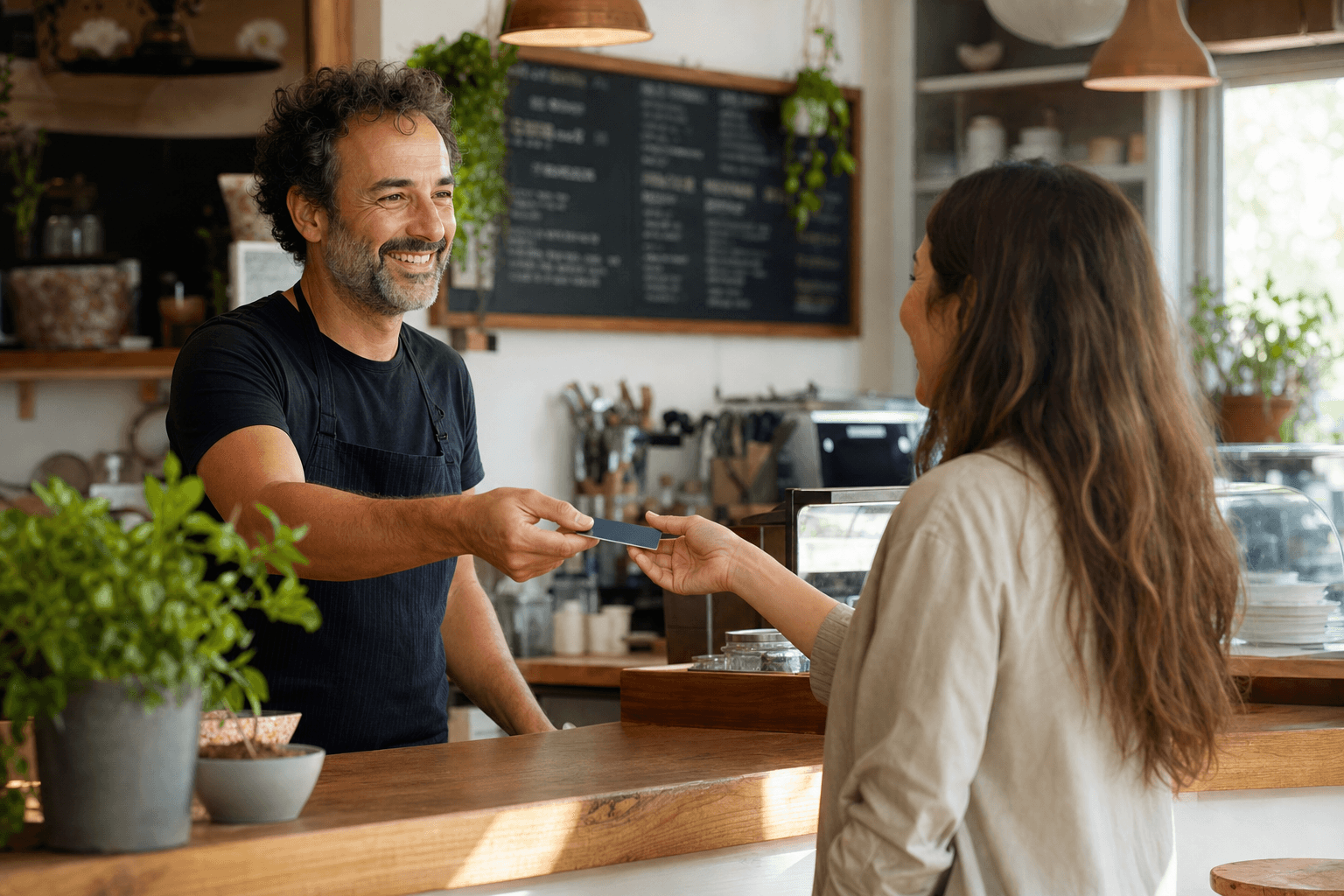
Repeat customers are the financial backbone of any independent restaurant. A first-time guest who has a great experience might come back — but without a reason to return regularly, they often don't. A well-designed loyalty program gives them that reason. It turns a one-time visit into a habit.
The good news: you don't need a big budget, a fancy app, or a marketing agency to run an effective loyalty program. What you do need is a clear format, a reward that actually motivates people, and a system simple enough that your staff can run it without friction. This guide covers all three.
Why Loyalty Programs Work for Small Restaurants
The economics of customer retention are straightforward. Acquiring a new customer costs significantly more than retaining an existing one — estimates typically put the ratio at five to one. Loyal customers also tend to spend more per visit, refer friends, and leave reviews. For a small restaurant operating on thin margins, even a modest improvement in repeat visit rate can meaningfully change your bottom line.
Beyond the numbers, loyalty programs give you something valuable: a direct relationship with your best customers. When you know who your regulars are and what they order, you can market to them specifically rather than broadcasting to strangers.
Punch Card Programs: Still Effective, Still Simple
The classic paper punch card — buy nine coffees, get the tenth free — has survived for decades because it works. It's free to implement, requires no technology, and customers understand it instantly. For a cafe, sandwich shop, or any concept with a high-frequency, low-ticket item, a punch card is often the best starting point.
How to make punch cards work harder
- Set the right threshold. A free item after 10 purchases is the industry standard. Going beyond 12 makes the reward feel out of reach; fewer than 8 cuts into margin too quickly.
- Make the reward meaningful. A free item of equal or lesser value is fine. A free upgrade (e.g., a free specialty drink instead of a drip coffee) feels more generous and costs you the same.
- Print them well. A flimsy card signals low value. Spend $30 on a stack of business-card-weight punch cards. It makes a difference in how customers perceive the program.
- Train your staff to hand them out. The most common reason punch card programs fail is that staff forget to mention them. Make it part of the transaction script.
The main downside of paper punch cards is that you can't track them, and some customers will lose them or forget them. That's acceptable at low cost. But if you want data, you'll need to go digital.
Digital Loyalty Programs: More Data, More Reach
Digital loyalty tools let you track visits, send targeted offers, and reach customers between visits via email or SMS. The tradeoff is setup time and, in some cases, a monthly fee.
App-based programs
Platforms like Square Loyalty, Stamp Me, Belly, and Fivestars let customers earn points or stamps through a dedicated app or via your point-of-sale system. These work well if your customers are tech-comfortable and you have a high enough transaction volume to justify the cost (typically $25–$100/month depending on the platform).
SMS-based programs
Text-message loyalty programs are simpler than apps and have much higher open rates than email. A customer texts a keyword to a short code to join, and you send them offers via SMS. Tools like Textedly or Podium make this accessible for small operators. The catch: customers have to opt in, and you must comply with SMS marketing regulations.
Email-based programs
If you already have an email list, a loyalty program layered on top of it can be very cost-effective. You send a monthly "loyalty offer" — a discount, a free item, an early-access deal — to subscribers. It's less automated than an app but requires no additional platform fee. If you haven't started building your email list yet, that should be a parallel priority. A strong email list is one of the most durable marketing assets a restaurant can own.
QR code check-ins
A lightweight option: place a QR code on each table or at the counter. When customers scan it, they land on a form to log their visit or claim a stamp. You can build this with a free Google Form linked to a spreadsheet, or use a tool like Loopy Loyalty. This approach pairs naturally with your QR code menu — customers are already scanning something, so adding a loyalty check-in is a small additional step.
Points-Based Programs: Best for Higher-Ticket Concepts
A points system — earn 1 point per dollar spent, redeem 100 points for $5 off — works better for restaurants with higher average checks (sit-down dining, catering, specialty concepts) where a simple punch card doesn't translate well. Points feel more flexible to customers because they can accumulate and redeem on their own schedule.
The key design decisions for a points program:
- Earn rate: 1 point per $1 spent is the most common and easiest to understand.
- Redemption threshold: Make it achievable in 3–5 visits for most customers. If it takes 20 visits to earn anything, most people will disengage before they get there.
- Reward options: Offering a menu of rewards (free appetizer, free dessert, discount on next visit) gives customers a sense of agency and increases perceived value.
- Bonus points: Award double points on slow days (Tuesday lunch, for example) to drive traffic when you need it.
Tiered VIP Programs: For Your Most Loyal Customers
A tiered program — Bronze, Silver, Gold, or whatever you want to call it — rewards your highest-frequency customers with escalating perks. This model works well for restaurants with a strong regular base and a bit more operational bandwidth to manage it.
Example structure:
- Bronze (5+ visits/year): Birthday discount, early access to new menu items.
- Silver (15+ visits/year): Free appetizer once a month, priority reservations.
- Gold (30+ visits/year): Named on a "regulars board," free dessert on every visit, invited to private tastings.
The non-monetary perks — recognition, access, exclusivity — often mean more to regulars than the free food. Being known by name, being invited to a special event, having your usual order remembered: these are the things that create genuine loyalty, not just transactional repeat visits.
Referral Programs: Let Your Regulars Do the Marketing
A referral program turns loyal customers into recruiters. The mechanics are simple: when an existing customer refers a new guest, both parties get a reward. This works especially well in the first year of operation when you're actively trying to grow your customer base.
A straightforward referral offer: "Bring a friend who's never been here. You both get 20% off your next visit." You can track this with a simple referral card, a unique discount code, or through your email platform.
The key is making the ask explicit. Most happy customers will tell friends about a restaurant they love — but they're more likely to act on it when you give them a concrete reason and a mechanism to do so.
Event-Based and Seasonal Loyalty Offers
You don't need a formal, year-round loyalty program to build repeat visits. Seasonal and event-based offers can accomplish the same thing in a more manageable way.
- Birthday clubs: Customers sign up with their birthday. You send them a free dessert or discount offer valid during their birthday month. Low cost, high perceived value, and it drives a visit that might not have happened otherwise.
- Anniversary offers: Send a "we miss you" offer to customers who haven't visited in 60 or 90 days. Re-engagement campaigns consistently outperform cold acquisition in cost-per-visit terms.
- Seasonal punch cards: Run a limited-time version — "Visit 5 times this winter and get a free holiday special" — to create urgency without committing to a permanent program.
- Happy hour loyalty: Offer a dedicated stamp card for happy hour visits. This rewards the behavior you want (traffic during slow periods) rather than just overall spending.
Connecting Your Loyalty Program to Your Digital Menu
One underused tactic: promote your loyalty program directly through your menu. If customers are viewing your digital menu on their phone, you can add a banner or a section at the bottom that explains the loyalty program and links to a sign-up form. This catches customers at the exact moment they're engaged with your brand.
Similarly, if you offer online ordering, the order confirmation page or confirmation email is a natural place to introduce your loyalty program. Customers who just ordered are in a positive frame of mind — they're more likely to sign up for something that rewards them for doing it again.
If you're taking orders through your own system rather than a third-party platform, you also keep the customer relationship. Third-party delivery apps own the customer data; you don't. Running zero-commission ordering through your own page means you can build a loyalty program on top of real customer data you actually control.
What Makes Loyalty Programs Fail (and How to Avoid It)
Most small restaurant loyalty programs don't fail because of bad ideas — they fail because of poor execution. Here are the most common pitfalls:
- Too complicated. If customers need to explain the program to themselves, they won't bother. One clear rule beats five nuanced ones every time.
- Reward too distant. A free item after 20 visits sounds generous but feels unachievable. Customers disengage before they earn anything.
- Staff don't mention it. Your team is the program's primary sales force. If they're not mentioning it at every transaction, most customers won't know it exists.
- No promotion outside the restaurant. Put your loyalty program in your email footer, on your Instagram bio, on your website. Don't rely only on in-person discovery.
- Launching and forgetting. A loyalty program needs occasional refreshing — a double-points week, a new reward tier, a seasonal offer — to stay top of mind for customers who enrolled months ago.
Measuring Whether Your Loyalty Program Is Working
You don't need sophisticated analytics to know if a loyalty program is paying off. Track these basic metrics:
- Enrollment rate: What percentage of customers join when offered the program?
- Active participation rate: Of enrolled customers, how many have earned or redeemed a reward in the last 90 days?
- Visit frequency: Are loyalty members visiting more often than non-members? (Compare average visits per month for each group.)
- Average check size: Do loyalty members spend more per visit than non-members?
- Redemption rate: What percentage of issued rewards get redeemed? Very low redemption can mean the reward isn't motivating; very high redemption can squeeze margin.
Review these numbers quarterly. If enrollment is low, the program isn't being communicated well. If participation drops off, the reward may not be compelling enough or the threshold too high.
Frequently Asked Questions
What's the simplest loyalty program I can start this week?
A paper punch card is the fastest to launch — design it in Canva, print at a local copy shop, and start handing them out today. Set the threshold at 9–10 purchases and offer a free item of equal or lesser value as the reward. It costs almost nothing and requires no technology.
Do I need a special app to run a digital loyalty program?
Not necessarily. You can run a basic digital loyalty program using a Google Form for sign-ups, an email platform like Mailchimp for sending offers, and a spreadsheet to track participation. Dedicated apps like Square Loyalty or Stamp Me add automation and convenience, but they're not required to get started.
How much should a loyalty reward be worth?
A common benchmark is a reward worth roughly 5–10% of the spending required to earn it. So if a customer needs to spend $100 to earn a reward, the reward should feel like it's worth $5–$10. Going below 5% tends to feel stingy; going above 10% starts to hurt your margin.
Should I use a third-party delivery app's loyalty program or build my own?
Build your own wherever possible. Third-party platforms own the customer relationship — you don't get the data, you can't contact those customers directly, and you pay commission on every order. Running loyalty through your own ordering page keeps the customer relationship (and the data) with you.
How do I get customers to actually sign up?
The most effective method is a direct ask at the point of sale: "Would you like to join our loyalty program? You'll get a free [item] after your tenth visit." Pair that with a visible sign at the counter, a mention in your email signature, and a note on your digital menu. Passive promotion alone rarely drives strong enrollment.
Ready to connect your loyalty program to a digital menu and online ordering system that you actually own? MenuHoster makes it easy to build a professional digital menu, accept online orders with zero commission, and create a web presence that works for your restaurant — no developer needed. See our pricing and get started free today.
MenuHoster Team
Helping restaurants go digital