Salon Loyalty and Membership Ideas That Retain Clients
Updated:
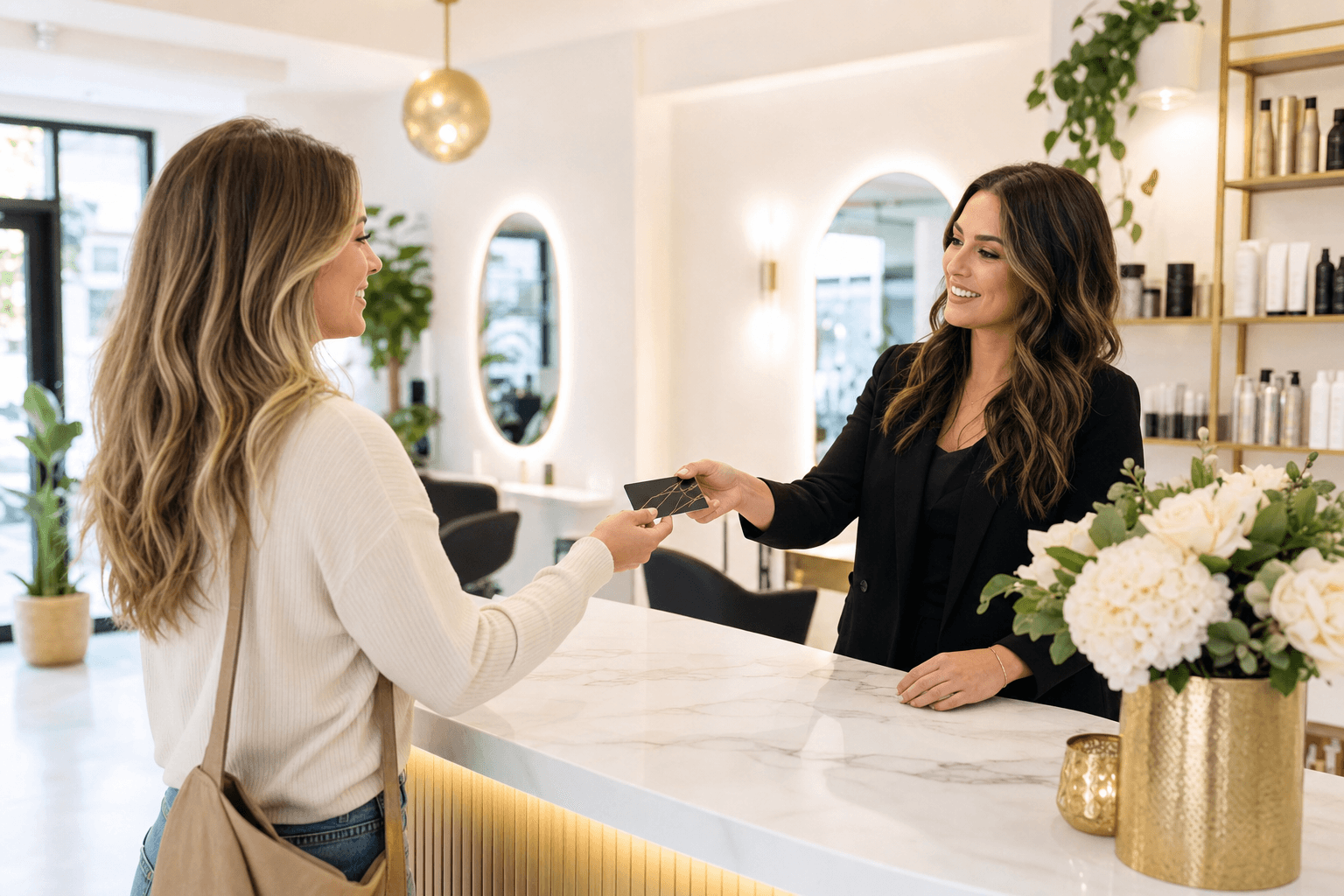
Acquiring a new salon client costs five to seven times more than keeping an existing one. Yet most salons spend the bulk of their marketing budget chasing new faces while quietly losing regulars to competitors, inconvenience, or simple forgetfulness. A well-designed loyalty or membership program flips that equation — it rewards the clients you already have, makes them feel seen, and gives them a financial reason to book again instead of wandering.
This guide covers the most effective loyalty and membership structures for hair salons, barbershops, nail salons, and spas, along with the practical steps to launch and sustain them without adding a mountain of admin work.
Why Loyalty Programs Work for Salons
Salons sell recurring services. A haircut needs to happen every four to six weeks. A gel manicure lasts two to three weeks. A blowout might be a weekly ritual. The natural cadence of beauty services makes loyalty programs a natural fit — you're not trying to manufacture repeat visits, you're just removing friction and adding incentive to the behavior clients already intend to do.
The numbers back this up. Research from Bain & Company consistently shows that a 5% increase in client retention can increase profits by 25–95%. In a service business where your chair time is the inventory, filling it with returning clients rather than one-time visitors is the difference between a stressful month and a profitable one.
Beyond the economics, loyalty programs create emotional connection. When a client earns a free treatment or gets a members-only perk, they associate your salon with being valued. That feeling is hard for a competitor to undercut with a Groupon.
Punch Card and Points Programs
The classic punch card — "buy 9 services, get the 10th free" — is simple, low-cost, and still effective, especially for barbershops and nail salons where visits are frequent and the service is consistent.
Physical vs. Digital Punch Cards
Physical cards work well in walk-in-heavy shops. They're tangible, require no app, and clients carry them in their wallet as a reminder. The downside: they get lost, forgotten, or occasionally faked. A digital version (via a free-tier app like Stamp Me or Square Loyalty) solves the loss problem and gives you data on visit frequency.
Making Points Programs Work
A points system is more flexible than a punch card. You award points per dollar spent, and clients redeem them for discounts, free add-ons, or products. This works particularly well for full-service salons where clients spend varying amounts per visit — a client who gets a color and cut earns points faster than one who comes in just for a trim, which feels fair.
- Keep the math simple. "Earn $1 for every $10 spent" is easier to understand than "earn 12 points per dollar, redeemable at 500 points."
- Set a realistic redemption threshold. If clients have to spend $500 before they earn a $10 reward, they'll tune out. Aim for a first reward within two to three visits.
- Award bonus points for specific behaviors — booking online, referring a friend, leaving a review, or trying a new service category.
Membership and Subscription Models
Memberships are the most powerful retention tool available to salons right now, and they're still underused. A membership converts a transactional relationship ("I'll come back when I need a haircut") into a committed one ("I pay monthly, so I'm definitely coming back"). It also gives you predictable monthly revenue — something almost no salon has.
The Basic Membership Structure
The simplest model: clients pay a flat monthly fee and receive one service per month at a reduced price, plus perks. For example:
- Barbershop: $35/month for one haircut per month (regular price $30–40) + 10% off retail products + priority booking.
- Hair Salon: $60/month for one blowout per month + 15% off color services.
- Nail Salon: $45/month for one gel manicure per month + free nail art on one visit per quarter.
- Spa: $99/month for one 60-minute massage or facial per month + 20% off additional services.
The key is that the monthly fee is slightly less than the walk-in price, making the client feel they're winning — while you win by locking in the booking and the revenue regardless of whether they show up.
Tiered Memberships
Offering two or three tiers ("Silver / Gold / VIP") lets clients self-select their level of commitment and spend. A Gold member might get two services per month and free deep conditioning; a Silver member gets one service and a 10% retail discount. Tiers also give you an upsell path — a Silver member who loves the program is a natural upgrade candidate.
What to Charge
Price your membership so the perceived value is clear but the margin still works for you. A good rule of thumb: the monthly fee should represent a 10–20% discount on the included services at full price. Don't go deeper than 20% — you'll attract deal-seekers and erode your positioning. The perks (priority booking, free add-ons, birthday discounts) add perceived value without significant cost.
VIP and Tiered Loyalty Tiers
Even without a paid membership, you can create a tiered loyalty structure based on annual spend or visit frequency. Think of it like airline status — the more a client spends, the better their perks.
- Tier 1 (Regular): Baseline rewards, birthday discount, early access to seasonal promotions.
- Tier 2 (Loyal): After 10 visits or $300 in a year — free add-on service once per quarter, priority scheduling during busy periods.
- Tier 3 (VIP): After 20 visits or $600 in a year — complimentary annual treatment (e.g., a conditioning treatment or brow wax), name recognition ("Your usual stylist, pre-booked"), exclusive access to new services before they're offered to the public.
The psychology here is powerful. Clients in Tier 2 who are close to Tier 3 will actively accelerate their bookings to reach the next level. You're not discounting — you're gamifying loyalty.
Referral Programs That Complement Loyalty
A referral program is not the same as a loyalty program, but the two work extremely well together. Your most loyal clients are also your most credible advocates. Rewarding them for bringing in new clients compounds the retention effect — they stay longer because they have a social investment in your salon.
A simple structure: the referring client earns a $15–20 credit when the new client completes their first appointment. The new client gets a first-visit discount (10–15%). Both parties win, and you've acquired a new client at a fraction of the cost of paid advertising.
For a deeper look at building out a full referral system, see our guide on how to build a salon referral program that grows your chairs.
Making Your Service Menu Part of the Loyalty Experience
One underrated part of running a loyalty or membership program is making sure clients can easily see what they're earning toward. If a client doesn't know what services are available or what prices they're being rewarded on, the program loses its pull.
A clean, digital salon service menu that's easy to access from your booking confirmation, your Instagram bio, or a QR code in your waiting area gives clients a reason to browse — and browsing leads to upgrading. When a loyalty member sees "deep conditioning treatment — $35" and knows they're 50 points away from a free one, that menu becomes a conversion tool.
If you haven't already built a digital menu for your salon, creating a digital service menu is a straightforward first step that supports every other marketing initiative you run.
Seasonal and Event-Based Loyalty Boosters
Loyalty programs don't have to be static. Layering in time-limited promotions keeps the program feeling fresh and gives clients a reason to engage beyond their regular cadence.
- Double-points months: Run a double-points week in a slow month (January, February) to spike bookings when you need them most.
- Birthday rewards: A free add-on or discount during the client's birthday month costs you very little and generates outsized goodwill. It's also a reason to collect birthdate information at sign-up.
- Milestone rewards: Celebrate a client's 1-year anniversary with your salon with a handwritten note and a small perk. This kind of personalization is what large chains can't replicate.
- Seasonal packages: Offer members early access to holiday packages (bridal prep, prom season, holiday glam) before they're available to the general public.
Reducing No-Shows Within Your Loyalty Program
No-shows are a silent profit killer. One of the hidden benefits of a paid membership is that it dramatically reduces no-show rates — when a client has already paid for the month, they have a financial incentive to actually show up.
For non-members in your loyalty program, you can tie point accrual to confirmed attendance. A client who cancels with less than 24 hours' notice doesn't earn points for that visit. A client who shows up on time and books their next appointment before leaving earns a small bonus. You're using the loyalty mechanics to shape the behavior that keeps your schedule running smoothly.
For more tactics on this, see our guide on how to reduce no-shows at your salon or barbershop.
Tools to Run Your Program Without the Headache
You don't need expensive software to run a loyalty program. Here's a realistic toolkit for different budget levels:
Free / Low-Cost Options
- Square Loyalty: Built into Square POS. Tracks visits and points automatically. Starts at ~$45/month for small businesses.
- Stamp Me / Stampcard: Digital punch card apps. Free tiers available. Good for simple visit-based programs.
- Google Sheets + email: For very small shops, a manual spreadsheet and a monthly email update works fine if you're managing under 100 loyalty clients.
Mid-Range Options
- Vagaro: Popular salon booking software with a built-in loyalty module. Memberships, points, and automated reminders all in one place.
- Fresha: Free booking platform with membership and loyalty features. Charges a small fee on membership transactions.
- Mindbody: More common in spas and wellness studios. Robust membership management, but pricier.
Communicating the Program
Whatever tool you use, make sure clients know the program exists. Add it to your digital service menu, mention it at checkout, include it in your booking confirmation emails, and post about it on Instagram. A loyalty program no one knows about is just a cost center.
How to Launch Your Program
- Define your goal first. Are you trying to increase visit frequency, raise average spend, reduce no-shows, or generate predictable monthly revenue? Your goal shapes the program structure.
- Start simple. A punch card or a single-tier membership is better than a complex multi-tier system you can't manage. You can add complexity once the basics are working.
- Set the economics before you launch. Calculate the cost of your rewards at full redemption. If every client redeems everything, does the program still make financial sense?
- Announce it to existing clients first. Your current clients should hear about the program before you promote it publicly. They're your best early adopters and will spread the word.
- Train your staff. Every person at the front desk or behind the chair should be able to explain the program in 30 seconds. If they can't, clients won't sign up.
- Review it quarterly. Check redemption rates, membership churn, and whether the program is actually changing booking behavior. Adjust as needed.
Frequently Asked Questions
How much should a salon membership cost?
Price your membership at roughly 10–20% below the full retail price of the included services. For example, if a monthly blowout normally costs $65, a membership that includes one blowout per month might be priced at $52–58. Add non-monetary perks (priority booking, product discounts, birthday treats) to increase perceived value without cutting deeper into your margin.
Should I use a physical punch card or a digital loyalty app?
Either can work, but digital is generally better for salons with more than 50 active loyalty clients. Digital programs don't get lost, generate useful data on visit frequency and spending, and can send automated reminders. Physical punch cards are fine for small barbershops or nail salons with a tight, regular clientele where the personal touch matters more than data.
How do I prevent loyalty program abuse?
Set clear terms: rewards apply only to full-price services (not already-discounted treatments), points are non-transferable, and memberships are per individual client. For paid memberships, use a platform that ties the membership to a credit card on file so billing is automatic and transparent.
How long does it take to see results from a loyalty program?
Most salons see meaningful changes in rebooking rates within 60–90 days of launch. Membership revenue stabilizes after three to four months once early adopters have committed and you've worked out any friction in the sign-up process. Don't judge the program in the first 30 days — it takes time for clients to experience the rewards and change their behavior.
Can a loyalty program work for a small one-person salon?
Absolutely. In fact, a solo stylist or solo nail tech often has an advantage — you can make the program feel genuinely personal rather than corporate. A simple "book 8 appointments, get your 9th at half price" tracked in a notebook or a free app is enough to meaningfully improve retention without adding admin burden.
Ready to make your loyalty program even more effective? Start by giving clients a professional, easy-to-browse view of everything you offer. Build your digital salon menu with MenuHoster — it takes minutes to set up, looks great on any device, and gives your loyalty members a clear picture of every service and perk they're earning toward. See our pricing and get started today.
MenuHoster Team
Helping restaurants go digital