Using Your Menu as a Marketing Asset, Not Just a List
Updated:
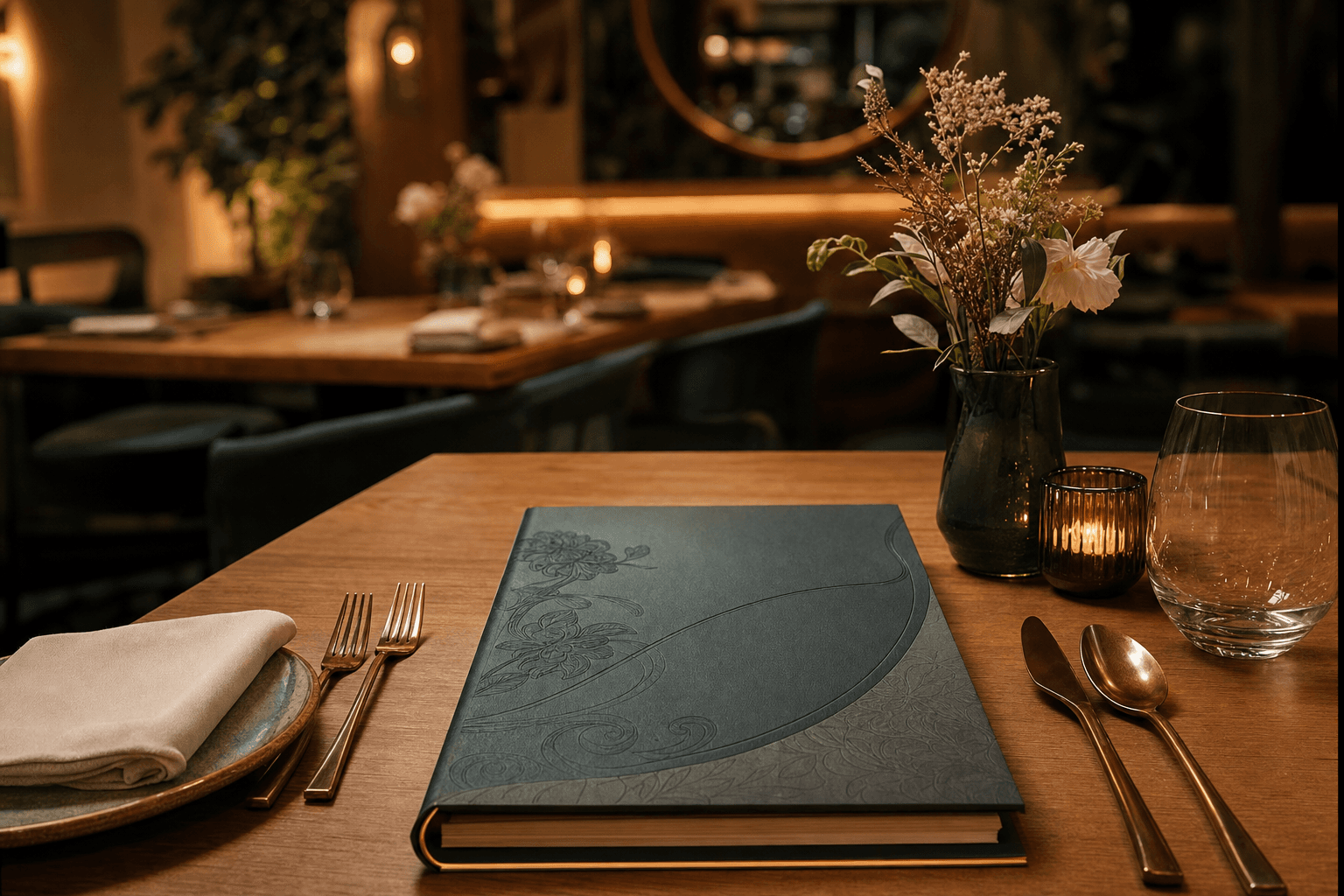
Your Menu Is Your Best Marketing Document
Most independent restaurant owners think of the menu as a necessary operational document — a list that tells customers what you sell and what it costs. That's a costly underestimation. Your menu is the single piece of content that every paying customer reads before spending money with you. No social media post, no email campaign, no printed flyer gets that level of guaranteed attention.
Think about it: a guest sits down, picks up your menu, and spends anywhere from two to eight minutes with it. They're primed to buy. They're already in your space. The menu is the last conversation you have with them before they order — and it can either passively list options or actively sell, tell your story, and shape what they choose.
This guide is about making it do the latter. No design degree required. No expensive agency. Just a sharper understanding of what your menu can do — and practical steps to make it work harder for you.
Understand What Your Menu Communicates Beyond Food
Before you change a single word or layout element, step back and ask: what does my menu say about my restaurant right now?
Every menu communicates several things simultaneously:
- Your price positioning. Is this a neighborhood spot, a special-occasion destination, or a fast-casual lunch stop?
- Your identity. Are you a family-run Italian trattoria with decades of recipes, or a modern small-plates concept driven by local farms?
- Your confidence. A menu crammed with 80 items signals indecision. A focused menu of 30 well-chosen dishes signals mastery.
- Your values. Do you source locally? Are you allergen-aware? Do you support a particular community? These details matter to modern diners.
If your menu currently communicates none of those things — if it's just Times New Roman on a laminated sheet — you're leaving real money and loyalty on the table. The fix isn't complicated, but it does require intentionality.
Write Descriptions That Sell, Not Just Describe
Menu copy is one of the highest-ROI writing tasks in your business. A single sentence added to a dish description can measurably lift how often it gets ordered.
Research from Cornell University found that descriptive menu labels increased sales of those items by 27% compared to plain names — and customers rated the food as tasting better. Words do real work.
Be specific, not generic
"Grilled chicken sandwich" tells a customer nothing they couldn't guess. "Free-range chicken thigh, charred on the flat-top, served on a toasted brioche with house-made pickles and smoked aioli" tells a story. It justifies the price, sets expectations, and makes the dish sound worth ordering.
Use origin and provenance
If your tomatoes come from a farm 40 miles away, say so. If your pasta is made in-house every morning, say so. These details aren't bragging — they're reasons to choose you over the place next door. They also give your servers talking points that reinforce the sale.
Invoke sensory language
Words like crispy, silky, smoky, bright, rich, tangy activate the imagination and trigger appetite. Use them precisely — don't call everything "delicious" or "amazing," which are meaningless. Describe how the dish actually feels and tastes.
For a deeper look at crafting descriptions that convert, see our guide on building a restaurant menu that works.
Use Layout and Structure to Guide Orders
Where items appear on your menu is not neutral. Eye-tracking studies consistently show that diners scan menus in predictable patterns — typically starting at the top center or top right of a page. The items placed in those "sweet spots" get disproportionate attention.
Lead with your best, not your cheapest
Many operators list items from cheapest to most expensive out of some instinct toward transparency. This is a mistake. Lead with your signature dishes — the ones you're proudest of, that have the best margins, and that represent your concept most clearly. Price anchoring works: when a guest sees a $38 entrée first, the $26 entrée looks reasonable by comparison.
Use visual hierarchy deliberately
Bold item names. Use slightly larger type for categories you want to emphasize. Add a small "chef's recommendation" callout or a subtle border box around a high-margin item. These nudges are subtle enough not to feel pushy but effective enough to move the needle on what people order.
Limit choice strategically
The "paradox of choice" is real in restaurants. Menus with too many options create decision fatigue, slow table turns, and often result in guests defaulting to the safest, most familiar — and often lowest-margin — item. A tighter menu with confident, well-described options typically outperforms a sprawling one. Aim for quality over quantity in every category.
Our article on how to structure menu categories so guests order more goes deeper on the mechanics of layout and flow.
Make Your Menu a Brand Touchpoint
Your menu should look and feel like it belongs to your restaurant — not like it was assembled from a generic template at 11pm before opening day.
Consistent typography and color
Use the same fonts and color palette as your signage, your social media, and your website. This isn't just aesthetics — it builds brand recognition. When a guest sees your Instagram post later that week, they should feel the same visual language they encountered at the table.
Include a brief brand story
A two or three sentence introduction — on the inside cover of a physical menu, or at the top of a digital one — goes a long way. Not a corporate mission statement. Something human: "My grandmother made this sauce every Sunday in Naples. We've been making it the same way in this kitchen since 2009." That kind of context creates emotional connection and makes the meal feel meaningful.
Photography: use it or skip it entirely
Bad food photography hurts more than no photography. Blurry, poorly lit phone photos from 2017 undermine confidence in your food. If you can invest in one round of professional shots for your top five to eight dishes, do it. If not, clean typography and strong copy will serve you better than mediocre images. If you're exploring AI-generated food imagery as an option, read our honest breakdown of whether AI food images belong on your menu.
Your Digital Menu Is a Marketing Channel
If you're still treating your digital menu as a static PDF, you're missing a significant opportunity. A properly set-up digital menu is a live, searchable, shareable marketing asset that works for you around the clock.
It shows up in search results
When someone Googles "best pasta near me" or "brunch spots open Sunday," a well-structured digital menu with descriptive item names helps your restaurant appear in those results. Search engines can read and index the text of your menu — a PDF cannot be indexed the same way. This is free, passive marketing that compounds over time.
It's shareable on social
A link to your digital menu can be shared in Instagram bios, Facebook posts, Google Business profiles, and text messages. Guests who are deciding where to eat often share menus with friends. A clean, mobile-friendly menu page makes that decision easier — and tips it in your favor.
It can be updated instantly
Seasonal specials, 86'd items, price adjustments — a digital menu lets you make those changes in minutes without reprinting anything. This means your menu is always accurate, which builds trust and prevents the frustration of a guest ordering something you no longer have.
A digital menu also integrates naturally with QR codes, which are now a standard table experience. Done right, the QR code → digital menu → online order flow is a seamless pipeline that reduces friction and increases average check size.
Connect Your Menu to Online Ordering
The most powerful upgrade you can make to your menu as a marketing asset is turning it into a direct revenue channel. When your menu links directly to online ordering — without going through a third-party delivery app — you keep 100% of the revenue from each transaction.
Third-party platforms charge 15–30% commission per order. On a $40 order, that's up to $12 gone before you've paid a single food cost. Over a month of online orders, the math is brutal. The alternative is setting up your own zero-commission online ordering directly from your menu page — so every order that comes in stays in your pocket.
This also means you own the customer relationship. You collect the email address. You can follow up with promotions. You build loyalty with your own guests, not with the app's audience.
Use Your Menu to Promote High-Margin Items
Not all dishes are created equal from a profitability standpoint. Menu engineering — the practice of analyzing which items are both popular and profitable — gives you a framework for deciding what to promote and what to quietly retire.
The classic matrix divides items into four categories:
- Stars: High popularity, high margin. Feature these prominently. Give them the best real estate and the best descriptions.
- Plowhorses: High popularity, low margin. These keep guests happy but don't make you money. Consider whether you can raise the price slightly or reduce portion cost without affecting quality.
- Puzzles: Low popularity, high margin. These need better placement, better descriptions, or a server push. Don't bury them.
- Dogs: Low popularity, low margin. Cut them or rework them. They're cluttering your menu and diluting focus.
Once you know which items are your stars, your menu layout should reflect that. Put stars where eyes go first. Give them the descriptive copy they deserve. Let the menu do the selling your servers don't always have time to do.
Seasonal and Limited Menus Create Urgency
One of the most underused marketing levers in restaurants is scarcity. A seasonal item or a limited-time special creates genuine urgency that a permanent menu item never can. "Available through the end of March" is a reason to come in now, not later.
Seasonal menus also give you fresh content to share on social media, in email newsletters, and in your Google Business profile updates — all of which drive traffic at no additional cost. A menu that never changes gives you nothing new to talk about. A menu that evolves with the seasons gives you a marketing calendar built in.
The key is making sure those updates are easy to execute. With a digital menu, adding a seasonal section takes minutes. You can promote it the same day. That kind of agility is a real competitive advantage for independent operators who can move faster than chains.
Train Your Team to Use the Menu as a Sales Tool
Even the best-designed menu benefits from a server who knows how to use it. Train your front-of-house staff to:
- Know the story behind two or three key dishes — where the ingredients come from, how the dish is prepared, why it's worth ordering.
- Actively recommend the items you've identified as stars or puzzles, rather than just taking whatever order comes first.
- Upsell naturally by mentioning pairings: "The short rib goes really well with the roasted root vegetables if you want something to share."
- Redirect guests away from dogs: "The chicken is popular, but honestly the duck has been getting a lot of love lately — it's really good right now."
Your menu and your team should work in concert. The menu sets the stage; your staff closes the sale.
Frequently Asked Questions
How often should I update my menu to keep it feeling fresh?
At minimum, review your menu seasonally — four times a year. That gives you a natural rhythm for introducing new items, retiring underperformers, and adjusting prices. Beyond that, make small updates whenever ingredient costs shift significantly or you have a new dish worth featuring. With a digital menu, there's no cost to making changes, so don't let a fear of reprinting hold you back from keeping things current.
Do menu descriptions really make a measurable difference in sales?
Yes, and the evidence is strong. Studies show descriptive labels can increase item sales by 20–30% and improve perceived food quality — even when the dish itself hasn't changed. A single well-written sentence per item is one of the cheapest and highest-return investments you can make in your menu.
Should I include prices on my digital menu if I'm worried about sticker shock?
Always include prices. Hiding them creates distrust and frustrates guests who are trying to make decisions. The better strategy is to use anchoring and framing — present your menu in a way that makes your prices feel justified and fair, through strong descriptions, clear value signals, and smart layout.
How do I turn my menu into an online ordering tool without paying app commissions?
The cleanest solution is to host your menu on a platform that includes built-in ordering and lets you keep 100% of the revenue. That means no third-party marketplace, no commission per order — just a direct transaction between you and your guest. You promote the link through your QR codes, social profiles, and website, and orders come straight to you.
Can a digital menu really help with SEO?
Absolutely. A digital menu with descriptive item names, ingredient details, and category headings gives search engines indexable text that a PDF or image-based menu doesn't provide. When someone searches for a specific dish type or cuisine in your area, a well-structured digital menu improves your chances of appearing in those results — at zero ongoing cost.
Your menu is already in front of every customer who walks through your door. The question is whether it's working for you or just sitting there. MenuHoster makes it straightforward to build a digital menu that's fast, mobile-friendly, and connected to commission-free online ordering — so you can start treating your menu like the marketing asset it actually is. Try it free and see the difference a smarter menu makes.
MenuHoster Team
Helping restaurants go digital